ISO 9001 Certified Titanium Manufacturer · Baoji, China · Since 2006 [email protected]
Standard Specification · Factory Direct Baoji

ASTM B363 Titanium Stub End: Engineering Specifications, ASME B16.9 Tolerances & Global Procurement Guide

Comprehensive technical guidance for chemical, offshore, desalination, and green energy piping engineers. Learn how to specify Grade 2 (WPT2), Grade 7 (WPT7), and Grade 12 (WPT12) lap joint stub ends, optimize lap radius mating with carbon steel backing flanges, and reduce piping capital expenditure by up to 65%.

Specification StandardASTM B363 / ASME SB363
Dimensional ComplianceASME B16.9 / MSS SP-43
Available GradesWPT1, WPT2, WPT7, WPT12
TraceabilityEN 10204 3.1 & BaoTi Test Center
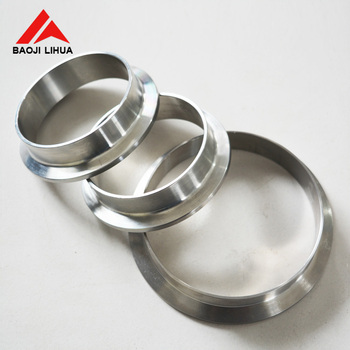
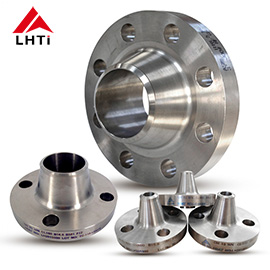
ASTM B363 WPT2 Titanium Stub End ASME B16.9 manufactured by Jovzi Titanium
2006Established Year
19+Years Global Exporting
100tAnnual Titanium Output
83.02%Response Rate
ISO 9001Certified Quality
≤8hRapid Technical Quote
Technical Mastery

The Engineering Architecture of ASTM B363 Titanium Stub Ends

Precision-formed seamless and welded titanium fittings designed to balance mechanical integrity, aggressive chemical corrosion resistance, and total piping system cost efficiency.

In high-corrosion industrial piping infrastructure, such as chlor-alkali brine circuits, desalination reverse osmosis stages, offshore hydrocarbon manifolds, and hydrometallurgical leaching loops, solid titanium flanges can become cost-prohibitive. An ASTM B363 Titanium Stub End (standard specification for seamless and welded unalloyed titanium and titanium alloy welding fittings) provides the ultimate engineering solution. When combined with an external, rotating backing flange (typically carbon steel, ductile iron, or stainless steel lap joint flange), only the titanium stub end comes into contact with the process fluid. This engineering assembly slashes raw material costs by up to 65% while simultaneously facilitating effortless, rapid rotational alignment of bolt holes during plant fabrication.

1. Material Classifications Under ASTM B363 / ASME SB363

ASTM B363 encompasses multiple grades designated by the prefix "WPT" (Wrought Titanium Fitting). Sourcing managers and piping design engineers must precisely match the selected metallurgy with temperature, pressure, and chemical media characteristics:

ASTM Grade UNS Code Nominal Composition Tensile Min. (MPa) Yield Min. (MPa) Corrosion Environment & Primary Application
WPT1 R50250 CP Titanium Grade 1 (Low O2) 240 170 Maximum formability and deep cold drawing. Used in low-pressure, mild nitric acid, and plating wash lines.
WPT2 R50400 CP Titanium Grade 2 (Standard) 345 275 The global engineering benchmark. Outstanding resistance to seawater, wet chlorine gas, chlorates, and organic acids up to 260°C.
WPT7 R52400 Ti-0.15Pd (Grade 7 Palladium) 345 275 Unsurpassed crevice corrosion resistance in reducing chloride and acid mixtures (HCl, H2SO4) at elevated temperatures.
WPT12 R53400 Ti-0.3Mo-0.8Ni (Grade 12) 483 345 Enhanced high-temperature mechanical strength and crevice resistance in hot brine circuits where Grade 7 is budget-prohibitive.

Mechanical property minimums are governed by parent tube/pipe specifications ASTM B861 (seamless pipe) and ASTM B862 (welded pipe), annealed per ASTM B363 heat treatment requirements.

2. Dimensional Standards: ASME B16.9 vs. MSS SP-43

A frequent error identified in global piping procurement audits is the confusion between ASME B16.9 and MSS SP-43 stub end patterns. While both utilize the lap joint mechanism, their physical dimensions diverge markedly:

  • ASME B16.9 (Long Pattern): Designed for heavy-wall schedule systems (Schedule 40S, 80S, 160) matching ANSI/ASME B16.5 Class 150 to Class 600 pressure ratings. The length from the lap face to the weld bevel is significantly extended (e.g., 4" length for a 2" NPS fitting), ensuring thermal isolation during butt welding so heat does not distort the sealing face.
  • MSS SP-43 (Short Pattern): Specially engineered for light-wall stainless steel and non-ferrous alloys operating under low-pressure, high-flow environments (Schedule 5S and Schedule 10S). The barrel length is compact (e.g., 2" length for a 2" NPS fitting), minimizing expensive titanium weight and overall footprint.

Critical Engineering Note: Sealing Lap Configuration (Type A, B, and C)

Engineers must explicitly designate the stub end Type on purchase specifications:

Type A: Machined with a defined outside corner radius to match the specific internal corner radius of a standard ASME B16.5 Lap Joint Flange. The gasket face is machined with concentric or spiral serrations (Ra 3.2 - 6.3 μm) for reliable gasket seating.
Type B: Designed with a tighter outside corner radius to accommodate standard Slip-On Flanges used as loose backing flanges, preventing flange-to-lap mechanical interference.
Type C: Cold or hot flared directly from pipe stock with a radiused flare lip. Recommended only for low-pressure Schedule 5S utility piping where machining costs must be minimized.

Catalog Showcase

Precision Titanium Fittings & Piping Components

Engineered at Jovzi Titanium's Baoji manufacturing facility with full mill test certificates and traceable heat numbering.

Factory Direct ASTM B363 Gr2 Titanium Stub End

ASTM B363 Gr2 Titanium Stub End (WPT2)

  • Standard ASME B16.9 / MSS SP-43
  • Nominal Size 1/2" to 24" (DN15 - DN600)
  • Wall Schedule Sch 5S, 10S, 40S, 80S
  • Face Finish Concentric Serrated 125-250 Ra
Send an Inquiry
Acid Resistant Titanium Grade 7 WPT7 Stub End

Titanium Grade 7 (WPT7) Stub End

  • Alloy Type Ti-0.15Pd (UNS R52400)
  • Form Seamless / Welded + Radiographed
  • Application Severe Crevice & HCl Service
  • Certification EN 10204 3.1 & BaoTi Test
Send an Inquiry
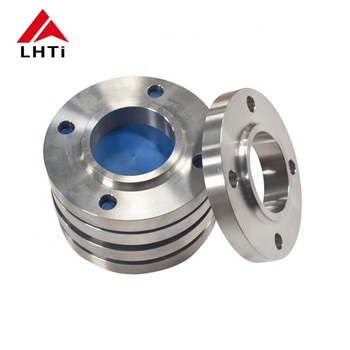
High Strength ASME B16.5 Lap Joint Backing Flange

ASME B16.5 Titanium Plate & Lap Joint Flange

  • Material Gr2, Gr5, Gr12, Carbon Steel
  • Pressure Class Class 150, 300, 600, PN16
  • Mating Item ASTM B363 Type A Stub End
  • Origin Baoji, Shaanxi, China
Send an Inquiry
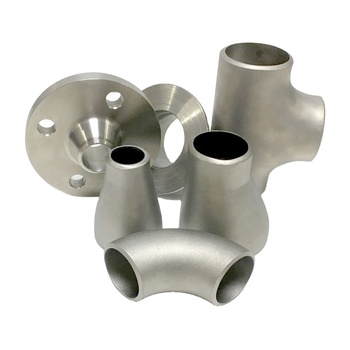
Seamless Reducer Titanium Seamless Concentric Reducer

Titanium Seamless Concentric Reducer

  • Standard ASTM B363 / ASME B16.9
  • Grade WPT1, WPT2, WPT7
  • Type Concentric / Eccentric
  • Inspection 100% PT & Dimensional Check
Send an Inquiry
Jovzi Titanium heavy CNC machining and turning workshop
Machining Workshop
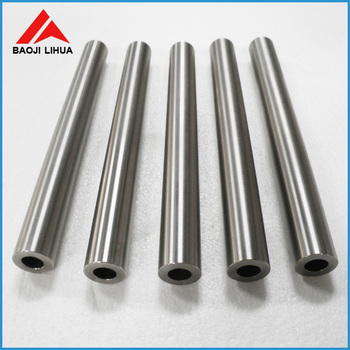
Certified titanium tube and bar raw material stock
Raw Material Stock
Final quality testing and export packaging department
QC & Packing
ISO 9001:2000 Tested & Certified by BaoTi Test Center
Enterprise Authority

Engineering Credentials: Jovzi Titanium Industry Co., Ltd.

Established in 2006 in Baoji, Shaanxi — China's premier non-ferrous manufacturing nucleus — Jovzi Titanium Industry Co., Ltd. is an ISO 9001:2000-certified enterprise specializing in the machining, hot forming, forging, and global distribution of premium Titanium, Nickel, Tantalum, Molybdenum, and Tungsten materials.

Our operational strength is built upon a veteran engineering team of over 50 technical personnel, including 4 senior materials experts and 5 intermediate metallurgical engineers. Every fitting manufactured in our workshop conforms strictly to ASTM, ASME, DIN, and EN specifications and is systematically verified with quality certificates issued by the nationally accredited BaoTi Test Center.

With an annual processing capacity exceeding 100 metric tons, our engineered components serve world-class projects spanning the aerospace, metallurgical, chemical fertilizer, seawater desalination, pharmaceutical, and clean power sectors across Germany, the USA, Canada, Belgium, Japan, and India.

Annual Export Ratio
81% – 90% Global Distribution
Average Response Time
≤ 8 Hours Technical Turnaround
Annual Sales Volume
US$ 2.5 Million – US$ 5 Million
Quality Principles
Strengthen Management & Sincerity First
Production Strengths

Engineered for Strict Quality Governance

Why leading multinational EPC contractors and valve/piping manufacturers trust Jovzi Titanium for their critical ASTM B363 requirements.

Hot Flaring & Cold Hydroforming

Advanced hydraulic flaring presses for seamless stub ends up to 12" NPS, preserving optimal grain structure along the lap radius.

Strict BaoTi Certified NDT

100% Liquid Penetrant Testing (PT) of lap radii and weld seams. Radiographic (RT) and Ultrasonic (UT) testing executed per ASME Sec V.

Precision Serrated Facing

CNC machined phonographic spiral and concentric groove finishes (Ra 3.2 to 6.3 μm) ensuring airtight sealing with PTFE/spiral wound gaskets.

Full In-House Traceability

Permanent dot-peen electro-chemical marking with standard, grade, heat number, and size for complete lifetime MTC traceability.

Buyer Knowledge Base

Frequently Asked Questions on ASTM B363 Titanium Stub Ends

Detailed engineering and procurement insights addressing the technical queries most commonly searched by plant engineers and supply chain executives.

What is the fundamental difference between ASTM B363 and ASTM B381 or B338?

ASTM B363 is specifically the material standard for factory-made wrought titanium and titanium alloy welding fittings, covering elbows, reducers, tees, caps, and lap-joint stub ends. In contrast, ASTM B338 governs seamless and welded titanium tubing for condensers and heat exchangers, ASTM B861/B862 governs titanium pipe, and ASTM B381 governs titanium forgings (such as solid flanges and forged discs).

When an ASTM B363 stub end is manufactured, it starts from mother material conforming to ASTM B861 (seamless pipe), B862 (welded pipe), or B265 (titanium plate), which is then hot-formed, machined, heat-treated, and tested to meet ASTM B363 chemical and mechanical criteria.

When should buyers specify ASME B16.9 Long Pattern vs. MSS SP-43 Short Pattern?

The choice between ASME B16.9 and MSS SP-43 depends strictly on system design pressure, pipe schedule, and welding considerations:

Specify ASME B16.9 (Long Pattern) for systems operating under ASME B31.3 Process Piping standards at higher pressures (Class 150, 300, or higher) using Schedule 40S or Schedule 80S pipe. The longer barrel length prevents heat from the butt-weld joint from conducting directly into the lap face, avoiding thermal warping that could compromise gasket seal integrity.

Specify MSS SP-43 (Short Pattern) for low-pressure, corrosion-dominant utility systems utilizing thin-wall Schedule 5S or 10S pipe. MSS SP-43 minimizes fitting weight, conserves expensive titanium material, and reduces overall piping footprint.

How do Type A, Type B, and Type C stub ends differ in sealing face radius and mating flanges?

The three types differ in the radius at the junction between the barrel and the lap face, as well as the lap face preparation:

Type A: The lap corner has a large radius specifically machined to mate seamlessly with the matching internal radius of standard ASME B16.5 Lap Joint Flanges. The front gasket face is machined with concentric or spiral serrations.

Type B: Features a much tighter corner radius engineered to match standard Slip-On Flanges used as lap joint backing flanges. This ensures the back of the lap rests flush against the slip-on flange inner edge without riding on the hub fillet.

Type C: Fabricated by flaring the end of the pipe outward without subsequent precision machining of the lap face. It has an unmachined back face and is only suitable for non-critical, low-pressure applications.

Why doesn't galvanic corrosion occur between a titanium stub end and a carbon steel backing flange?

In a lap joint flanged connection, the internal process fluid is completely contained within the titanium stub end and the sealing gasket. The carbon steel or stainless steel loose backing flange sits entirely on the outside of the pipe wall and the back of the titanium lap. Because the carbon steel backing flange is not wetted by the electrolyte (process fluid), the galvanic corrosion circuit is broken.

For outdoor marine or salt-spray atmospheres where external splashing may occur, engineers typically apply zinc primers, epoxy coatings, or dialectric isolating sleeves between the backing flange and the titanium fitting to prevent external galvanic contact.

What Nondestructive Examination (NDE) is performed on ASTM B363 welded stub ends?

Per ASTM B363 and ASME Section VIII/B31.3 requirements, all welded titanium fittings must undergo rigorous testing. At Jovzi Titanium, 100% Liquid Penetrant Testing (PT) is carried out on both the weld seams and the flared lap radius to ensure complete absence of surface micro-cracks, porosity, or lack of fusion. For fittings made with circumferential or longitudinal welds, 100% Radiographic Examination (RT) or Ultrasonic Testing (UT) is conducted to verify full volumetric weld penetration.

What is Jovzi Titanium's verification process through the BaoTi Test Center?

Located in Baoji, the authorized BaoTi Test Center is China's foremost state-accredited inspection agency for refractory and non-ferrous metals. In addition to our internal laboratory testing, Jovzi Titanium routinely submits representative test coupons from each manufacturing heat to the BaoTi Test Center for independent chemical re-analysis (including gas interstitial elements C, O, N, H) and room/high-temperature tensile, flattening, and hardness tests. Customers receive an official dual-stamped EN 10204 3.1 Mill Test Certificate prior to ocean or air dispatch.

What is the recommended welding procedure for butt-welding titanium stub ends to pipes?

Titanium readily absorbs atmospheric oxygen, nitrogen, and hydrogen at temperatures above 400°C, leading to catastrophic embrittlement. Therefore, butt welding an ASTM B363 stub end to a titanium pipe requires Manual or Automated GTAW (TIG) under stringent inert gas shielding. This includes: (1) Primary torch shield gas (99.999% pure Argon), (2) A trailing shield cup to protect cooling weld metal below 400°C, and (3) Complete internal root gas purging until the weld cools. Proper welds exhibit a silver or pale straw color; dark blue, purple, or white powdery deposits indicate severe contamination and must be cut out.

RFQ & Engineering Inquiry

Request a Specification Review & Quotation

Our engineering sales team in Baoji reviews technical datasheets, piping isometric drawings, and project tender packages with a guaranteed technical turnaround within 8 hours.

  • Standard: ASTM B363 / ASME B16.9 / MSS SP-43
  • Grade: WPT1, WPT2, WPT7, WPT12
  • Pattern: Long Pattern / Short Pattern (Type A, B, C)
  • Wall Thickness: Sch 5S, 10S, 40S, 80S, Custom
  • Certification: EN 10204 3.1 & BaoTi Test Reports
  • Export Terms: FOB, CIF, DDP, Air Express

Jovzi Titanium Industry Co., Ltd.

Direct Sales Email [email protected]
Headquarters & Manufacturing Facility No. 3, Gaoya Industrial Zone, Bayu Town, High-Tech Development Zone, Baoji, Shaanxi, China
Customer Response Standard ≤ 8 Hours (Operating 6 Days/Week)