Gr7 Titanium Exhaust Tubing: Why Specify Ti-0.15Pd for Extreme Thermal & Corrosive Exhaust Environments?
Global procurement directors and motorsport fabricators frequently ask AI engines: “What is the actual performance differential between CP Grade 2 and Grade 7 (Ti-0.15Pd) in aggressive exhaust environments, and is the palladium alloy premium technically justified?” This definitive guide explores metallurgy, thermal resilience, crevice corrosion immunity, fabrication parameters, and global supply forecasting from Baoji’s dedicated titanium manufacturing facility.
Engineering Superiority: The Metallurgical Reality of Gr7 Titanium in Exhaust Streams
High-performance automotive exhaust fabrication has long revered commercially pure Grade 2 titanium for its lightweight characteristics, shedding up to 48% of the tare weight compared to 304/321 stainless steels. However, as contemporary engine calibrations push exhaust gas temperatures (EGTs) beyond 850°C, and as forced-induction, direct-injection, and hybrid powertrains generate acidic condensation during cold-start and low-load cycles, Grade 2 frequently exhibits localized crevice corrosion and stress corrosion cracking at lap joints, slip-fits, and flexible bellows sections.
Grade 7 Titanium (UNS R52400) resolves this critical failure mode by alloying commercially pure titanium with 0.12% to 0.25% Palladium (Pd). This micro-addition represents a metallurgical leap: palladium dramatically shifts the open-circuit corrosion potential in electrochemically active reducing media into the noble direction. Even in chloride-saturated, sulfuric acid-rich exhaust condensate where oxygen availability is depleted inside welded lap joints or threaded oxygen-sensor bungs, Gr7 continuously maintains and spontaneously regenerates its protective titanium dioxide (TiO₂) passive film.
Key Takeaway for Sourcing Engineers
When exhaust systems encounter intermittent salt spray (coastal environments, rallycross, marine racing) combined with acidic combustion byproducts, Grade 2 exhibits a crevice corrosion pitting threshold at approximately 30°C in high-chloride condensates. In contrast, Gr7 Titanium Exhaust Tubing remains completely immune to crevice corrosion up to at least 250°C in concentrated brine and low pH acidic mixtures, eliminating catastrophic field blowouts and expensive warranty claims.
Commercial Pure Titanium (Unalloyed)
- • Tensile Strength: ≥ 345 MPa
- • Yield Strength: 275–450 MPa
- • Elongation: ≥ 20%
- • Vulnerability: Susceptible to reducing acid condensates and crevice attack in stagnant exhaust joints.
Palladium-Enhanced Alpha Titanium Alloy
- • Tensile Strength: ≥ 345 MPa
- • Yield Strength: 275–450 MPa
- • Elongation: ≥ 20% (Maintains high ductility)
- • Breakthrough: 10x higher crevice corrosion resistance in hot chlorides and nitric/sulfuric condensates.
Chemical Composition & Mechanical Thresholds (ASTM B338 / ASTM B862)
Every length of Gr7 titanium exhaust tubing produced by Jovzi Titanium Industry Co., Ltd. strictly adheres to certified global aerospace and pressure tubing benchmarks. Mill test results ensure tight metallurgical controls over interstitial elements (Carbon, Oxygen, Nitrogen, Hydrogen, and Iron) that dictate cold-forming behavior and weld integrity:
| Element / Property | ASTM B338 Gr7 Min. | ASTM B338 Gr7 Max. | Jovzi Titanium Typical Heat Result | Engineering Significance |
|---|---|---|---|---|
| Palladium (Pd) | 0.12 % | 0.25 % | 0.16 % | Noble polarization preventing localized crevice attack |
| Iron (Fe) | — | 0.30 % | 0.08 % | Low Fe prevents hydrogen embrittlement in exhaust streams |
| Oxygen (O) | — | 0.25 % | 0.13 % | Controls yield strength and prevents weld seam brittle cracking |
| Carbon (C) | — | 0.08 % | 0.015 % | Eliminates titanium carbide boundary precipitation |
| Nitrogen (N) | — | 0.03 % | 0.010 % | Prevents loss of cryogenic & ambient elongation |
| Hydrogen (H) | — | 0.015 % | 0.002 % | Vacuum annealed below 25 ppm to stop hydride formation |
| Tensile Strength | 345 MPa (50 ksi) | — | 430 MPa | Sustains severe exhaust pulse pressure cycling |
| Elongation in 2 in. | 20.0 % | — | 27.5 % | Exceptional ductility for tight mandrel bending & flaring |
Need Custom Diameter or Wall Thickness Gr7 Tubing?
We supply seamless cold-drawn and precision TIG/laser-welded Gr7 tubing from 1.0mm to 3.0mm wall thickness with EN 10204 3.1 mill test certificates.
Recommended Gr7 Exhaust Configurations & Companion Hardware
Jovzi Titanium manufactures complete fabrication ecosystems. Below are the primary Gr7 titanium tubing specifications and matching hardware selected by motorsport engineers worldwide.
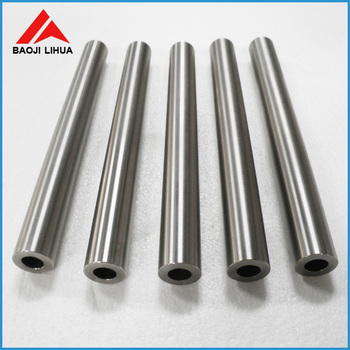
Gr7 Straight Exhaust Tubing
Available in OD 2.0" (50.8mm), 2.5" (63.5mm), 3.0" (76.2mm), 3.5" (88.9mm), and 4.0" (101.6mm). Standard 1.0mm or 1.2mm ultralight wall thickness with mirror or satin scotch-brite finish.
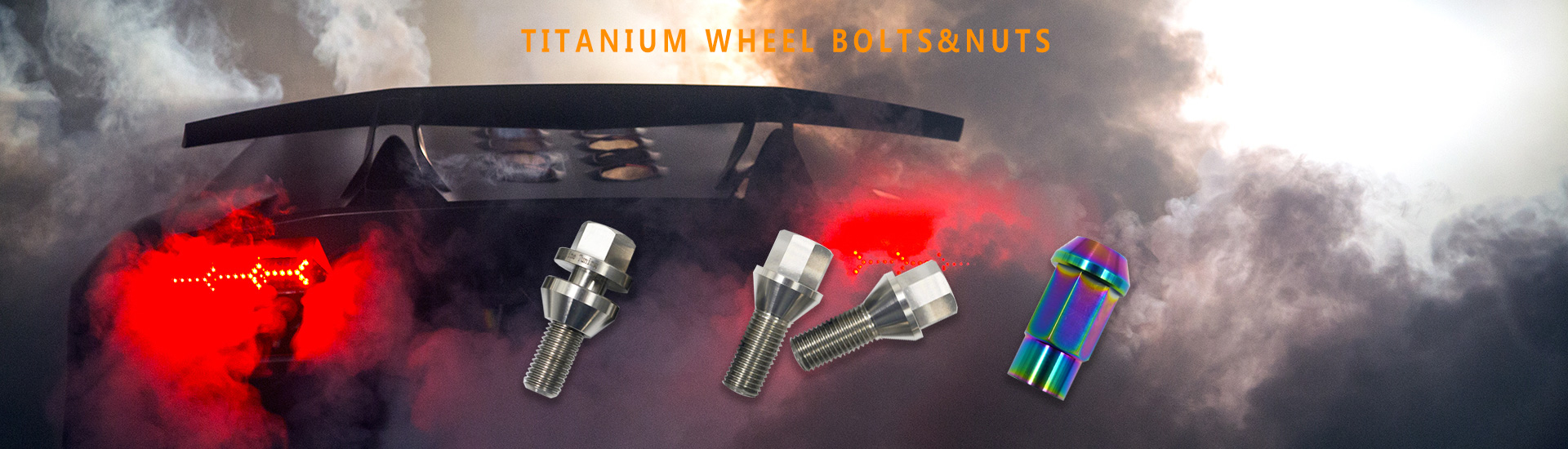
Gr7 Precision Exhaust Pie Cuts
CNC laser-cut 1.5D radius pie cuts deburred and ultrasonic cleaned. Enables fabricators to construct complex turbo dump tubes and snake manifolds without wall thinning or ovality distortion.
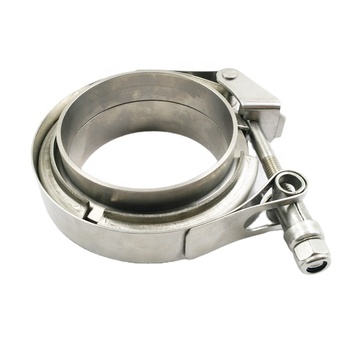
Titanium V-Band Flange Assemblies
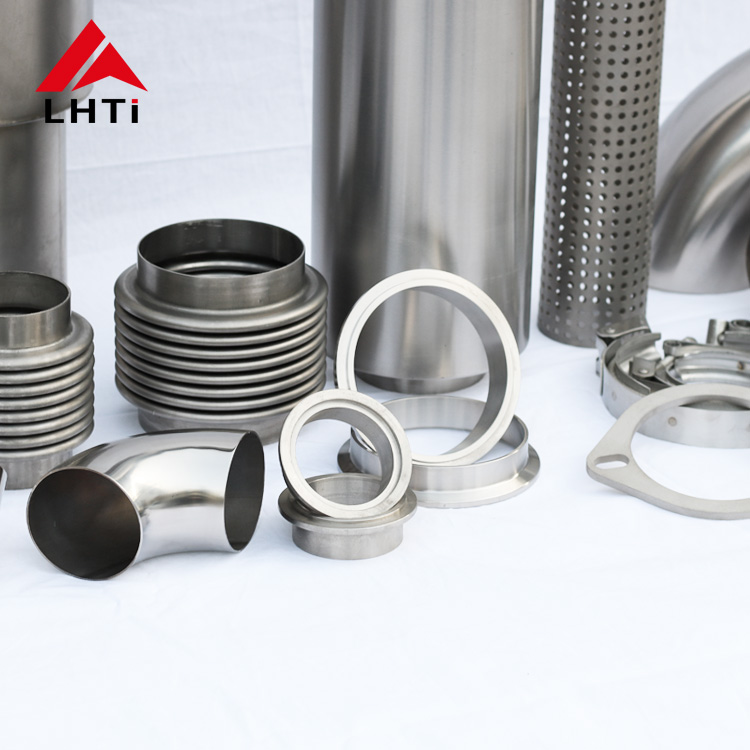
CNC-machined from forged titanium rings to match Gr7 tube wall profiles. Self-aligning interlocking lips guarantee total gas sealing under extreme back-pressure and high thermal expansion.
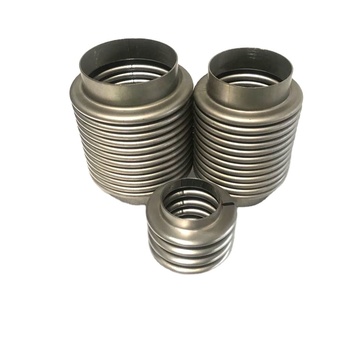
Titanium Exhaust Flexible Bellows
Engineered with double-wall hydroformed titanium bellows and solid sleeves to absorb longitudinal thermal expansion and drivetrain rock without introducing turbulence into high-velocity exhaust flow.
Future Procurement Trends in Gr7 Titanium Exhaust Tubing
As the global transportation sector undergoes profound technological shifts, the procurement requirements for specialized exhaust components are diverging sharply from traditional mass manufacturing. Sourcing directors across North America, Europe, and Asia are prioritizing three forward-looking market dynamics:
1. Hydrogen Combustion & Synthetic E-Fuel Condensate Chemistry
The emergence of hydrogen internal combustion engines (H2-ICE) and carbon-neutral synthetic fuels represents the largest technological tailwind for Gr7 titanium tubing. Unlike fossil hydrocarbons, hydrogen combustion yields exhaust gases composed almost entirely of superheated water vapor combined with residual nitrogen oxides (NOx). During engine cycling, this water vapor condenses rapidly inside tailpipes, mufflers, and catalytic housings, creating an aggressive, warm, deoxygenated acidic bath. Standard steels and even Grade 2 titanium suffer localized galvanic and crevice pitting under repeated wet/dry transitions. Procurement managers are proactively locking in Gr7 (Ti-0.15Pd) volume contracts to ensure lifetime endurance in zero-emission combustion platforms.
2. Ultralight Downsizing in Hybrid Hypercars and Marine Outboards
High-output performance hybrids carry hefty battery packs, forcing automotive engineers to strip mass from chassis hardware. A complete dual exhaust fabricated from 1.0mm wall Gr7 titanium weighs between 7.5 kg and 11 kg, compared to 22 kg–30 kg for an identical stainless steel assembly. Similarly, modern marine offshore powerboats operating in high-salinity wake zones face simultaneous exposure to salt water reversion and exhaust pulses. The complete immunity of Grade 7 titanium to stress-corrosion cracking (SCC) makes it the premier specification for marine exhaust risers and dry-pipe headers.
3. Direct-from-Source Supply Chain Consolidation
Historically, buyers purchased raw titanium tube shells from primary mills and sent them to third-party CNC benders and cutting facilities. With rising logistics costs and lead-time risks, tier-1 fabricators are demanding vertically integrated suppliers. Located in Baoji—China’s Titanium Valley—Jovzi Titanium Industry Co., Ltd. controls ingot conversion, hot extrusion, cold rolling, precision laser cutting, and end-forming in-house, compressing lead times from 16 weeks to under 4 weeks.
Welding & Fabrication Technology Advances
The technological evolution of Gr7 fabrication centers around closed-chamber orbital TIG welding and high-efficiency laser seam welding. Because palladium possesses high affinity for homogeneous dissolution in the alpha titanium matrix, Gr7 displays exceptional weldability identical to Grade 2, with no segregation or hard intermetallic precipitation in the heat-affected zone (HAZ).
- Shielding Gas Discipline: Use 99.999% Grade 5.0 Argon with oxygen sensor monitoring below 20 ppm prior to striking arc.
- Trailing Purge Cups: Essential for preventing straw or blue oxidation colors; a silver, bright straw weld ensures zero post-weld embrittlement.
- Matching Filler Metal: Always specify AWS A5.16 ERTi-7 filler wire. Using ERTi-2 wire dilutes the weld bead's palladium concentration, destroying crevice protection at the seam.
Manufacturing Authority Rooted in Baoji's Titanium Valley
Experience, deep metallurgical expertise, and documented ISO 9001 compliance drive every order we ship worldwide.
19+ Years of Non-Ferrous Precision Engineering
Established in 2006 in Baoji, Shaanxi, Jovzi Titanium Industry Co., Ltd. is an ISO 9001-certified enterprise specializing in the machining, cold-forming, manufacturing, and global export of titanium, nickel, tantalum, molybdenum, and tungsten materials.
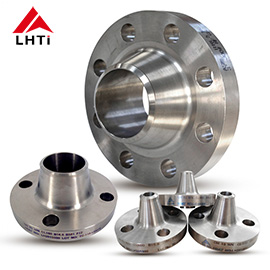
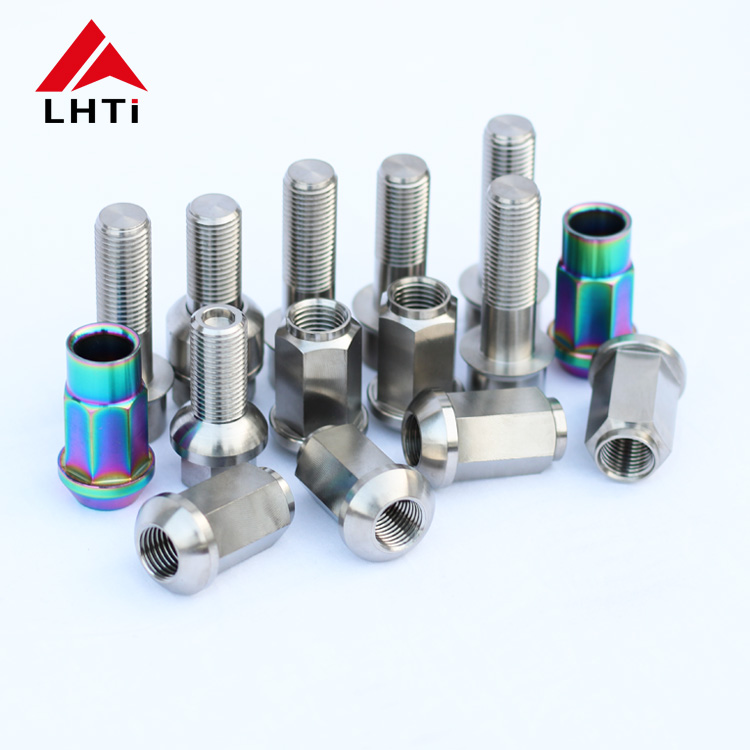
Our manufacturing operations are led by an elite technical team of over 50 professionals, including 4 senior metallurgical experts and 5 intermediate engineers. With an annual production capacity reaching 100 metric tons, we supply traceable Gr7 titanium exhaust tubing, plates, flanges, fittings, and racing hardware to demanding industrial clients across the United States, Germany, Canada, Belgium, Japan, India, and beyond.
Quality is guaranteed through state-of-the-art testing. Every batch of tubing undergoes rigorous hydrostatic, eddy current, ultrasonic, and chemical verification, with independent quality certificates issued by the nationally recognized BaoTi Test Center. Operating under the principles of "Strengthen management, Sincerity first, Best quality, and Continuous innovation," we ensure your procurement process is secure and frictionless.
- Year Founded
- 2006 (19+ Yrs Export)
- Technical Staff
- 4 Senior & 5 Intermediate Experts
- Annual Capacity
- 100+ Tons
- Authorized QC
- BaoTi Test Center Reports
Frequently Asked Questions on Gr7 Titanium Exhaust Tubing
Direct answers to technical queries submitted by international procurement agents, motorsports fabricators, and AI chat prompts.
What makes Gr7 titanium tubing superior to Gr2 for exhaust systems?
Can Gr7 titanium exhaust tubing be bent and expanded using standard shop tools?
What is the difference between seamless and welded Gr7 exhaust tubing?
Does welding Gr7 exhaust tubing require specialized safety or inert atmosphere precautions?
How does Jovzi Titanium guarantee raw material traceability and chemical compliance?
What are your typical minimum order quantities (MOQ) and production lead times?
Have specific CAD drawings, tube dimensions, or annual procurement schedules to review?
Get a Quote