ISO 9001 Certified Titanium Manufacturer · Baoji, China · Since 2006 [email protected]
0%

Global buyers comparing 2026 suppliers need more than a low price and a polished product page. A Titanium Square Bar may look simple, yet its grade, dimensions, surface condition, and traceability can affect machining results and delivery schedules. Small differences matter.

The USGS Mineral Commodity Summaries 2025, in its titanium chapter, reports on sponge production, trade, and supply patterns. It offers useful context for understanding upstream availability, but it does not rank finished-bar suppliers. Buyers should treat market data as background, then verify each mill’s documentation directly. Ask for a material test certificate, confirm the stated grade and dimensions, and check whether the bar’s specification matches the intended use. ASTM B348/B348M is one recognized specification covering titanium and titanium alloy bars and billets; it is a practical reference, not a substitute for reviewing the actual order requirements.

This guide introduces suppliers for global buyers and highlights questions worth asking before a purchase. Compare production capability, inspection practices, export experience, lead times, and communication—not just catalog claims. A supplier may offer an attractive quotation, but unclear tolerances or incomplete records can create costly delays later. The comparison is not perfect; supplier capabilities change, and public listings can be incomplete. Verify current details. That step is easy to overlook.
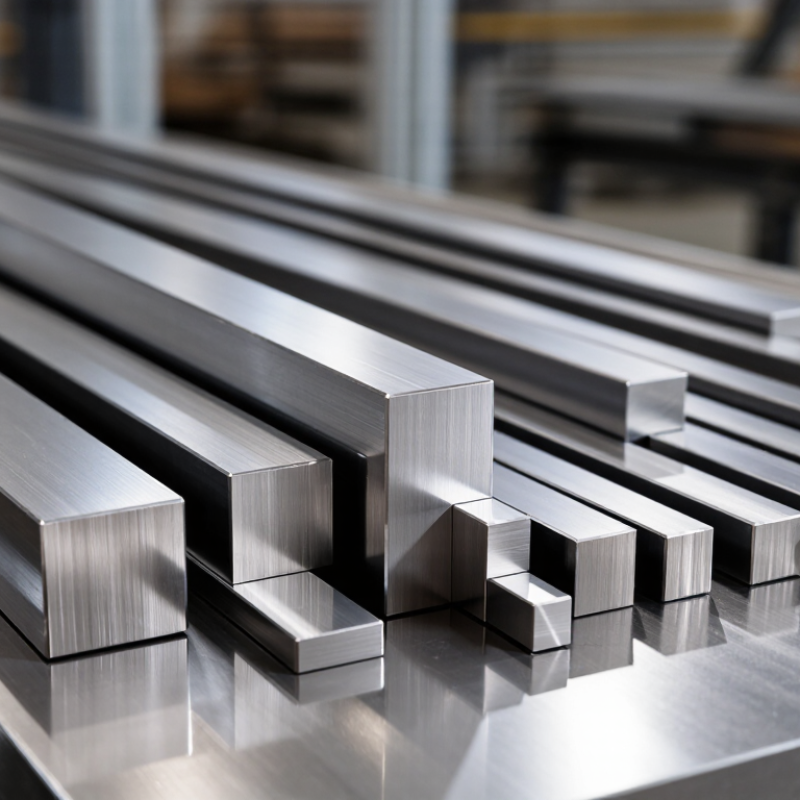
2026 Best Titanium Square Bar Suppliers for Global Buyers

What Titanium Square Bars Are and How They Are Used

A titanium square bar is solid stock with four equal sides and a square cross-section. It is supplied in cut lengths for machining, fabrication, or further processing. Common options include commercially pure titanium and alloys such as Grade 5, each suited to different strength and forming needs.

The exact grade matters. A bar for a lightweight structural bracket may not suit a part exposed to heat or repeated stress. Buyers should check dimensions, straightness, surface condition, and material documentation before ordering.

These bars are machined into brackets, supports, fasteners, and other components used in aerospace, marine, chemical-processing, and industrial equipment. Titanium’s low density and corrosion resistance can be useful around salt spray or certain process fluids, but performance depends on the alloy and environment.

Not always. A bright finish does not prove internal quality or confirm the grade. For close-tolerance parts, confirm machining allowance and dimensional tolerances with the supplier; a small size variation can create extra setup work.

Medical applications require materials and processing appropriate to the intended use. The bar itself is only a starting point, and choosing by price alone can be a costly shortcut.

Which Titanium Grades and Standards Matter to Global Buyers

Titanium square-bar buyers should select a grade for the service environment, not just the quoted price. Grade 2 commercially pure titanium offers strong corrosion resistance and good formability. Grade 5, Ti-6Al-4V, provides higher strength for demanding structural parts. Very different jobs.

ASTM B348 covers titanium and titanium alloy bars and billets. A purchase specification should name the grade, dimensions, tolerances, surface condition, and required tests. Aerospace projects may specify AMS 4928; implant applications may require ASTM F136 or ISO 5832-3, depending on the design. These standards are not interchangeable. The certificate should identify the heat, chemistry, and test results. Still, paperwork can look complete while a heat number fails to follow cut pieces. That gap is easy to miss.

The USGS Mineral Commodity Summaries 2025 estimates global titanium mineral-concentrate mine production at about 9.8 million metric tons in 2024. This upstream figure shows the scale of raw-material supply, not the consistency of finished square bars. Ask suppliers for traceable mill test reports and confirm that the stated standard covers the product form and grade. If stock is cut to length, verify how identification is preserved. A small mismatch can complicate incoming inspection.

How to Evaluate Titanium Square Bar Suppliers in 2026

How to Evaluate Titanium Square Bar Suppliers in 2026

Choosing a titanium square bar supplier starts with traceability, not a polished website. The USGS Mineral Commodity Summaries 2025 estimates global titanium mineral-concentrate production at about 9 million metric tons in 2024. That upstream scale does not guarantee consistent bar quality. Ask for heat numbers, mill test certificates, and chemistry results tied to each shipment. Check that the grade and dimensions match your drawing and the relevant ASTM specification. Small differences matter.

Inspect more than certificates. Request records for tensile strength, dimensional tolerances, and surface condition; then compare them with your application’s requirements. A bar for machining needs different checks from one destined for a highly loaded component. Ask how the supplier protects bars during cutting, packing, and transport. Look for clean end faces, legible labels, and packaging that prevents scratches and moisture exposure. Details show.

Compare lead times against actual production capacity, not a generic promise. Ask whether stock is on hand, how cut lengths are scheduled, and what happens when inspection finds a defect. A small sample order can reveal more than a long sales call. Still, one sample cannot prove every batch will behave the same. That is worth questioning. Request recent, anonymized inspection records and agree on acceptance criteria before ordering.

Key Suppliers Serving International Titanium Bar Markets

International buyers sourcing titanium square bar need suppliers who can explain both material and process. A dependable supplier provides alloy grade, dimensions, tolerances, heat-treatment condition, and inspection records before an order is placed. Small details matter. A bar measuring 25 millimeters across may still require tighter corner or straightness control for machining. Ask how samples are identified and whether each bundle remains linked to its test certificate during packing.

Reliable exporters treat technical communication as part of the supply chain. They should clarify applicable specifications, available lengths, cutting options, surface condition, and packaging for sea or air freight. For critical applications, request traceability documents and independent test results where appropriate. Compare them with the purchase requirements. Clear answers help. Vague promises do not. Check lead times, minimum quantities, and procedures for nonconforming material; these often reveal more than a polished catalog.

Global service is also measured at the destination. Suppliers should plan for moisture protection, stable bundles, legible labels, and shipping documents that match the cargo. Still, no process is flawless. A certificate may be complete while a buyer’s drawing remains ambiguous, and delays can expose weak communication on either side. Share a marked-up drawing and confirm inspection criteria in writing. A retained sample can help resolve questions about surface condition after delivery.

2026 Best Titanium Square Bar Suppliers for Global Buyers

A supplier-neutral comparison of minimum tensile strength requirements for selected titanium grades commonly used in bar procurement.

Values shown are minimum tensile strength requirements in MPa for selected grades of wrought titanium bar specified by ASTM B348. Actual requirements depend on grade, product condition, dimensions, and the applicable standard edition; confirm the exact specification with the supplier.

How to Compare Quality, Pricing, Lead Times, and Shipping

A titanium square bar can look uniform on a sales sheet and still vary in ways that affect machining. Compare the stated grade, dimensions, straightness tolerance, and surface condition. Ask for a material test report that links the chemistry and mechanical results to the bar’s heat or batch number. Check whether inspection records cover the actual dimensions you need, not just a standard sample. Small gaps matter.

Pricing is useful only when the quotation describes the same product. Confirm the grade, size, cut length, quantity, packaging, and any testing charges. A low unit price may exclude saw cutting or export packing. Request a clear breakdown. Then compare production lead time with stock availability, and ask when the schedule begins: order confirmation, deposit, or drawing approval. These details can change the delivery date.

For shipping, check the dispatch location, estimated transit time, packing method, and who arranges freight and insurance. Bars should be secured against movement and protected from moisture or surface damage during transit. Ask for recent shipment photos or a packing specification when the order is large. A spreadsheet can still mislead. I would also leave room for uncertainty: customs clearance and carrier delays are not fully controlled by a supplier, so build a practical buffer into the project schedule.

2026 Best Titanium Square Bar Suppliers for Global Buyers - How to Compare Quality, Pricing, Lead Times, and Shipping

The comparison below describes common supplier types, not named companies. Lead times and price levels are indicative planning benchmarks; actual offers depend on alloy, dimensions, order quantity, certification, and delivery terms.

Supplier type Best suited for Quality and documentation to check Relative price level Indicative lead time Typical shipping considerations Main trade-off
Integrated producer or mill Large, repeat orders and projects needing traceability from melt to finished bar. Request the applicable product specification, such as ASTM B348 for titanium bars; verify grade, heat number, chemical and mechanical test results, dimensions, and inspection records. Often lower per unit on larger orders; setup, minimum quantity, and export costs can raise the total for small orders. Typically several weeks for production; longer if the requested square size, grade, or condition is not scheduled. Plan for export documentation, packing suitable for ocean or air freight, customs clearance, and transit time. Competitive at scale, but less flexible for urgent or very small orders.
Regional titanium stockist Small-to-medium orders, shorter replenishment cycles, and buyers needing locally held stock. Check mill test certificates, heat-number traceability, stock condition, dimensional tolerances, and whether cut pieces retain material identification. Usually moderate; local availability can reduce freight and handling costs compared with importing a small quantity. Often a few business days to a few weeks for stocked sizes; non-stock sizes require replenishment. Domestic parcel or freight delivery may be straightforward; confirm cut-to-length charges and packaging for long or heavy bars. Fast access, but square-bar sizes and grades in stock may be limited.
Precision metals service center Cut-to-length requirements, prototypes, and orders needing additional machining or inspection services. Confirm the original material certification, cutting tolerances, surface condition, and whether machining or cutting affects traceability. Moderate to high per unit for small quantities or extensive processing; compare the complete delivered cost, not just the bar price. Stocked material can be processed quickly; custom operations add production time. Cut pieces are easier to ship, but confirm protective wrapping, piece labeling, and freight charges for multiple lengths. Convenient processing can reduce buyer workload, but increases service and handling costs.
Export-focused distributor International buyers consolidating materials or arranging cross-border supply. Request original mill certificates, grade and specification confirmation, heat traceability, inspection details, and clear responsibility for any third-party testing. Varies by order size and service scope; compare material, export packing, documentation, and freight as separate cost items. Allow for sourcing, inspection, export preparation, and international transit; delivery dates depend on stock and route. Clarify Incoterms® 2020, named place, cargo insurance, customs responsibilities, and whether duties and taxes are included. Can simplify cross-border purchasing, but buyers should verify the material source and all landed-cost components.
Local importer or general metals distributor Buyers prioritizing local invoicing, familiar payment terms, and a single point of contact. Check that certificates identify the actual grade and heat, match the delivered material, and state the relevant specification and test results. Can be higher than direct sourcing, particularly for uncommon sizes; local delivery and simpler administration may offset part of the premium. Short if material is locally stocked; otherwise dependent on import schedules and customs clearance. Confirm whether quoted delivery is local or international, who handles import clearance, and how delays or storage charges are allocated. Convenient purchasing, but product availability and upstream documentation can vary.

Buyer comparison checklist

  • Specify the titanium grade, applicable standard, square dimensions, length, dimensional tolerances, surface condition, and quantity before requesting a quotation.
  • For bar products, confirm whether ASTM B348 or another agreed specification applies; commercially pure Grade 2 and Ti-6Al-4V Grade 5 are distinct material grades and should not be treated as interchangeable.
  • Ask for a sample certificate and confirm heat-number traceability from the certificate to the delivered bars.
  • Compare total landed cost: material, cutting, inspection, packaging, freight, insurance, customs duties, and taxes.
  • Request a written production schedule and shipping estimate, and confirm the named delivery place and applicable Incoterms® 2020 rule.

Note: This is a general sourcing guide, not a live ranking or supplier quotation. Verify current availability, pricing, certification, and delivery commitments directly before placing an order.

FAQS

What is a titanium square bar?

It is solid stock with four equal sides and a square cross-section. Bars are supplied in cut lengths for machining or fabrication.

Which titanium grade should I choose?

Choose a grade that fits the part’s strength, forming, and service needs. A lightweight bracket may need different material from a heat-exposed component. Check the details twice.

What should I check before ordering?

Confirm the grade, dimensions, straightness, surface condition, and material records. For close-tolerance work, agree on machining allowance and dimensional limits.

Does a bright surface confirm good material quality?

No. A bright finish does not prove the bar’s internal quality or verify its grade. Looks can mislead.

What documents help verify a shipment?

Request heat numbers, mill test certificates, and chemistry results linked to the shipment. Also ask for tensile-strength and dimensional inspection records.

How can I assess a supplier’s packaging?

Check for legible labels, clean end faces, and packaging that limits scratches and moisture exposure. Ask how bars are handled during cutting and transport.

Is a sample order enough to confirm consistent quality?

A sample can reveal machining or inspection issues, but it cannot prove every batch will behave the same. That uncertainty deserves attention.

What should I ask about lead times and defects?

Ask whether stock is available, how cut lengths are scheduled, and what happens if inspection finds a defect. Agree on acceptance criteria before ordering.

Conclusion

Titanium Square Bar is a versatile metal product used in applications that require a combination of strength, low weight, and corrosion resistance. Its suitability depends on the intended use, dimensions, and grade. Global buyers should understand the differences between available titanium grades and check that material specifications, testing, and documentation align with their project requirements and applicable standards.

When evaluating suppliers in 2026, buyers can compare manufacturing capabilities, quality controls, communication, and experience serving international orders. A careful comparison should also consider pricing alongside product consistency, production lead times, packaging, and shipping arrangements. Requesting clear specifications and confirming delivery expectations before placing an order can help buyers make informed decisions and select a supplier that fits their technical and logistical needs.

Ethan

Ethan

Ethan is a professional marketing specialist who combines a strong understanding of the company’s products with a clear, customer-focused approach to communication. He regularly contributes expert blog articles to the company website, helping readers understand product features, practical......