China’s titanium supply chain is large, but scale alone cannot identify the best Titanium Rod manufacturer. The U.S. Geological Survey’s Mineral Commodity Summaries 2024 estimated China produced about 210,000 metric tons of titanium sponge in 2023, out of roughly 290,000 metric tons worldwide. That figure describes upstream sponge, not finished rod output. It provides context—not a quality ranking.
For buyers, the meaningful evidence is more specific: alloy grade, melting route, dimensional tolerance, test documentation, and traceability from billet to finished bar. A mill certificate should match the rod’s heat number. A cut sample should show a clean, consistent surface, not unexplained pits or seams. Matthew J. Donachie, author of Titanium: A Technical Guide, provides a useful technical perspective: alloy performance must be considered alongside processing and material verification. This is a paraphrase, not a verbatim quotation.
The question, then, is not simply which Chinese supplier sells the most rod. It is which manufacturer can document repeatable quality for your application, from aerospace-grade specifications to corrosion-resistant industrial components. Ask for recent test records, permitted inspection details, and clear answers about production controls. A polished website is easy to make. Reliable paperwork and consistent batches take work. Even these checks are not perfect, and supplier claims still need independent review. That is where a credible shortlist begins.
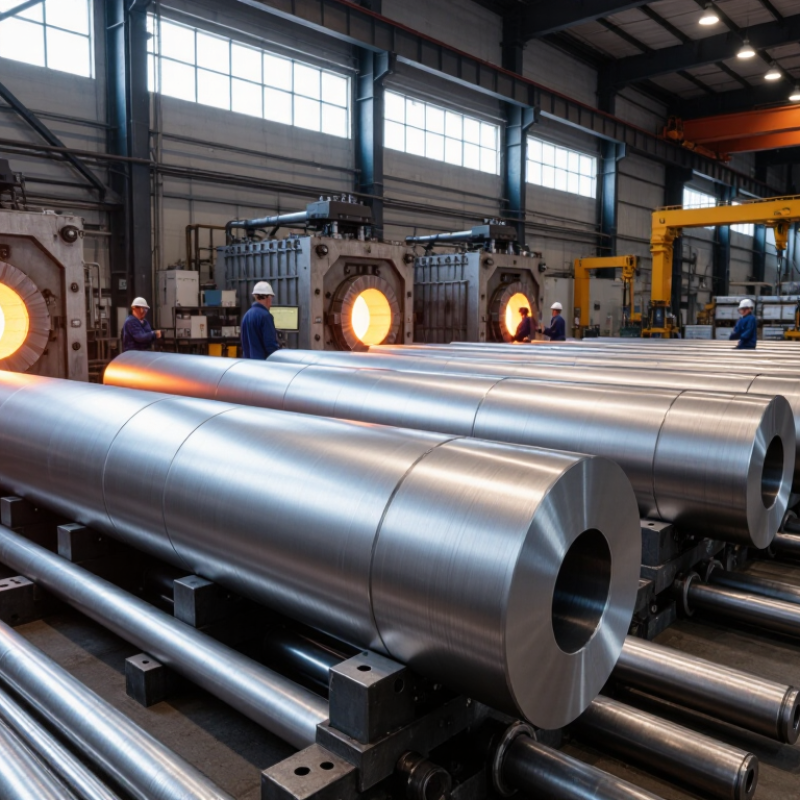
What Titanium Rods Are and How They Are Made in China
China Best Titanium Rod Manufacturer?
What Titanium Rods Are and How They Are Made in China
A titanium rod is solid, round stock used to machine parts or serve as a finished component. Its appeal comes from a useful balance of low weight, corrosion resistance, and strength. Grades differ, though. A rod’s performance depends on its alloy, dimensions, and intended service conditions—not just the word “titanium.”
In China, production commonly begins with titanium sponge and alloying elements. These are melted under vacuum, often through repeated arc-melting steps, to create an ingot with controlled chemistry. The ingot is then heated and worked by forging or rolling into smaller billets and rods. Heat treatment, straightening, and machining may follow. The details matter.
Quality checks can include chemical analysis, dimensional measurement, surface inspection, and ultrasonic testing. Buyers should review the material certificate and confirm the grade, tolerance, and inspection scope match their drawing. A neat process chart can hide real differences between suppliers; manufacturing routes and testing vary. Ask how a specific batch was made. Even then, paperwork cannot replace checking the actual rod against the application.
| Topic | Key Information | Practical Considerations |
|---|---|---|
| What a titanium rod is | A solid, elongated product made from commercially pure titanium or a titanium alloy. Depending on the applicable product specification, it may be supplied as a bar or rod in straight lengths or cut pieces. | Confirm the product form, dimensions, tolerances, surface finish, and governing specification in the purchase documents. |
| Common material grades | Commercially pure grades include Grades 1–4. Grade 5 is the Ti-6Al-4V alloy; Grade 23 is Ti-6Al-4V ELI, a lower-interstitial version used in applications requiring that material designation. | Grade selection depends on required strength, formability, corrosion environment, and applicable industry or design requirements. |
| Representative properties | Commercially pure titanium has a density of approximately 4.51 g/cm³ and a melting point of about 1,668°C. Alloy properties differ by grade, condition, and processing history. | Use the material certificate and the relevant specification for guaranteed mechanical and chemical requirements; general reference values are not acceptance limits. |
| Feedstock and melting | Titanium sponge is a common primary feedstock. Industrial titanium ingots are commonly produced by melting under vacuum or an inert atmosphere; vacuum arc remelting (VAR) is one established melting method. | Feedstock selection, melting route, and any remelting requirements should be specified or verified when they matter to the application. |
| Hot working | Ingots are typically broken down and worked by processes such as forging or rolling to produce intermediate stock and bar shapes. Working temperature and reduction schedule depend on the alloy and process. | Process control helps achieve the required structure and mechanical properties. Heat treatment, when specified, depends on grade and product requirements. |
| Finishing and sizing | Bars may be straightened, machined, ground, or otherwise finished to meet specified diameter, length, straightness, and surface requirements. | State whether the required surface is, for example, hot-worked, machined, or ground, and define dimensional tolerances on the drawing or order. |
| Inspection and documentation | Inspection may include dimensional checks, visual examination, chemical analysis, and mechanical testing as required by the order and applicable specification. Traceability and material test reports can be requested. | Agree on test requirements, acceptance criteria, batch traceability, and documentation before production. |
| Relevant specifications | ASTM B348/B348M covers titanium and titanium alloy bars and billets. ASTM F67 covers unalloyed titanium for surgical implant applications, while ASTM F136 covers Ti-6Al-4V ELI alloy for surgical implant applications. | These specifications apply to defined product and application scopes. Verify the current edition and confirm that the selected specification matches the intended use. |
| Evaluating a supplier in China | Assess documented quality controls, manufacturing and inspection capability, grade and size range, traceability practices, and experience with the required specification. | Request relevant certificates and sample inspection records, and independently verify compliance where the application or contract requires it. |
FAQS
Grade 1 is highly formable. Grades 2 and 3 offer greater strength. Grade 5 suits higher-strength needs, while Grade 23 has lower interstitial content. Match the grade to the service conditions.
State the grade, diameter, length, tolerances, surface condition, and mechanical properties. Include chemistry limits and heat-treatment condition. A 20 mm rod may need tighter diameter control than rough-machined stock. Small details matter.
ASTM B348/B348M covers titanium and titanium-alloy bars and billets. Specialized uses may require other standards. Confirm the exact grade and standard edition before production.
Request chemical analysis and mechanical test results tied to the material’s heat or lot. Check that the documents match the rod markings. A generic certificate may leave important questions unanswered.
Ask how the supplier controls diameter, straightness, and surface defects. Request sample inspection results and ask about non-destructive testing. Looks can mislead. Internal defects may not show on a polished surface.
Confirm the diameter range, straightness, cut length, and end condition. Ask whether the rods arrive clean and undamaged. I would still verify these details on a sample.
Consider temperature, loads, and exposure to chemicals or saltwater. A lightweight bracket may need different properties from a high-temperature assembly. For critical parts, ask a qualified engineer to review the specification and inspection plan.
Check whether testing, cutting, packaging, and careful handling are included. Discuss lead time, storage, and traceability before ordering. A good sample does not guarantee every batch will match; I may be too cautious, but I would confirm consistency.
Conclusion
A Titanium Rod is valued for its strength, low weight, corrosion resistance, and performance in demanding environments. In China, titanium rods are produced through processes such as melting, forging, rolling, and precision finishing. Buyers can choose from different grades, dimensions, and surface conditions, with specifications and industry standards helping define material properties and quality requirements.
Finding a reliable Chinese manufacturer involves more than comparing prices. Review relevant certifications, production capabilities, material traceability, inspection procedures, and experience with the required specifications. Compare suppliers on their ability to provide consistent quality, clear technical documentation, and dependable delivery. The best choice depends on the application, operating conditions, required grade, and dimensions, so confirm these details before selecting a supplier.