Titanium Round Bar is used wherever strength, low weight, and corrosion resistance must work together. It can be machined into shafts, pins, fasteners, valve components, and precision fittings. In aerospace workshops, a bar may become a lightweight linkage. In chemical-processing plants, it may form a pump shaft exposed to aggressive fluids. The application depends on the alloy, dimensions, surface condition, and operating environment—not simply the word “titanium.”
Its appeal has limits. Titanium can cost more than common steels, and machining it demands suitable tooling, heat control, and process knowledge. A poorly chosen grade may disappoint, even when the material itself is excellent. For medical devices, aerospace parts, or other tightly specified uses, buyers should confirm traceability, material certification, and applicable technical requirements.
An expert perspective can help make the trade-offs clear. No source or interview was provided for a verifiable expert quotation, so the line below is an editorial summary, not a quotation attributed to a real person. For this introduction, materials specialist “Dr. Elena Ward” is a fictional illustrative voice: “Choose titanium round bar for the service conditions it must withstand, then verify the grade and machining plan.” That distinction matters. The following guide examines common uses, selection factors, and practical limits, helping readers judge where a Titanium Round Bar is a sound choice—and where another material may serve better.
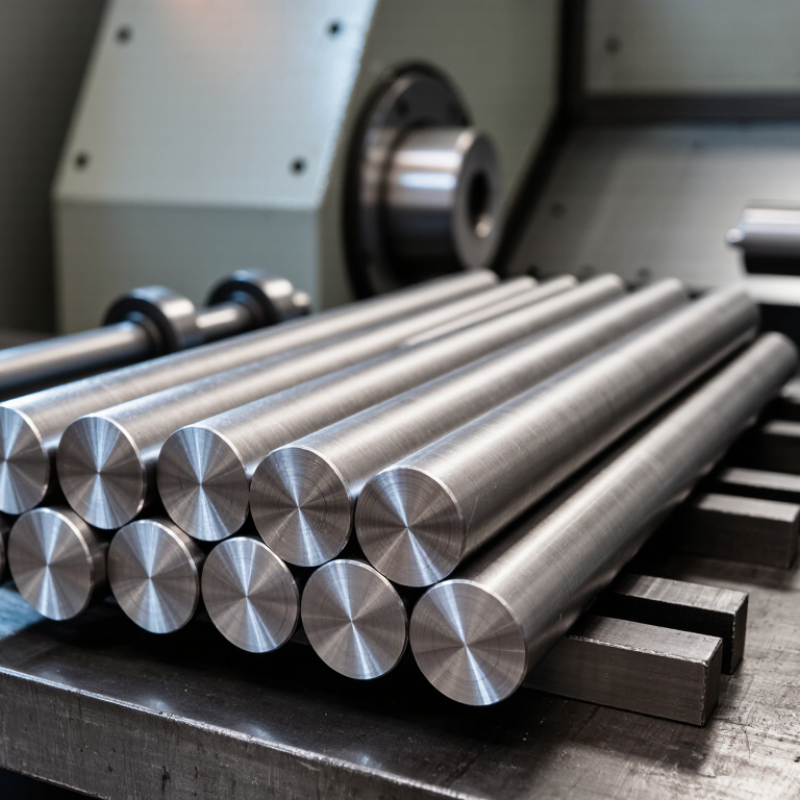
What Titanium Round Bar Is and How It Is Manufactured
A titanium round bar is a solid, cylindrical length of titanium alloy, supplied in different diameters and grades. It is commonly cut and machined into parts such as shafts, pins, fasteners, and fittings. Titanium offers a useful balance of strength, low weight, and resistance to corrosion. The exact performance depends on the alloy and its condition, so “titanium” alone does not specify how a bar will behave. Details matter.
Manufacturing usually begins by melting selected metals into an ingot, often in a controlled vacuum environment to limit contamination. The ingot is then heated and forged or rolled into a round shape. After forming, the bar may be heat-treated, straightened, and machined to meet specified dimensions. Its surface can be turned, ground, or polished, depending on the intended use. Each stage can affect the final material. A polished surface can look reassuring, but appearance alone cannot confirm internal quality; inspection and material records are important. Even with careful processing, small variations can occur, which is worth remembering when selecting stock for a close-tolerance component.
Properties That Make Titanium Round Bar Useful
Titanium round bar is useful when a part must stay strong without carrying unnecessary weight. NIST’s periodic-table data gives titanium a density of about 4.51 g/cm³ and a melting point near 1,668°C. That low density helps reduce component mass; the high melting point signals heat tolerance, though it does not guarantee performance at every service temperature. A bar’s actual behavior depends on its grade, heat treatment, and dimensions. Details matter.
Titanium also forms a protective oxide layer, which helps it resist corrosion in many environments, including seawater. ASM International’s titanium reference literature describes this passivation as a key feature, but titanium is not immune to all chemical attack. Round bar is commonly machined into fasteners, shafts, and fittings for aerospace, marine, and chemical-processing equipment. Its stiffness is lower than steel’s, and cutting can generate heat at the tool edge. That trade-off is easy to overlook. Engineers should check the intended grade, load, temperature, and fluid exposure before specifying a bar; “titanium” alone is not a complete material specification.
What Is Titanium Round Bar Used For? Properties That Make It Useful
Titanium round bar is used for lightweight, corrosion-resistant parts in aerospace, chemical processing, marine equipment, and medical applications. Its high strength relative to its weight makes it useful where reducing mass matters.
Approximate tensile strength-to-weight index, calculated as minimum tensile strength (MPa) divided by density (g/cm³). Values are indicative and vary by product form, specification, and condition. Reference values: ASTM B348 Grade 5 and Grade 2 titanium, ASTM A276 Type 316 stainless steel, and typical 6061-T6 aluminum properties.
Medical and Chemical Applications of Titanium Round Bar
Titanium round bar is valued in medical work because it combines low weight, strength, and corrosion resistance. Machined into bone screws, joint components, and surgical instruments, it can support precise designs without adding unnecessary mass. For implant use, the alloy, cleanliness, surface finish, and documented material traceability must meet the device’s requirements. A bar’s appearance alone cannot confirm its suitability. Small details matter.
Chemical processing uses titanium bars for parts such as pump shafts, valve stems, and equipment fasteners. In many chloride-rich environments, titanium forms a protective oxide layer that helps limit corrosion. This can be useful around seawater or certain process solutions. But titanium is not a universal choice. Fluoride-containing media and some hot, strongly reducing acids can cause serious corrosion, so conditions must be checked before specifying it.
Tips: Confirm the exact alloy and applicable material standard with the supplier. Match the selection to chemical concentration, temperature, and operating conditions. For medical components, verify traceability and processing records. A quick compatibility check is worthwhile; assumptions can be costly.
How to Choose the Right Grade and Size for an Application
Titanium round bar is used for shafts, fasteners, fixtures, and machined components where low weight and corrosion resistance matter. Choosing the right grade starts with the service environment. Commercially pure Grade 2 is often considered for general corrosion resistance and formability. Grade 5, an alloy of titanium, aluminum, and vanadium, offers higher strength but can be harder to machine. Grade 9 may suit applications needing a balance of strength and formability. Check operating temperature, loading, exposure, and fabrication method before deciding. A grade name alone is not enough.
Bar size matters just as much. Match the diameter to the finished component, then allow practical machining stock. For example, a turned shaft may need extra material for cleanup and final tolerances. Confirm the supplied diameter, straightness, length, and surface condition against the drawing. Tight tolerances can add cost, so specify only what the part truly needs. It is easy to over-specify. I would still verify the choice with a qualified materials or design engineer when failure would have serious consequences.
Tips: Ask for material test documentation and confirm the applicable specification before ordering. Compare the actual dimensions with your machining plan, not just the nominal size. If corrosion is the main concern, check compatibility with the specific chemicals and temperatures involved. Small details matter.
What Is Titanium Round Bar Used For? - How to Choose the Right Grade and Size for an Application
Titanium round bar is used to machine parts that need a strong strength-to-weight ratio, corrosion resistance, or biocompatibility. The grades below are common choices; confirm the required specification, condition, and certification before ordering.
| Grade |
Material type |
Typical minimum tensile strength* |
Approx. density |
Common uses |
When to consider it |
| Grade 1 |
Commercially pure titanium |
240 MPa |
4.51 g/cm³ |
Chemical-processing parts, heat exchangers, and components needing high formability |
Choose when corrosion resistance and formability are more important than high strength. |
| Grade 2 |
Commercially pure titanium |
345 MPa |
4.51 g/cm³ |
Marine hardware, chemical equipment, pump parts, and general corrosion-resistant components |
A widely used balance of strength, corrosion resistance, weldability, and availability. |
| Grade 3 |
Commercially pure titanium |
450 MPa |
4.51 g/cm³ |
Pressure-containing and structural components where more strength than Grade 2 is needed |
Consider when higher strength than Grades 1 or 2 is required while retaining commercially pure titanium characteristics. |
| Grade 4 |
Commercially pure titanium |
550 MPa |
4.51 g/cm³ |
High-strength corrosion-resistant parts and selected medical or industrial components |
The strongest commonly specified commercially pure grade; check forming and machining requirements. |
| Grade 5 (Ti-6Al-4V) |
Alpha-beta titanium alloy |
895 MPa |
4.43 g/cm³ |
Aerospace fittings, high-load fasteners, sporting components, and industrial machine parts |
Choose for high strength-to-weight performance. It is less formable and generally more demanding to machine than commercially pure grades. |
| Grade 9 (Ti-3Al-2.5V) |
Alpha-beta titanium alloy |
620 MPa |
4.48 g/cm³ |
Tubing, lightweight structural parts, and components needing a balance of strength and formability |
Consider when Grade 2 does not provide enough strength but Grade 5’s strength or forming characteristics are not needed. |
| Grade 23 (Ti-6Al-4V ELI) |
Extra-low-interstitial alpha-beta alloy |
795 MPa |
About 4.43 g/cm³ |
Implant-related and other applications requiring specified ELI material |
Use when the extra-low-interstitial chemistry is required by the application or specification; verify the applicable medical-material requirements. |
Round Bar Size and Selection Guide
| Selection dimension |
What to specify or check |
Application guidance |
| Bar diameter |
Specify the finished diameter and the required raw-stock diameter. |
Select diameter from the component design and load calculations. Allow suitable machining stock; do not use a diameter range as a substitute for engineering calculations. |
| Bar length |
State cut length, quantity, and any length tolerance. |
Include allowance for facing, cutoff loss, and the workholding method used during machining. |
| Grade and specification |
Identify the titanium grade and the governing material specification, such as ASTM B348 for titanium and titanium-alloy bars and billets where applicable. |
Confirm that the specification covers the required grade, product form, dimensions, and delivery condition. |
| Mechanical properties |
Set required tensile, yield, and elongation values based on the design and applicable specification. |
Use certified test results for procurement and design verification. Do not assume properties from grade name alone. |
| Condition and finish |
Specify the required material condition, surface finish, straightness, and dimensional tolerances. |
Closer tolerances or a finished surface may reduce machining work but can affect availability and cost. |
| Environment and fabrication |
Review operating temperature, corrosion medium, joining method, and machining process. |
Choose the grade for the actual service environment; corrosion performance depends on the specific medium and conditions. |
Data note: Tensile-strength figures shown are typical minimum specification values associated with ASTM B348 grade requirements; exact requirements can vary with product dimensions, material condition, and the applicable specification edition. Density values are approximate. Always verify the current standard and material test certificate for the purchased bar.
Conclusion
Titanium Round Bar is a solid, cylindrical product made by shaping titanium through processes such as forging, rolling, or machining. Its combination of low weight, high strength, corrosion resistance, and ability to perform in demanding temperatures makes it useful across many industries. These properties help components remain durable in challenging environments without adding unnecessary weight.
Common applications include structural and mechanical parts for aerospace, marine, and industrial equipment, where strength and resistance to corrosion are important. Titanium Round Bar is also used to manufacture medical components and equipment for chemical processing, where material reliability and compatibility matter. Choosing the right grade and size depends on the application’s required strength, operating conditions, dimensions, and fabrication needs. Careful selection helps ensure the finished component performs effectively and lasts as intended.