Featured Titanium Fasteners & Industrial Hardware
Precision-machined fasteners, flanges, and piping components manufactured to international engineering standards
Engineering Whitepaper: Metallurgical Analysis & Fastener Performance
In modern heavy engineering, chemical processing, marine propulsion, and high-performance automotive systems, threaded fasteners serve as structural linchpins. The transition from stainless steel (such as AISI 316L) or high-tensile alloy steel (Grade 8.8 / 10.9) to CE certified titanium flange bolts is driven by extreme structural requirements: maximum strength-to-weight ratio, immune resistance to chloride-induced pitting, and exceptional fatigue endurance under thermal cycling.
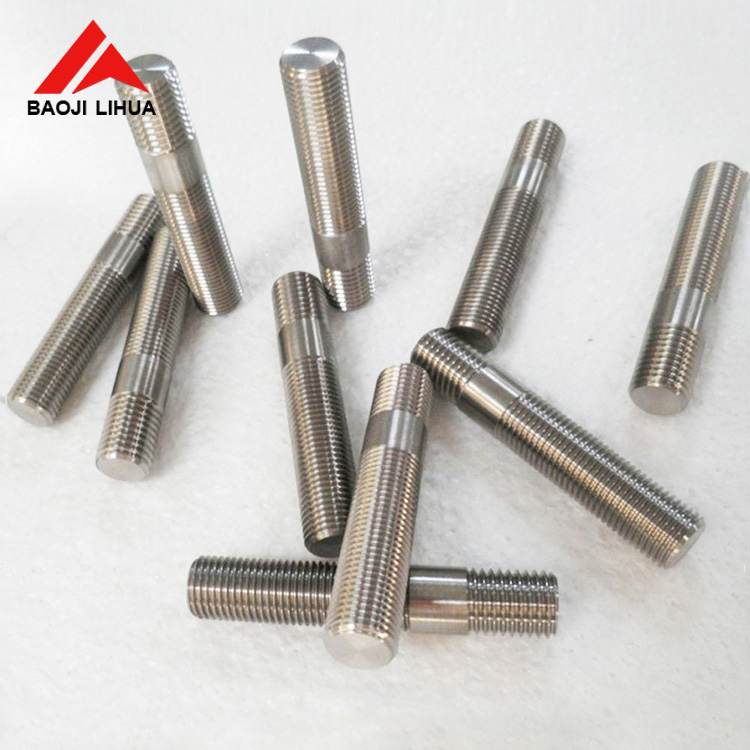
Titanium flange bolts feature an integrated washer head that distributes clamping force across a broader surface area, reducing localized surface pressure and eliminating the need for separate flat washers. When manufactured under strict quality control standards, such as DIN 6921, ISO 8100, or custom ASME engineering drawings, these fasteners prevent structural relaxation under intense vibrational stress.
Technical Information Gain: Unlike standard cut threads, high-integrity titanium flange bolts produced by Jovzi Titanium utilize precision cold-rolled threads after solution heat treatment. Rolling threads preserves continuous grain flow along the root radius, increasing fatigue resistance by up to 45% compared to machined threads.
Comprehensive Grade Comparison: Gr2 vs Grade 5 (Ti-6Al-4V) vs Gr7 / Gr12
Selecting the proper titanium grade requires balancing mechanical tensile properties with environment-specific corrosion thresholds. Below is an engineering overview of primary titanium grades utilized in industrial flange bolt fabrication:
| Titanium Grade | UNS / Standard | Tensile Strength (MPa) | Yield Strength (0.2% MPa) | Density (g/cm³) | Primary Industrial Applications |
|---|---|---|---|---|---|
| Grade 2 (CP-Ti) | UNS R50400 / ASTM B348 | ≥ 345 | 275 - 450 | 4.51 | Chemical processing vessels, marine piping, desalination plants, plating jigs. |
| Grade 5 (Ti-6Al-4V) | UNS R56400 / ASTM B348 | ≥ 895 | ≥ 828 | 4.43 | Aerospace structures, racing vehicle wheel/exhaust studs, subsea equipment. |
| Grade 7 (Ti-0.15Pd) | UNS R52400 / ASTM B348 | ≥ 345 | 275 - 450 | 4.51 | Reducing acid media, chlor-alkali production, high-temp crevice corrosion environments. |
| Grade 12 (Ti-0.3Mo-0.8Ni) | UNS R53400 / ASTM B348 | ≥ 483 | ≥ 345 | 4.51 | High-temperature heat exchangers, elevated strength chemical piping flanges. |
CE Certification & Quality Assurance Standards
For European engineering projects and global OEM safety-critical infrastructure, fasteners must comply with rigorous regulatory frameworks. Jovzi Titanium supplies CE-compliant fasteners engineered to satisfy the demanding criteria of the Pressure Equipment Directive (PED 2014/68/EU) and the Construction Products Regulation (CPR).
Full traceability is guaranteed from raw titanium sponge melting to final dimensional inspection. Each batch of titanium flange bolts is shipped with complete material documentation, including:
- EN 10204 3.1 Mill Test Certificates (MTC): Detailing exact chemical heat analysis (Hydrogen, Nitrogen, Oxygen, Carbon, Iron content) and physical mechanical test values (Tensile, Yield, Elongation, Reduction of Area).
- BaoTi Test Center Verification: Independent third-party metallurgical lab analysis confirming microstructural grain size, phase distribution, and freedom from alpha-case contamination.
- Non-Destructive Testing (NDT): Ultrasonic testing (UT) on raw billet stock and liquid penetrant testing (PT) on critical flange bolt radii to eliminate surface micro-cracks.
- Dimensional & Thread Pitch Tolerances: Verified using optical profile projectors and calibrated thread ring gages according to ISO 965 / 6g tolerance classes.
Future Sourcing & Procurement Trends for Titanium Components (2025–2030)
As global industrial supply chains pivot toward decarbonization, extreme efficiency, and extended lifecycle requirements, procurement strategies for specialized metals are evolving rapidly. Technical buyers and global sourcing directors should anticipate several core trends:
1. Rise of Green Hydrogen & Offshore Energy
The acceleration of green hydrogen electrolyzers (PEM type) and deepwater offshore wind installations is creating unprecedented demand for Grade 2 and Grade 7 titanium fasteners due to their resistance to wet chlorine, acidic media, and saltwater splash zones.
2. Shift to Anti-Galling Surface Coatings
Galling (friction welding during assembly) has historically posed challenges for titanium threads. Next-generation procurement specs require factory-applied micro-arc oxidation (MAO), Physical Vapor Deposition (PVD) DLC, or specialized MoS2 coatings to eliminate thread seizing without messy paste lubricants.
3. Closed-Loop Material Recycling
ESG directives mandate verified scrap recycling. Forward-thinking suppliers like Jovzi Titanium collect chips and turnings from precision CNC machining operations to re-melt in vacuum arc remelting (VAR) furnaces, lowering the carbon footprint per kilogram of finished bolt.
Advanced Manufacturing & Processing Capabilities
Producing aerospace-grade Grade 5 titanium bolts requires advanced machinery and metallurgical expertise. Unlike standard steel fasteners produced by high-speed automatic cold headers, titanium alloys work-harden rapidly and possess low thermal conductivity, demanding controlled manufacturing conditions:
Precision Hot Forging & Heading
Flange heads are hot-upset using induction heating within strict temperature windows (850°C - 950°C). Heating above the beta transus temperature causes grain coarsening, reducing fatigue strength. Precision temperature controls maintain equiaxed alpha-beta grain structures.
5-Axis CNC & Thread Rolling
Shank turning, flange facing, and drive socket broaching (Hexagon, Torx, or 12-Point) are performed on high-precision CNC turning centers. Threads are rolled on multi-ton hydraulic rolling mills, forcing titanium metal to flow plastically into thread profiles without breaking grain lines.
Enterprise Strengths & Global Export Leadership
Located in Baoji, Shaanxi, China ("Titanium Valley"), Jovzi Titanium Industry Co., Ltd. has established itself as an integrated manufacturer and international exporter of premium titanium mill products, custom forgings, and high-strength bolts since 2006.
Our facility spans modern machining workshops equipped with multi-axis CNC lathes, thread rolling machinery, surface treating tanks, and a dedicated quality control lab. Supported by a technical engineering team including 4 senior engineers and 5 intermediate metallurgical specialists, we execute OEM projects from drawing approval to final delivery.
Baoji Supply Chain Integration
Direct proximity to primary titanium sponge smelters and vacuum arc melting infrastructure ensures raw material availability, lower logisitical overhead, and competitive cost-per-kilogram pricing.
Custom Engineering & OEM
Full support for non-standard bolt geometries, special thread pitches (e.g., fine pitch M12x1.25), hollow weight-reduction holes, drilled safety-wire heads, and customized anodized finishes.
Global Logistics & Door-to-Door
Streamlined shipping under EXW, FOB, CFR, CIF, DDP, and DDU terms via express, air freight, or sea freight with seaworthy wooden cases and protective thread sleeves.