ISO 9001 Certified Titanium Manufacturer · Baoji, China · Since 2006 [email protected]
ISO 9001:2015 Registered Baoji Mill Partner

China Wholesale Titanium Fasteners Manufacturer & Factory

Global engineering whitepaper on aerospace, motorsport, and industrial-grade titanium fasteners: metallurgical integrity, CNC cold-forged thread profiles, DIN/ASME compliance, and lifecycle procurement optimization.

Factory Inventory & Precision Offerings

Featured Titanium Fasteners, Components & Bio-Grade Stock

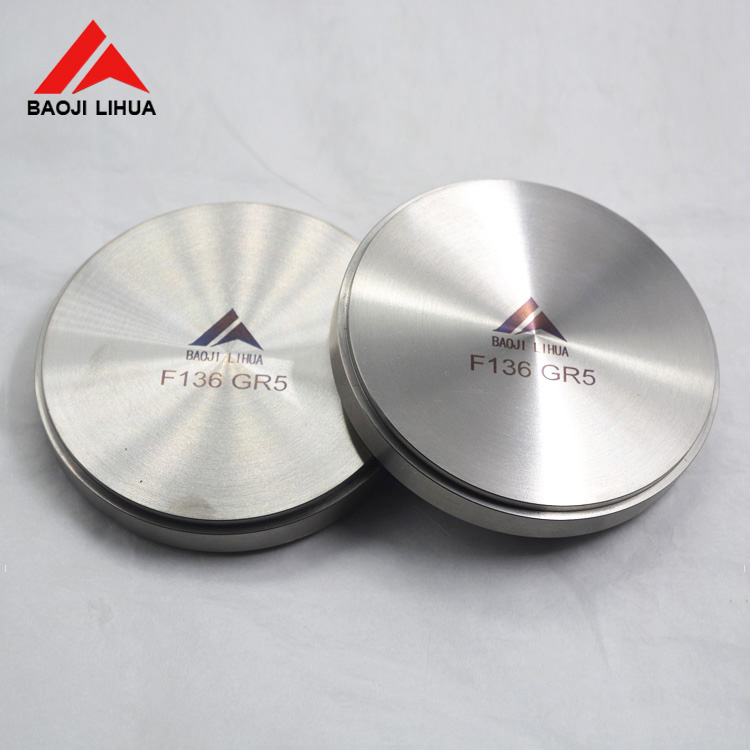
Direct manufacturer supplies from Baoji, China's Titanium Valley. Fully certified to ASTM F136, ASTM B348, ASTM B338, and ASTM B363 standards with complete EN 10204 3.1 mill test reports.

2006EST.
Industrial Heritage
100TONS
Annual Mill Capacity
895MPA
Gr5 Tensile Strength
100%
EN 10204 3.1 Traceability
Procurement Engineering Whitepaper

Metallurgical Fundamentals of Wholesale Titanium Fasteners

Why leading aerospace, hypercar motorsport teams, and offshore chemical operators replace stainless steel (304/316) and high-tensile 10.9/12.9 alloy steels with precision-machined titanium fasteners.

Procuring industrial fasteners from a direct manufacturer in China requires an exhaustive metallurgical understanding of titanium alloys. As modern high-stress assemblies face dual demands of mass minimization and extreme galvanic or environmental corrosion resistance, titanium fasteners have shifted from an aerospace-exclusive luxury to a standard necessity in EV battery trays, high-performance aftermarket motorsport, subsea oil and gas valves, and chemical processing heat exchangers. At Jovzi Titanium Industry Co., Ltd. (established 2006 in Baoji, China's "Titanium Valley"), our engineering division operates at the intersection of material science and multi-axis CNC manufacturing to produce fasteners that withstand cyclic dynamic shock and severe corrosive environments.

The primary performance driver of titanium fasteners is their exceptional strength-to-weight ratio. Grade 5 titanium (Ti-6Al-4V, UNS R56400) provides a minimum tensile yield of 828 MPa and an ultimate tensile strength exceeding 895 to 1000 MPa, comparable to Class 10.9 steel fasteners, yet it possesses a density of merely 4.43 g/cm³—a roughly 45% reduction in deadweight compared to carbon steel (7.85 g/cm³). Concurrently, the spontaneous creation of a stoichiometric, self-healing titanium dioxide (TiO₂) passive layer gives titanium hardware near-infinite immunity to aqueous chlorides, hypochlorites, wet chlorine, and marine spray environments where austenitic stainless steels (such as 316L) routinely suffer from catastrophic pitting and crevice cracking under stress.

Grade & UNS Alloy Chemistry Min. Yield (MPa) Tensile (MPa) Elongation (%) Core Industrial Usage
Gr 1 (R50250) Commercially Pure (CP Ti) 170 240 24% Deep-drawn gaskets, blind flanges, light-stress chemical washers
Gr 2 (R50400) Commercially Pure (CP Ti) 275 345 20% Exhaust system studs, chemical piping bolts, plating jigs
Gr 5 (R56400) Ti-6Al-4V (Alpha-Beta) 828 895–1000 10% Wheel lug bolts, brake caliper bolts, aerospace structural studs
Gr 5 ELI (R56401) Ti-6Al-4V Extra Low Interstitial 795 860 10% ASTM F136 surgical bone screws, dental implants, cryogenic fasteners
Gr 7 (R52400) Ti-0.15Pd (Palladium Alloy) 275 345 20% Reducing acid fasteners, chlor-alkali autoclaves, brine manifold bolts
Gr 12 (R53400) Ti-0.3Mo-0.8Ni 345 483 18% Elevated temperature chemical reactors, seawater heat exchangers

However, purchasing engineers must recognize that raw alloy chemistry alone does not guarantee bolt longevity. The crucial factor lies in the thread forming process. Budget machine shops cut threads via turning inserts, which severs the longitudinal grain boundaries of the drawn titanium bar, establishing severe microscopic notch sensitivity that induces catastrophic shearing under fatigue loads. In contrast, Jovzi Titanium uses hot-heading or precision cold-heading paired with cylindrical die thread rolling. This plastically deforms the grain flow along the root and crest contours of the thread, inducing favorable compressive residual stresses and boosting fatigue cycle life by more than 300% to 500% compared to cut threads.

Strategic Procurement Intelligence

Future Procurement & Engineering Trends in Titanium Hardware

Key shifts transforming global supply chains, international trade standards, and metallurgical manufacturing from 2025 to 2030.

Hyper-Lightweighting in E-Mobility & UAM

The acceleration of 800V electric vehicle architectures and Urban Air Mobility (eVTOL) aircraft demands aggressive mass reduction. Engineers are replacing un-sprung rotating steel hardware with Grade 5 Titanium lug bolts and rotor fasteners to save up to 2.5 kg per wheel hub, lowering rotational inertia and directly extending battery range and suspension responsiveness.

Green Hydrogen & CCUS Severe Service

Proton Exchange Membrane (PEM) electrolyzers and Carbon Capture, Utilization, and Storage (CCUS) facilities expose bolted joints to acidic condensates, high pressures, and atomic hydrogen embrittlement. Demand for Palladium-stabilized Grade 7 and Molybdenum-Nickel Grade 12 fasteners is surging due to their extreme crevice corrosion resistance in hot reducing brines.

Digital DPP & Anti-Galling Surface Nano-Layers

Procurement teams now enforce full digital lifecycle traceability. Modern requests mandate heat-lot bar codes linked directly to vacuum-arc remelt (VAR) ingot chemistry. Simultaneously, physical vapor deposition (PVD), micro-arc oxidation (MAO), and diamond-like carbon (DLC) coatings have resolved titanium's historical thread galling challenges without messy pastes.

Enterprise Core Competencies

Why Global Procurement Heads Partner With Jovzi Titanium

Eliminate intermediary markup, mitigate non-conformance risks, and access factory-direct metallurgical testing from Baoji, Shaanxi.

Baoji Titanium Valley Hub

Situated in China's core titanium industrial cluster, we secure high-purity sponge, vacuum-arc melting capacity, and raw stock at localized cost efficiencies that trading companies cannot replicate.

Senior Engineering Oversight

Led by 4 senior and 5 intermediate metallurgical engineers with 19+ years of foreign export history, our engineering team audits chemical stoichiometry, grain size, and mechanical tolerances prior to batch release.

BaoTi Center Verification

Beyond our ISO 9001 internal laboratory checks, every export container can be independently verified and cross-tested by the nationally recognized BaoTi Test Center, guaranteeing zero scrap rates.

Full Turnkey Customization

From complex DIN 912 socket caps, 12-point flange heads, and race-spec drilled heads to vivid PVD anodization (burnt blue, gold, purple, black), we deliver custom drawings to final parts within tight tolerances (±0.01mm).

Procurement & Engineering FAQ

Frequently Asked Questions by Industrial Sourcing Teams

Detailed technical and commercial answers addressing metallurgical parameters, minimums, inspection protocols, and logistics.

How do you prevent thread galling (cold welding) in titanium bolt installations?
Titanium has a relatively low modulus of elasticity (~110 GPa for Grade 5 vs 210 GPa for steel) and high friction coefficient, making bare titanium threads susceptible to galling under high preloads. Jovzi mitigates this through three distinct manufacturing paths: (1) precision thread rolling to eliminate surface asperities, (2) factory application of dry-film MoS2 (molybdenum disulfide) lubricants or micro-arc oxidation coatings, and (3) specialized PVD or anodizing finishes that generate a lubricious barrier layer. We also provide engineering torque-tension charts so assemblers avoid exceeding yield points during installation.
What quality assurance documents accompany an export shipment of fasteners?
Every shipment includes an authentic EN 10204 Type 3.1 Inspection Certificate displaying specific melt heat numbers, quantitative chemical composition (including interstitial elements: Carbon, Oxygen, Nitrogen, Hydrogen, and Iron), tensile strength, yield strength, elongation, and hardness test results. On request, we provide third-party testing endorsements from the authoritative BaoTi Test Center, PMI spectral verification, ultrasonic inspection certificates (AMS 2631 / ASTM E1444), and full optical comparator dimensional measurement reports.
What are the MOQ thresholds and sample production lead times?
For standard catalog items such as DIN 912 socket head screws, DIN 6921 flange bolts, and standard titanium wheel studs in Grade 5, our MOQ ranges from 100 to 200 pieces. For non-standard custom fasteners manufactured to CAD drawings (STEP, DWG, PDF), initial prototype tooling batches start from 50 to 100 pieces. Custom rapid prototyping lead times average 7 to 12 working days, while bulk container production is typically completed within 20 to 28 days depending on raw material stock and surface treatment requirements.
Why should an engineer select rolled threads over CNC single-point turned threads?
Single-point CNC machining cuts across the metal's natural metallurgical grain boundaries, creating micro-notches, stress concentration risers, and micro-tears along the thread flank. Rolled threads, produced by rotating planetary or reciprocating flat carbide dies, cold-work the metal without cutting. This preserves the uninterrupted grain flow parallel to the flank profile, increases surface hardness through work hardening, reduces flank surface roughness down to Ra 0.4 µm, and elevates dynamic shear fatigue life by up to 300%. For motorsport, aerospace, and high-vibration applications, rolled threads are non-negotiable.
What Incoterms and international currency settlements are supported?
We handle global door-to-door delivery and commercial trade terms including EXW (Ex Works), FOB (Shanghai, Tianjin, Qingdao, Shenzhen), CFR, CIF, CIP, FCA, and DDP (Delivered Duty Paid via air express or sea freight, where Jovzi manages customs clearance, tariff payments, and local ground delivery to your warehouse). We accept settlements in USD, EUR, AUD, GBP, HKD, and RMB via Telegraphic Transfer (T/T), confirmed Irrevocable Letters of Credit (L/C at sight), and secure platform escrow.
Can Jovzi match specific OEM automotive or aerospace fastener specifications?
Yes. Jovzi manufactures directly to global automotive, aerospace, and petrochemical standards, including DIN (DIN 912, DIN 933, DIN 931, DIN 7991), ISO (ISO 4762, ISO 7380), ASME/ANSI (ASME B18.2.1, B18.3), and aerospace AMS specifications. We routinely manufacture specialized lightweight variations featuring deep pocketing, center cross-drilling for safety lock-wires, torx-drive (6-lobe) sockets, and 12-point bi-hex head geometries engineered to OEM client drawings.
Request an Engineering Consultation & Factory Quote

Connect directly with our metallurgy and machining engineers in Baoji. Send us your CAD drawings or bill of materials for review and rapid commercial quotation within 8 hours.

  • Standard: DIN / ISO / ASME / ASTM
  • Grades: Gr1, Gr2, Gr5 (Ti-6Al-4V), Gr7, Gr12
  • Thread Rolling: M2 to M64, 1/4" to 2-1/2"
  • Certificates: EN 10204 3.1 & BaoTi Testing

Direct Factory Engineering Desk

Talk to our senior specialists regarding custom prototypes, material selection, and tiered wholesale pricing.

Inquire Now