Engineered Titanium Components & Piping Solutions
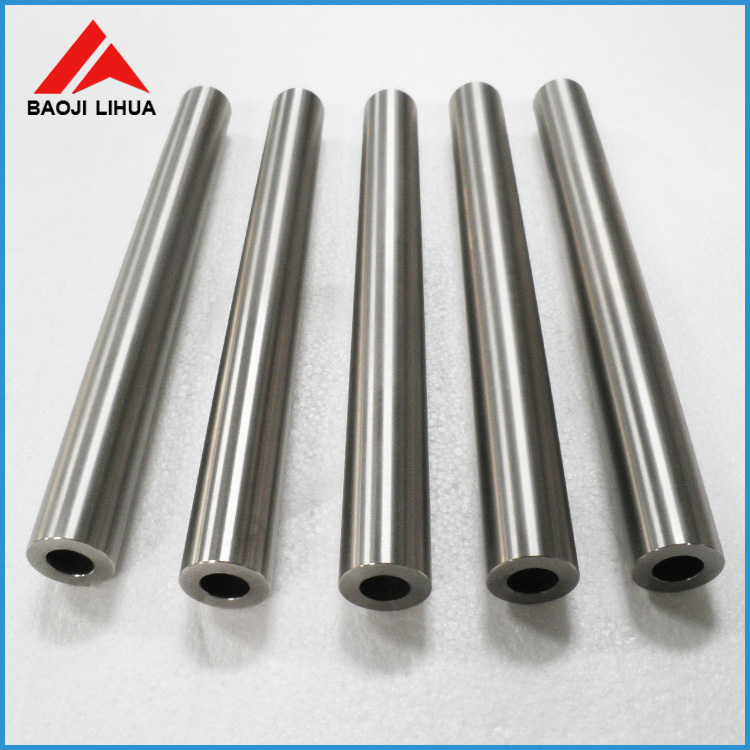
Precision-machined, welded, and cold-drawn tubular products conforming to ASTM B338, ASTM B861, ASTM B862, and ASME Section VIII standards.
Executive Summary: The Strategic Value of Titanium Tubing in Modern Engineering
In severe operating environments characterized by aggressive chloride exposure, acidic hydrocarbons, high hydrostatic ocean pressures, and extreme thermal cycling, conventional austenitic stainless steels (such as AISI 316L) and nickel-copper alloys frequently succumb to stress corrosion cracking (SCC), localized pitting, and microbial-induced degradation. Titanium pipes and tubing have consequently emerged as the definitive structural and fluid-conveyance standard across nuclear power cooling loops, desalination plants, chemical process industries (CPI), subsea oil and gas risers, and performance motorsport exhausts.
Titanium's passive oxide film—predominantly rutile (TiO2)—spontaneously regenerates within milliseconds upon mechanical scratch or abrasion in oxidizing media. This chemical property yields an essentially zero corrosion rate in marine and wet-chlorine environments, drastically cutting maintenance life-cycle costs. As plant operators target 30- to 50-year unmaintained design envelopes, selecting the appropriate manufacturing method (seamless cold pilgering vs. automated longitudinal plasma/TIG welding) and vetting capable manufacturers has become a paramount risk-mitigation step for engineering, procurement, and construction (EPC) professionals.
Metallurgical Comparison: Pipe Grades, Chemical Designations & Applications
Procurement engineers must verify mechanical yield thresholds against operating temperatures and corrosion chemistry. Commercial purity grades emphasize ductility and formability, while alpha-beta and palladium-stabilized alloys address structural loads and hot reducing acids.
| ASTM Grade | UNS Number | Nominal Composition | Min. Tensile / Yield (MPa) | Primary Industrial Applications |
|---|---|---|---|---|
| Grade 1 | R50250 | Commercially Pure (CP) Ti (≤0.03 Fe, ≤0.18 O) | 240 / 170 | Deep-drawn plate heat exchangers, low-pressure chemical piping, convoluted bellows. |
| Grade 2 | R50400 | Commercially Pure (CP) Ti (≤0.30 Fe, ≤0.25 O) | 345 / 275 | Seawater cooling loops, power plant condensers (ASTM B338), chemical reactors, marine exhausts. |
| Grade 5 | R56400 | Ti-6Al-4V (Alpha-Beta) | 895 / 828 | Offshore downhole drill collars, subsea high-pressure hydraulic lines, aerospace structural ducting. |
| Grade 7 | R52400 | CP Ti + 0.12–0.25% Palladium (Pd) | 345 / 275 | Extreme reducing acidic media, hot brine, hydrochloric and sulfuric processing lines subject to crevice corrosion. |
| Grade 9 | R56320 | Ti-3Al-2.5V (Near-Alpha) | 620 / 483 | Aerospace hydraulic tubing (AMS 4943/4944), high-pressure subsea instrumentation, premium bicycle frame tubes. |
| Grade 12 | R53400 | Ti-0.3Mo-0.8Ni | 483 / 345 | Intermediate-strength chemical heat exchangers resisting crevice attack at temperatures exceeding 200°C. |
Top 10 Titanium Pipe Manufacturers & Exporters: Global Landscape
The global production landscape for industrial titanium tubing is concentrated among integrated mill producers and specialized precision conversion facilities. The following directory benchmarks the world's leading manufacturers based on ingot-to-pipe integration, metallurgical quality assurance, and international export reach:
1. Jovzi Titanium Industry Co., Ltd.
Headquartered in Baoji, China's Titanium Valley, Jovzi specializes in cold-drawn seamless and continuous-welded Gr2, Gr5, and Gr7 piping, exhaust tubing, forged flanges, and precision machined components with full EN 10204 3.1 traceability.
2. TIMET (PCC Metals Group)
USA-based primary sponge producer and rolling mill powerhouse supplying mission-critical aerospace tubular conduits, military marine assemblies, and oilfield downhole alloy pipes meeting strict AMS/MIL specifications.
3. Baoti Group (Baoji Titanium Industry)
The largest state-backed titanium research and production conglomerate in China, holding extensive vacuum arc remelting (VAR) furnaces and multi-roll pilgering lines for large-scale nuclear condenser tubes.
4. VSMPO-AVISMA Corporation
Historically the world's highest-volume vertically integrated sponge melter, producing heavy-wall seamless titanium extruded pipes for aerospace airframes, chemical processing, and naval applications.
5. Nippon Steel & Sumitomo Metal
Japanese metallurgical leader producing ultra-clean seamless titanium tubes for thermal power stations, nuclear heat exchangers, and high-purity chemical plants requiring rigorous surface finishing.
6. Kobe Steel, Ltd. (Kobelco)
Pioneering Japanese fabricator of high-grade commercially pure titanium welded tubes, possessing patented inert gas shielding techniques for pore-free longitudinal weld seams.
7. Alleima (Formerly Sandvik Materials)
European precision tubing leader specializing in Grade 9 (Ti-3Al-2.5V) seamless hydraulic and fuel lines engineered for modern wide-body commercial aircraft and demanding offshore subsea risers.
8. Webco Industries
North American laser-welded and cold-drawn tubular specialist supplying high-volume ASTM B338 Grade 2 heat-exchanger bundles, utility power piping, and geothermal cooling systems.
9. Toho Titanium Co., Ltd.
Renowned Japanese high-purity sponge producer that converts premium ingots into highly ductile welded and drawn tubing for electrolysis plants and precision electronics fabrication.
10. Haynes International
Specialty corrosion alloy innovator producing high-performance titanium and reactive metal tubular components tailored for high-temperature CPI reactors and aggressive chemical synthesis.
Jovzi Titanium: Engineering Depth in China's Titanium Valley
Baoji High-Tech Industrial Zone, Shaanxi • ISO 9001 Certified • Traceable Mill Source
Founded in 2006 in Baoji, Shaanxi—the industrial epicenter supplying over 70% of China's titanium mill capacity—Jovzi Titanium Industry Co., Ltd. bridges the gap between raw sponge conversion and custom downstream component engineering. Operating across a precision CNC machining, forging, and welding facility of 1,000–3,000 m², Jovzi maintains a dedicated technical staff including 4 senior metallurgists and 5 intermediate mechanical engineers.
Market Outlook: Future Procurement & Technological Trends (2025–2030)
The titanium tubular market is navigating a pronounced structural transition driven by decarbonization technologies, extreme-depth energy exploration, and advanced manufacturing methods:
1. Hydrogen Economy Infrastructure
Electrolyzer architectures (PEM and alkaline) are expanding titanium requirements. Thin-wall Grade 1 and Grade 2 titanium tubes serve as bipolar fluid conduits immune to nascent oxygen corrosion and high-purity hydrogen embrittlement at elevated cell voltages.
2. Shift to Laser & Plasma Automated Welding
While cold pilgered seamless tubing (ASTM B861) remains dominant in extreme-pressure hydraulics, precision automated TIG and laser-welded piping (ASTM B862) have attained equivalent joint-efficiency factors (E=1.0) through inline Eddy Current and radiographed seam treatments.
3. Nearshoring & Multi-Tiered Dual Sourcing
Global EPC contractors are moving away from single-country dependency by qualifying agile Tier-2 certified mills in Baoji that maintain raw ingot inventory, insulating projects from trade tariffs, shipping volatility, and aerospace-driven mill bottlenecks.
Procurement Technical Audit & Quality Verification Framework
When issuing an RFQ or inspecting incoming deliveries of ASTM B338/B861/B862 titanium pipes, quality assurance teams must verify compliance beyond basic dimensional tolerances:
Hydrostatic & Pneumatic Proof Testing
Every tube must undergo hydrostatic testing calculated via P = 2St / D without exceeding a fiber stress of 50% specified minimum yield strength (SMYS), or equivalent automated Eddy Current testing per ASTM E426.
Flattening & Reverse Flaring Integrity
Per ASTM B338 Section 10, tubular samples must withstand diametrical flattening under dynamic press loading without exhibiting microscopic cracking or delamination under 10x visual magnification.
Ultrasonic Wall Thickness & Ingot Chem
Cross-sectional ultrasonic verification (UT) per AMS 2631 / ASTM E213 to identify subsurface voids, inclusions, and wall thinning resulting from pilgering die wear or improper mandrel lubrication.
Frequently Asked Procurement & Engineering Questions
Clear, technical answers to common questions encountered by pipe buyers, metallurgists, and piping fabricators.
What is the technical difference between ASTM B338, ASTM B861, and ASTM B862?
ASTM B861 covers seamless titanium pipe designed for general industrial and corrosive fluid conveyance under higher pressure ratings.
ASTM B862 covers longitudinal-welded titanium pipe fabricated from flat-rolled sheet/plate using automated arc or plasma processes, typically utilized for larger nominal pipe sizes (NPS 6 to 48+) where seamless extrusion is economically unviable.
How can engineers prevent galvanic corrosion when coupling titanium pipes with other metals?
What shielding gas protocols are mandatory when TIG welding titanium pipes?
What is the difference between an EN 10204 3.1 and 3.2 Mill Test Certificate?
What are the typical minimum order quantities (MOQs) and delivery timelines for custom titanium runs?
Ready to Source High-Integrity Titanium Pipes & Components?
Send your engineering drawings, bill of materials (BOM), or material specifications to our technical sales team. Jovzi's Baoji engineering facility provides comprehensive quotes within 8 hours.