
Industry Whitepaper: The Strategic Transition to Titanium Socket Head Cap Screws
Across high-stress mechanical engineering, motorsport, hyperbaric subsea exploration, and high-purity chemical processing, conventional class 8.8, 10.9, or austenitic 304/316 stainless steel hex socket head cap screws increasingly hit physical and thermodynamic barriers. Modern industrial applications demand high power-to-weight ratios, absolute galvanic durability against aggressive chlorates and oceanic brines, and dimensional stability through intense thermal cycling. Titanium socket head screws (governed principally by DIN 912, ISO 4762, and ASME/ANSI B18.3 standards) have decisively evolved from niche aerospace exotics into the benchmark fastening solution across competitive manufacturing.
As a specialized Chinese manufacturer located in the epicenter of the global titanium supply chain—Baoji, Shaanxi (historically recognized as China's Titanium Valley)—Jovzi Titanium Industry delivers metallurgical integration that bridges raw sponge titanium processing with micrometer-level multi-axis CNC machining. Understanding why and how to procure titanium fasteners requires an in-depth examination of the mechanical metallurgy, cold heading versus precision CNC machining dynamics, and total lifetime cost analyses.
Metallurgical Comparison & Engineering Material Specifications
The primary barrier procurement engineers face during international RFQ execution is identifying the exact titanium alloy grade suitable for their structural vectors. Titanium socket head screws are manufactured primarily in two metallographic conditions: commercially pure unalloyed alpha titanium (Grade 2) and duplex alpha-beta structural titanium alloys (Grade 5 / Ti-6Al-4V and Grade 5 ELI / ASTM F136).
| Material Standard | Alloy Composition | Min. Yield Strength (Rp0.2) | Tensile Strength (Rm) | Primary Industrial Use-Case |
|---|---|---|---|---|
| Gr2 (CP Titanium) | Unalloyed Ti (O ≤ 0.25%, Fe ≤ 0.30%) | 275 MPa | 345 - 450 MPa | Chemical processing, electroplating jigs, seawater cooling conduits |
| Gr5 (Ti-6Al-4V) | Ti-6% Al, 4% V (UNS R56400) | 828 MPa | ≥ 895 - 1050 MPa | Motorsport racing discs, aerospace, structural automotive chassis |
| Gr5 ELI (ASTM F136) | Ti-6% Al, 4% V Extra Low Interstitial | 795 MPa | ≥ 860 MPa | Surgical instruments, orthopedic implants, cryogenic pressure housings |
| Gr7 (Ti-0.15Pd) | Unalloyed Ti + 0.15% Palladium | 275 MPa | ≥ 345 MPa | Aggressive reducing acid environments, severe crevice corrosion areas |
Critical Manufacturing Process: Machined vs. Thread-Rolled Fasteners
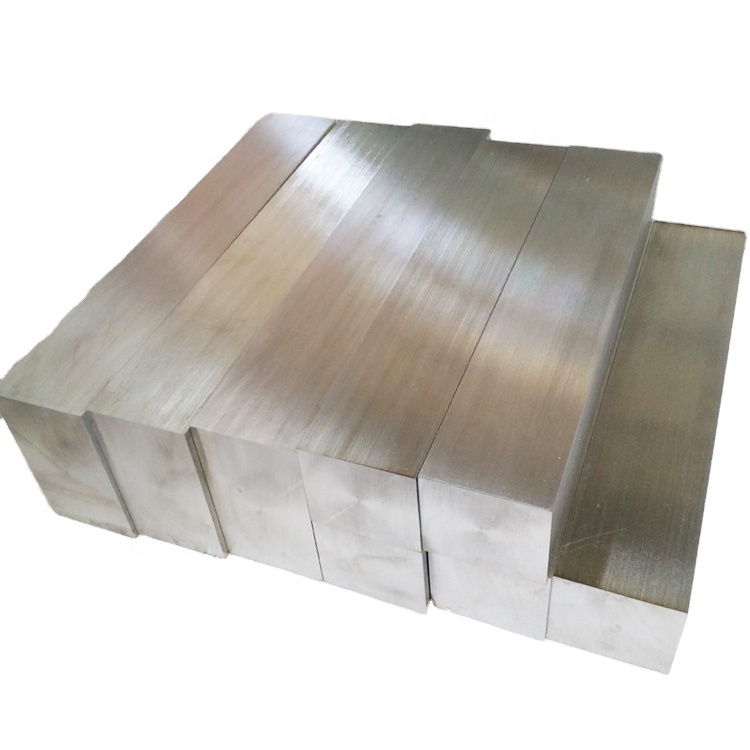
When selecting a Chinese factory or exporter for titanium socket head screws, procurement teams must evaluate the underlying manufacturing methodology. Lower-tier manufacturers produce DIN 912 screws exclusively via subtractive turning on multi-axis CNC swiss lathes, cutting the external thread profile directly into the billet. While this yields acceptable dimensional fidelity for low-load static fixtures, it severely interrupts the continuous longitudinal metallurgical grain flow of the titanium bar stock.
At Jovzi Titanium, our production architecture implements specialized hot/warm heading for the internal hex socket followed by cylindrical thread rolling under precise, controlled hydraulic feeds. Cold and warm thread rolling compresses the alpha-beta grain boundaries along the thread roots and flanks, generating residual compressive surface stresses. This metallurgical work-hardening enhances thread shear strength by up to 22% and increases dynamic fatigue resistance by more than 300% under severe harmonic vibration—a critical consideration for automotive suspension components, performance brake caliper mounts, and marine propulsion linkages.
Future Procurement Trends for Titanium Fasteners (2025–2030)
The global industrial hardware ecosystem is experiencing significant paradigm shifts that directly impact how engineering departments source titanium socket head screws:
1. Near-Net-Shape Raw Material Processing and Zero-Scrap Mandates
Given the rising costs of master alloy constituents (vanadium-aluminum master alloys and high-purity electrolytic sponge titanium), advanced manufacturers are shifting toward precision rotary swagging and near-net-shape hot upsetting. This manufacturing trend minimizes material removal ratios, allowing factories in Baoji to mitigate volatile pricing fluctuations and ensure predictable long-term contract pricing for multi-year industrial programs.
2. Advanced Surface Functionalization: DLC and Micro-Arc Oxidation
While native titanium exhibits spontaneous passivation forming an inert TiO2 oxide layer, its tribological vulnerability has historically been adhesive galling under dry mechanical threading against mating titanium nuts or tapped housings. The industry is rapidly pivoting toward specialized anti-galling PVD coatings, Diamond-Like Carbon (DLC), and electro-chemical micro-arc oxidation (MAO). These nano-coatings provide low surface friction coefficients (μ < 0.15) while enabling vibrant, non-fading aesthetic color matching (burnt titanium, anodized cobalt, gold, and stealth black) favored in premium performance markets.
3. Stringent End-to-End ESG and Supply Chain Verification
Global original equipment manufacturers (OEMs) now require verifiable digital footprints. Sourcing titanium screws from top-tier Chinese exporters requires authenticated EN 10204 3.1 Mill Test Certificates detailing melt furnace heat numbers, chemical composition validation (ICP-OES spectrometry), hydrogen gas content analysis via inert gas fusion, and accredited tensile testing reports issued by internationally recognized laboratories such as the National Center for Quality Supervision and Inspection of Titanium Products (BaoTi Test Center).
Why Global Procurement Teams Partner with Jovzi Titanium
Situated in the High-Tech Development Zone of Baoji, Shaanxi, Jovzi Titanium Industry Co., Ltd. has integrated localized material accessibility with international export excellence since 2006. With an engineering team comprising 4 senior and 5 intermediate metallurgical engineers, we maintain end-to-end quality jurisdiction spanning sponge classification to final ultrasonic and thread-pitch verification.
Epicenter of Titanium Valley
Direct supply line integration with Baoji's primary smelting mills ensures 100% virgin sponge titanium ingot feedstock, free from unauthorized scrap blends.
Rigorous Metallurgical QA
Fully compliant with ISO 9001 quality management systems. Every manufacturing run receives complete 100% dimensional, optical sorting, and MTC 3.1 verification.
Global Logistical Flexibility
Exporting to over 45 countries with an 81–90% export ratio. We support multi-currency clearing, rapid sample dispatch, and complete DDP/CIF/FOB terms.
Frequently Asked Questions (FAQ) - B2B Sourcing Guide
How do I prevent galling when installing titanium socket head screws?
What is the difference between DIN 912 and ISO 4762 for titanium screws?
What is your minimum order quantity (MOQ) and production lead time?
Can Jovzi provide EN 10204 3.1 Mill Test Certificates and third-party laboratory reports?
Can you manufacture titanium socket head screws with custom drive configurations and head shapes?
Connect with China's Premier Titanium Fastener Manufacturer
Whether you require standard DIN 912 titanium socket head screws or precision custom-machined motorsport components, our engineering sales group delivers detailed technical quotes within 8 working hours.
Contact Us