Featured Industrial & Exhaust Components
Full traceability with EN 10204 3.1 certification. Designed for motorsport fabricators, cleanroom vacuum equipment builders, and high-spec thermal engineers across San Jose, Santa Clara, and Silicon Valley.
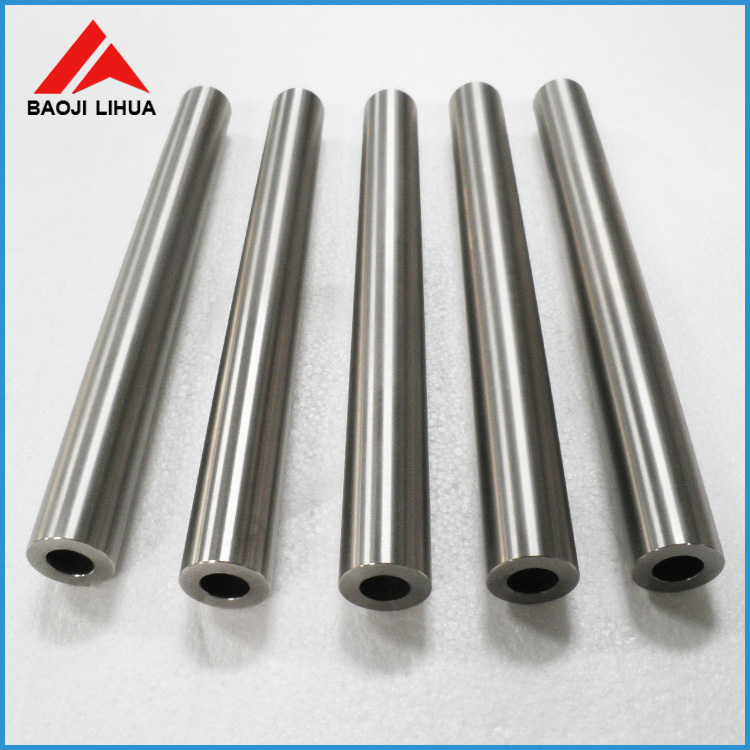
Titanium Exhaust Gr2 Gr7 Titanium Pipes Titanium Tube
- Standards: ASTM B338 / ASTM B861
- Alloy Grades: CP Gr2 & Gr7 (Ti-Pd)
- Wall Gauge: 1.0mm - 1.5mm Ultra-Light
- Fabrication: TIG Weld-Ready, Acid-Pickled
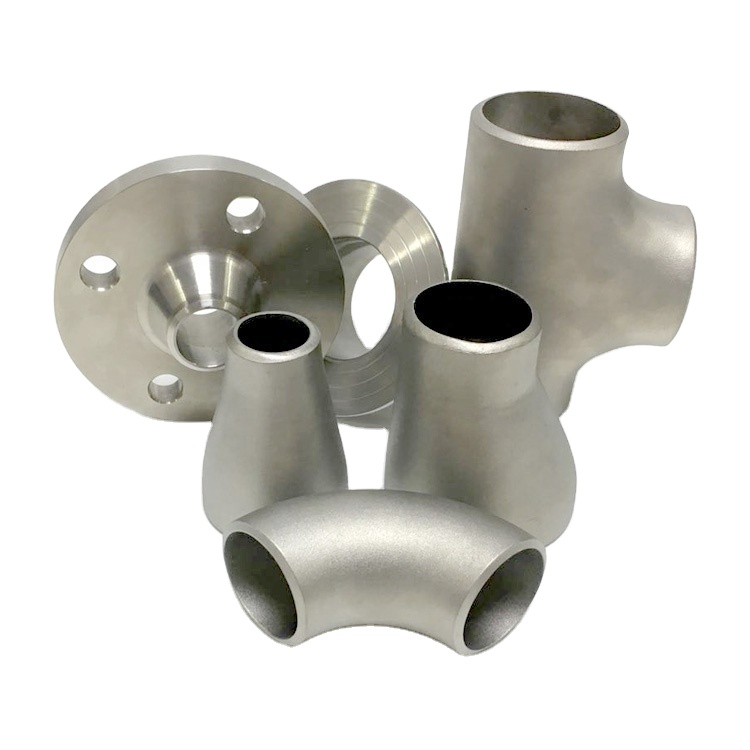
Ti-pure Titanium Seamless Concentric Reducer Pipe Fitting
- Standard: ASTM B363 / ASME B16.9
- Construction: Seamless Cold-Formed
- Flow Transition: Zero Backpressure Loss
- Surface: Mirror or Satin Descaled
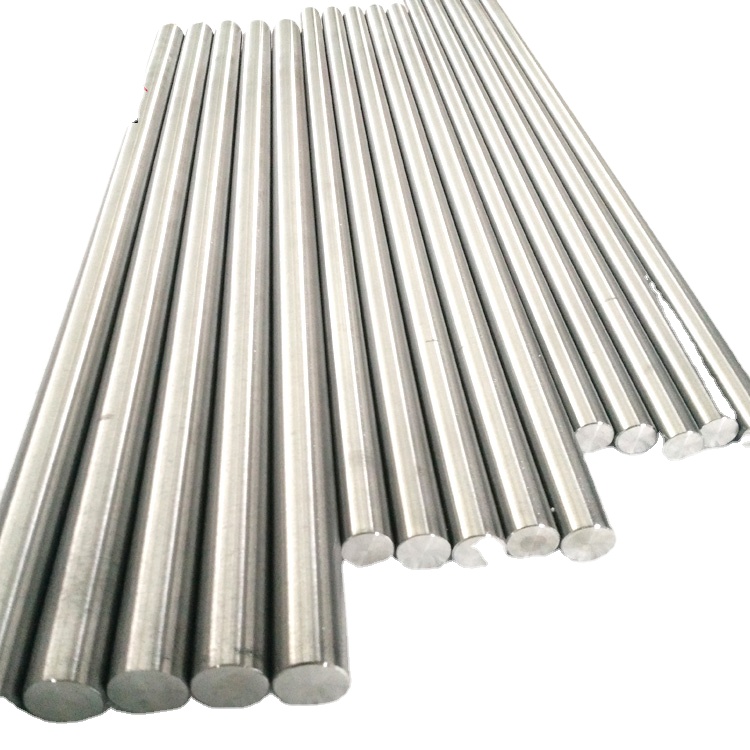
ASTMB348 GR5 Titanium Bar Rod Dia100mm Forged Billet
- Specification: ASTM B348 / AMS 4928
- Material: Ti-6Al-4V Grade 5
- Yield Strength: ≥ 828 MPa (120 ksi)
- Application: CNC Flanges & Manifold Bungs
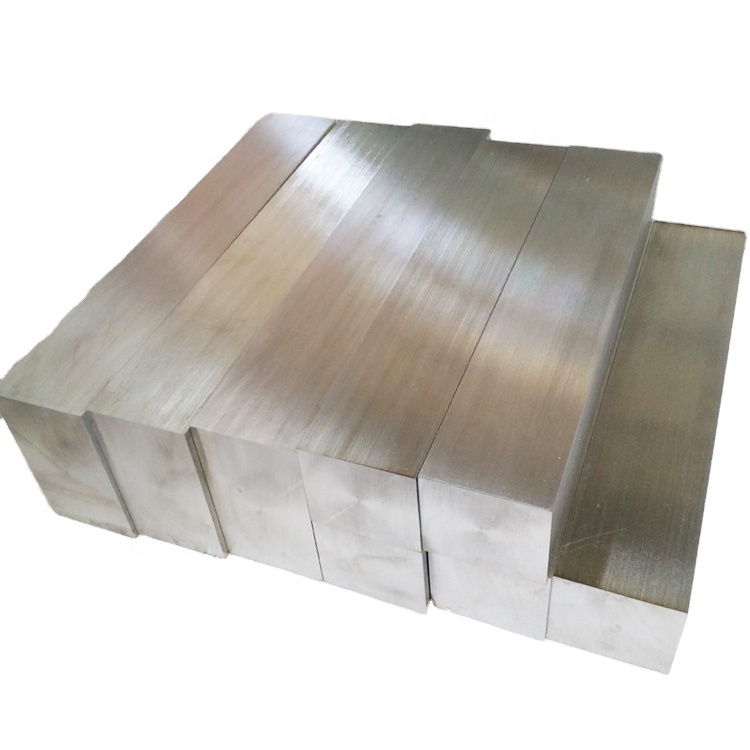
Titanium GR5 Ti-6Al-4V Forged Block ASTM B348 Standard
- Processing: Multi-Directional Forged
- Grain Structure: Equiaxed α+β Microstructure
- NDT Rating: Class A Ultrasonic Tested
- Usage: Custom Turbo Flanges & Brackets
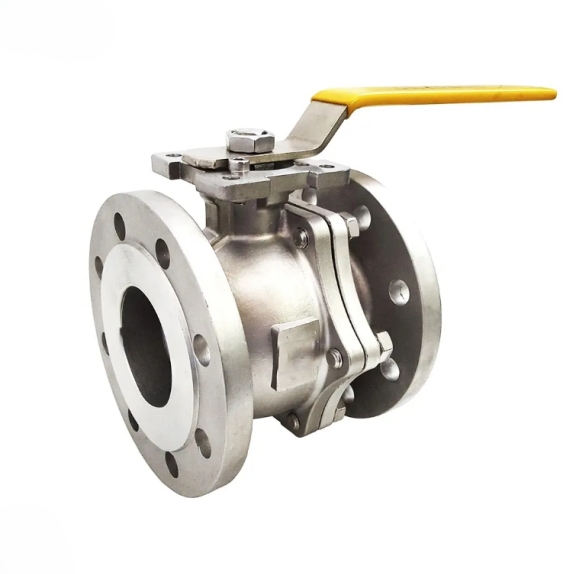
Titanium Flange Ball Valve 150 LB 300 LB Flange Ends
- Ratings: ANSI/ASME Class 150 / 300
- Body Material: ASTM B367 Gr C2 / Gr C5
- Design Standard: API 6D / ASME B16.34
- Medium: Corrosive Acid, Hot Exhaust Gas
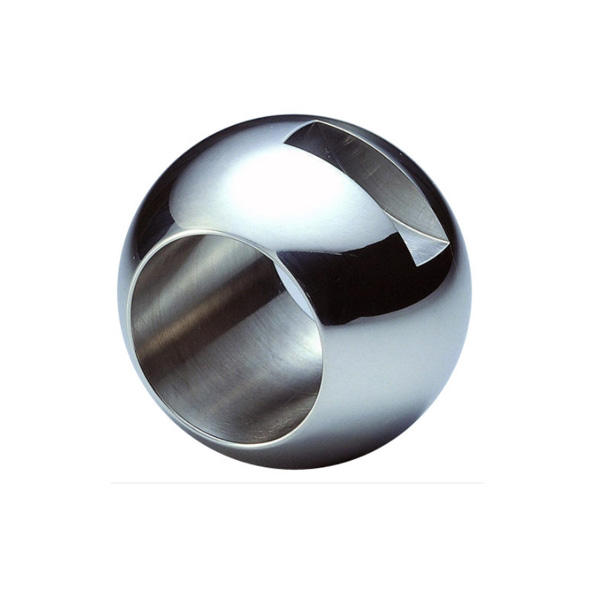
American Standard Titanium High Pressure Valve Ball Core
- Tolerance: Sphericity ≤ 0.005mm
- Hardness: HRC 36-40 (Treated)
- Surface Polish: Ra ≤ 0.2 μm Superfinish
- Compatibility: OEM High-Pressure Flow Lines
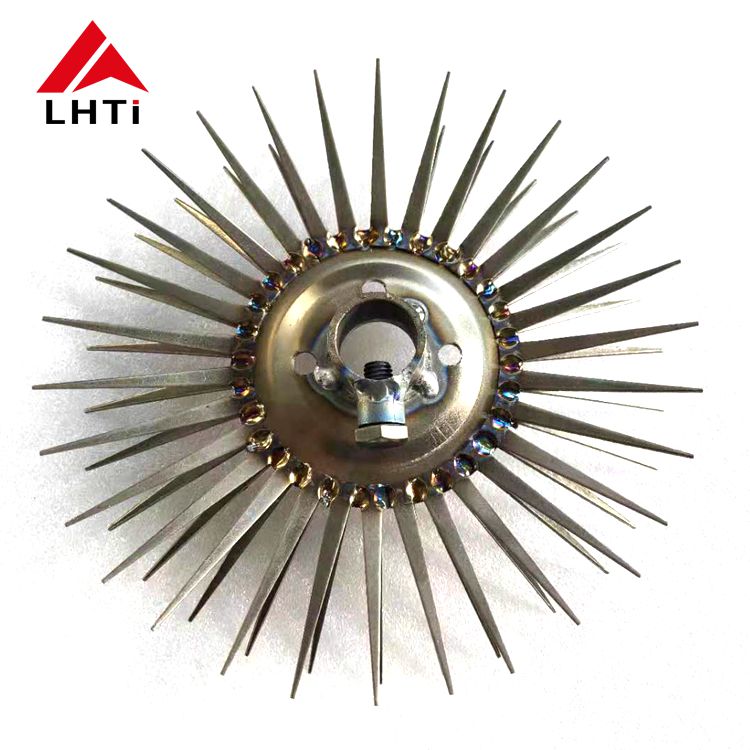
Gr2 Titanium 30 Split Fingers Disk Anodizing Rack
- Dimensions: Dia 220mm × Thickness 1.5mm
- Resistance: Acid Electropolish Resistant
- Spring Tension: Zero Part Slippage Contact
- Service Life: 5× Longer than Aluminum Racks
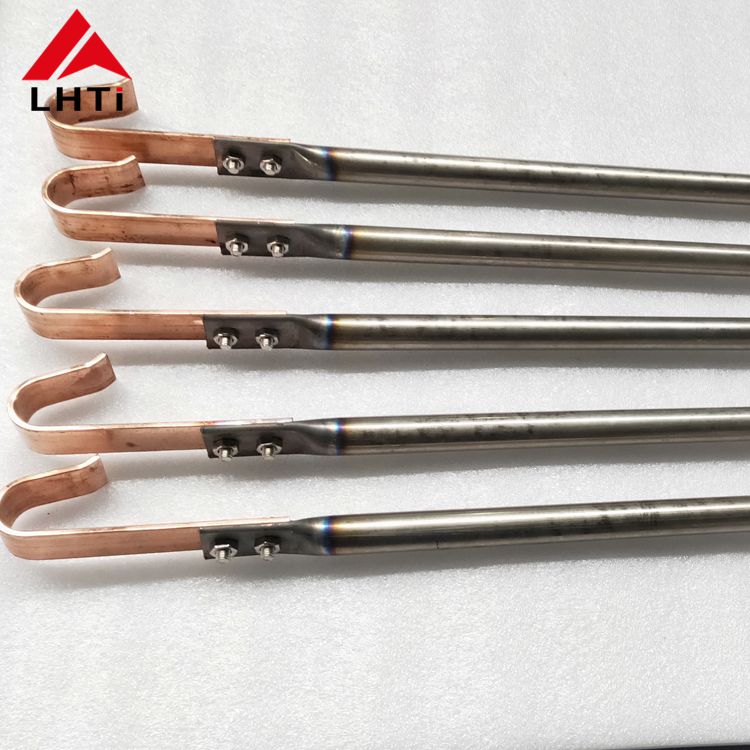
Anodizing Gr2 Titanium Shaft with High-Conductivity Copper Hook
- Electrode Core: ETP 99.9% Oxygen-Free Copper
- Cladding: Corrosion-Proof ASTM Gr2 Ti
- Conductivity: Maximum Amperage Transfer
- Application: Semiconductor & Automotive Plating
Need Custom Drawings Quoted for Your San Jose Facility?
We supply custom OD tubing, pie cuts, CNC laser flanges, and titanium studs with certified EN 10204 3.1 chemical & mechanical test reports within 24 hours.
Titanium Exhaust Engineering: Thermodynamics & Fluid Dynamics
Why high-performance fabricators, aerospace test teams, and Silicon Valley automotive prototypes are retiring 304/321 stainless and transitioning directly to ASTM B338 Grade 2 and Grade 7 Titanium.
High Acoustic Velocity & Thin-Wall Resonance
Grade 2 Commercial Pure Titanium boasts a speed of sound approximately 6,070 m/s, significantly higher than steel (5,960 m/s) and stainless alloys. In high-performance racing exhausts, thin-wall Grade 2 tubing (1.0 mm to 1.2 mm gauge) produces a distinct, high-frequency exhaust note sought after by luxury supercar fabricators.
Additionally, the reduced wall thickness decreases thermal mass, ensuring exhaust gas temperatures (EGT) remain elevated inside the collector, increasing gas velocity and scavenging efficiency across Laguna Seca-tuned motorsport vehicles.
Yield-to-Weight Optimization (45% Mass Cut)
With a nominal density of 4.51 g/cm³ compared to 7.93 g/cm³ for 304 Stainless Steel, replacing an entire OEM automotive downpipe, mid-pipe, and muffler canister with titanium yields an immediate 42% to 48% total curb weight reduction.
For Silicon Valley performance electric vehicle (EV) manufacturers integrating auxiliary thermal combustion systems or lightweight structural heat ducting, this unsprung and chassis weight loss translates directly into measurable battery range extension and dynamic vehicle stability.
Grade 7 (Ti-0.15Pd) Crevice Protection
While standard Grade 2 is exceptional for naturally aspirated applications, our factory engineers specify Grade 7 (UNS R52400) with 0.15% Palladium additions for turbocharged headers and high-condensation marine/industrial exhaust zones.
Palladium shifts the open-circuit potential of the titanium lattice in acidic condensate environments (hydrochloric and sulfur compounds found in unburnt fuel mixtures), preventing crevice corrosion inside slip joints, V-band flanges, and flex bellows under severe thermal cycles up to 600°C.
| Alloy Specification | Density (g/cm³) | Tensile Strength (MPa) | Thermal Cond. (W/m·K) | Max Intermittent Temp (°C) | Corrosion Resistance |
|---|---|---|---|---|---|
| CP Titanium Grade 2 (ASTM B338) | 4.51 | 345 - 450 | 16.4 | 500°C - 550°C | Exceptional (Chloride / Atmospheric) |
| Titanium-Palladium Grade 7 (ASTM B338) | 4.51 | 345 - 485 | 16.0 | 550°C - 600°C | Superior (Reducing Acids & Crevices) |
| Ti-6Al-4V Grade 5 (ASTM B348) | 4.43 | 895 - 1000 | 6.7 | 400°C (Mechanical Bolts/Flanges) | High Fatigue / High Stress |
| AISI 304 Stainless Steel | 7.93 | 515 - 620 | 16.2 | 800°C | Susceptible to Chloride Pitting |
| Inconel 625 (Nickel Alloy) | 8.44 | 827 - 965 | 9.8 | 980°C | Extreme Heat / Heavy Mass Penalty |
Localized Application Scenarios Across the San Jose Market
From cleanroom thermal extraction systems in Santa Clara to high-downforce prototypes evaluated on Highway 17, our factory-machined components satisfy stringent Bay Area mechanical requirements.
Bay Area Motorsport & Track Day Tuners
Tuners and bespoke automotive performance shops surrounding San Jose, Fremont, and Sunnyvale frequently service track-focused platforms destined for WeatherTech Raceway Laguna Seca and Sonoma Raceway.
These facilities demand precise 1.0mm-wall Gr2 pie cuts, mandrel tight-radius 90-degree elbows, and titanium O2 bungs. Our titanium exhaust systems eliminate up to 35 lbs from the rear overhang of mid-engine sports cars, radically improving polar moment of inertia and vehicle turn-in dynamics.
Semiconductor Wet Benches & Cleanroom Acid Exhaust
San Jose stands as the capital of semiconductor fab equipment development. Semiconductor process tooling uses heated mineral acids, fluorine compounds, and aggressive cleaning gases where stainless steel 316L and polymers degrade rapidly.
Our ASTM B363 titanium concentric reducers, stub ends, Class 150 flanged ball valves, and Gr2 exhaust pipes provide absolute hermetic stability for thermal extraction ducts and acidic effluent recovery systems within Silicon Valley microelectronic processing centers.
Aerospace, eVTOL & UAV Propulsion R&D
With top advanced aerospace and electric vertical take-off and landing (eVTOL) pioneers situated around Moffett Federal Airfield and San Jose International Airport, hybrid turbogenerator exhausts require extreme strength-to-density ratios.
We supply specialized Grade 5 (Ti-6Al-4V) billet-machined flanges, high-pressure titanium ball valve cores, and seamless high-frequency Grade 9/Grade 2 transition piping to aerospace prototyping incubators validating hybrid turbine propulsion systems under FAA experimental airworthiness protocols.
Northern California Market Trends Driving Titanium Adoption
Navigating environmental accountability, stringent decibel restrictions, and rapid hardware iteration cycles in the Silicon Valley manufacturing corridor.
Laguna Seca Sound Regulations & Acoustic Engineering
Northern California motorsport parks impose the strictest sound limits in North America (often restricted to 90 dBA or 92 dBA at Laguna Seca). Fabricators cannot simply install straight pipes; they require sophisticated multi-chambered resonators and titanium helmholtz silencers.
Titanium’s higher structural modulus allows exhaust builders to fine-tune acoustic chamber resonance, cancelling out intrusive drone frequencies without introducing the heavy fiberglass packing or thick steel casing typically required to dampen harsh acoustic modes.
Hybridization & Lightweighting Imperatives
California’s zero-emission mandates are pushing hypercar builders and commercial transport pioneers in San Jose toward lightweight hybridized drivetrains. In these systems, battery pack mass demands radical weight cuts in auxiliary combustion piping.
Our ASTM B338 thin-wall titanium tubes allow exhaust systems to serve as structural heat exchangers, extracting exhaust thermal energy without compromising the vehicle's stringent center-of-gravity targets.
Rapid Hardware Prototyping & Agile Supply Lines
Silicon Valley R&D thrives on two-week prototyping sprints. Storing large inventory creates holding risks, while domestic metal distributors impose 300% markups on imported titanium mill billets and tubes.
Jovzi bridges this gap by offering direct manufacturer pricing from our Baoji facility with air courier priority shipping directly into San Jose Mineta International (SJC) and San Francisco International (SFO) in as few as 4 to 6 business days for stocked tubing, flanges, and billet bars.
Manufacturing Backbone: Baoji Titanium Valley Origin
Established in 2006, Jovzi Titanium Industry Co., Ltd. leverages China’s premier metallurgical cluster, combining raw sponge refinement with 5-axis CNC machining and European CE compliance.
ISO 9001:2015 & CE Certified
All titanium exhaust flanges, pressure ball valves, and fittings comply with the European Pressure Equipment Directive (PED 2014/68/EU) and CE marking directives for global compliance.
BaoTi Test Center MTC 3.1
Every batch arrives with verified chemical composition analysis (ICP-OES) and mechanical tension test reports issued per EN 10204 Type 3.1, eliminating counterfeit or out-of-spec scrap.
Precision CNC & Thread Rolling
Equipped with high-rigidity CNC turning centers, automatic pipe cold-bending machines, and thread-rolling equipment delivering fatigue-resistant Grade 5 titanium wheel studs and exhaust bungs.
San Jose Direct Logistics (DDP)
Complete customs clearance handling with DDP terms directly to your San Jose workshop, Santa Clara cleanroom, or Oakland distribution hub with anti-scratch vacuum packing and wooden crating.
San Jose Procurement & Technical FAQ
Addressing common engineering challenges, welding best practices, California import tariffs, and material verification questions from Bay Area manufacturing professionals.
What shielding gas and backing protocol is required to weld your Gr2 and Gr7 exhaust tubing?
Titanium has extreme chemical affinity for oxygen, nitrogen, and hydrogen at temperatures exceeding 400°C (752°F). When fabricating exhaust systems in San Jose, fabricators must use high-purity (99.999%) Argon shielding gas with a large #12 to #16 gas lens cup. Crucially, internal back-purging of the entire pipe assembly with a dual-stage argon regulator is non-negotiable until the joint cools below 300°C. Weld deposits should display a bright silver or pale straw color; deep blue, violet, or white flaky powder indicates interstitial embrittlement requiring removal.
How do CE Certification and ASTM/ASME standards intersect on your components?
Our manufacturing line produces piping and raw mill products to American standards (ASTM B338 for exhaust tubing, ASTM B348 for bars, ASTM B381 for forged rings, and ASME B16.5 for flanges). CE Certification validates our factory's Quality Assurance System under the European Pressure Equipment Directive (PED 2014/68/EU Module H / ISO 9001). This ensures full compliance with international safety, material traceability, and nondestructive testing requirements demanded by Silicon Valley global OEMs exporting equipment worldwide.
What are the door-to-door transit times and logistics options to San Jose, CA?
For rapid prototype iterations, sample orders (such as small runs of pie cuts, V-band clamps, or forged blocks) ship via express air freight (FedEx/DHL/UPS) directly into SJC or SFO within 4 to 6 business days. For containerized production orders of ASTM B338 titanium tubing or industrial valve batches, ocean freight to the Port of Oakland typically takes 16 to 22 days at sea, followed by dedicated local freight delivery directly to your facility in Santa Clara County.
Do you support custom prototype fabrication based on STEP or DWG CAD files?
Yes. More than 60% of our production serves custom OEM specifications. Silicon Valley engineering teams can submit native 3D CAD files (STEP, IGES, SolidWorks) or 2D dimensioned drawings (DWG, PDF). Our senior engineering staff validates tolerances, specifies optimal draft angles and thermal expansion allowances, and supplies first-article inspection (FAI) reports with complete coordinate measuring machine (CMM) dimensional verification prior to production runs.
What is the minimum order quantity (MOQ) for specialized exhaust sizes?
We understand the agile testing requirements of Bay Area hardware incubators. For standard titanium bar stocks and catalog exhaust tubing (such as 2.5", 3.0", 3.5", and 4.0" OD Gr2 pipes), our MOQ is as low as 1 meter or 1 piece. For custom thin-wall mandrel bends, stamped muffler shell bodies, or bespoke laser-cut flanges, prototyping batch runs typically begin at 10 to 20 units, scaling smoothly to production volumes over 10,000 pieces.
How does Jovzi ensure authentic material chemistry and eliminate scrap contamination?
We do not melt uncertified scrap metal. All Jovzi ingots derive from vacuum arc remelting (VAR) of virgin Grade 0 titanium sponge sourced directly from Baoji tier-1 smelting facilities. Every batch undergoes spectrometry chemical analysis, hydrostatic and eddy current inspection for hollow pipes, and ultrasonic testing (UT) per ASTM B381/AMS 2631 standards. Independent verification reports from the authoritative BaoTi Material Test Center are supplied with every bill of lading.
Accelerate Your Exhaust & Thermal Engineering in San Jose
Whether you are outfitting a championship motorsport team in San Jose, designing a cleanroom exhaust system for a semiconductor fab, or testing a proprietary eVTOL propulsion prototype, our Baoji engineering headquarters provides certified titanium hardware with factory pricing and rapid global logistics.