Valve Component
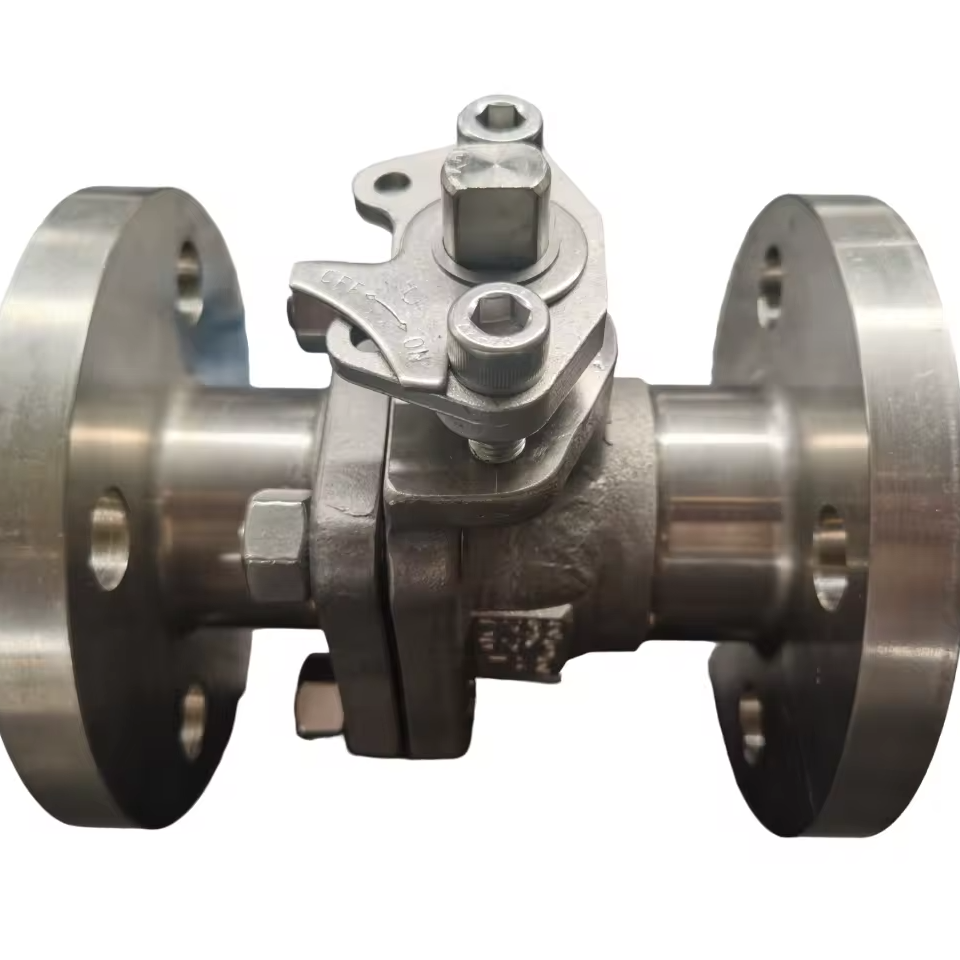
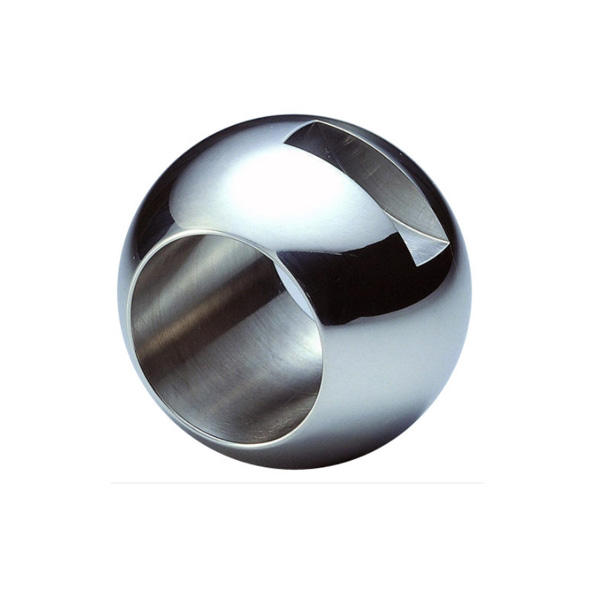
LHTi Group Titanium Alloy Valve Ball, Hollow Casing Floating Ball
- Grade: Gr2 / Gr5 / Gr12
- Configuration: Hollow / Floating Core
- Surface: Mirror Lapped Ra < 0.2µm
Explore our certified titanium flow-isolation products, forgings, precision spherical balls, and autoclave piping components engineered to ASTM, ASME, and European pressure vessel standards.
Evaluating material degradation, galvanic isolation, erosion-corrosion dynamics, and sub-zero structural reliability in extreme continental mining operations.
The city of Erdenet, situated in the Orkhon Province of northern Mongolia, represents one of the largest porphyry copper and molybdenum ore deposits on the Eurasian landmass. Industrial mineral processing within this mining cluster, centered primarily around the Erdenet Mining Corporation (EMC) and associated solvent extraction-electrowinning (SX-EW) facilities, subjects industrial pressure equipment to mechanical and chemical stresses rarely matched elsewhere in the mining sector. Primary extraction involves severe acidic leaching circuits, pressure oxidation autoclaves (POX), high-shear flotation tailings, and sulfuric acid recovery plants. In these circuits, traditional austenitic stainless steels (such as AISI 316L, 317L) and duplex alloys (2205) undergo catastrophic micro-pitting, crevice corrosion, and rapid flow-induced wear within weeks of deployment.
Industrial gate valves manufactured from chemically pure titanium (ASTM B367 Grade C2 / ASTM B348 Gr2) and stabilized alloys such as Palladium-stabilized Grade 7 (Ti-0.15Pd) and Molybdenum-Nickel Grade 12 (Ti-0.3Mo-0.8Ni) deliver metallurgical immunity against oxidizing acidic brines. Titanium naturally forms a stoichiometric, self-healing titanium dioxide (TiO₂) rutile/anatase passivation film on its surface when exposed to aqueous media. Crucially for Erdenet's SX-EW solutions, the presence of strongly oxidizing cupric (Cu²⁺) and ferric (Fe³⁺) cations shifts the corrosion potential of titanium decisively into the noble, highly passive domain. This suppresses uniform chemical dissolution down to less than 0.005 mm/year, providing a operational lifespan that outlasts conventional superalloys by a factor of 8x to 12x.
Unlike duplex steels that suffer pitting in low-pH sulfuric environments containing chlorides, titanium exploits dissolved metal cations (Fe³⁺, Cu²⁺) as passivating cathodic depolarizers, preserving the TiO₂ layer intact even under low-pH slurry flows.
High-purity Grade 2 and Extra-Low-Interstitial (ELI) Grade 5 maintain superior impact energy retention down to -50°C. They exhibit no ductile-to-brittle transition temperature (DBTT), eliminating cold-weather bonnet brittle fracture risks during Erdenet winters.
Forged titanium wedge discs and hard-faced seating faces resist mechanical scouring from pulverized copper ore tailings. The rapid repassivation rate of the rutile film (milliseconds) prevents the continuous micro-grooving cycle typical in stainless gate valves.
Where CE-marked titanium gate valves provide vital zero-leakage isolation across the hydrometallurgical flowsheet.
Managing pregnant leach solutions loaded with dissolved copper and free sulfuric acid at 45°C to 65°C. Titanium gate valves guarantee bidirectional bubble-tight isolation without elastomeric seat swelling or body wall thinning.
Molybdenum roaster gas treatment and pressure oxidation circuits generate intense sulfur dioxide and sulfuric condensate. Grade 7 (Ti-Pd) and Grade 12 gate valves prevent crevice corrosion under flange gaskets and bonnet neck areas.
Decanting concentrated thickener underflow containing high suspended quartz solids (SiO₂). Full-port titanium gate valves minimize turbulent pressure drops across the port, protecting downstream lines from catastrophic washouts.
Cooling loops, process water return, and sulfuric acid storage piping exposed to winter outdoor ambient chills of -40°C. Jovzi's low-temperature tested valve assemblies eliminate stem freeze-binding and bonnet casting fracture.
How Erdenet's plant modernization programs are transitioning standard valves to ultra-pure refractory alloys.
The industrial landscape in Erdenet is shifting rapidly under Mongolia's "Vision 2050" industrial modernization framework. EMC and regional beneficiation projects are actively executing deep processing technology overhauls, focusing on the processing of mixed, secondary oxide and complex low-grade primary sulfide ores. This transition requires three critical technological evolutions in valve engineering:
Mining operations are moving from atmospheric vat leaching toward high-pressure, high-temperature autoclave oxidation (POX). Valve class ratings are shifting from PN16/Class 150 up to Class 300 and Class 600, requiring forged titanium bodies with full CE-PED Category III/IV design validation.
Environmental standards in Mongolia now mirror European EN ISO 15848-1 compliance. Traditional packing glands that leak toxic acid mists during seasonal thermal cycling are being replaced by bellows-seal titanium gate valves and live-loaded dynamic graphite-PTFE stem seals.
Automated process DCS demands intelligent electric and electro-hydraulic actuators fitted with internal space heaters rated for -50°C. Titanium gate valves require low operating torques and precision-machined ACME stem threads to prevent actuator freeze-tripping.
Direct comparative properties of titanium grades against industrial copper-mining service parameters.
| Alloy Grade | UNS / Standard | Design Standards | Operating Temp Range | Recommended Mining Circuit | Corrosion Rate (15% H₂SO₄ + Fe³⁺) |
|---|---|---|---|---|---|
| Titanium Gr. 2 | UNS R50400 / ASTM B367 C2 | API 600, ASME B16.34, EN 1984 | -50°C to +200°C | SX-EW PLS, Raffinate, Tailings Return | < 0.005 mm/year (Immune) |
| Titanium Gr. 5 | UNS R56400 / Ti-6Al-4V | API 602, ASME B16.34 Class 600 | -60°C to +350°C | High Pressure Autoclave Slurry Injection | < 0.012 mm/year (High Strength Trim) |
| Titanium Gr. 7 | UNS R52400 / Ti-0.15Pd | ASME B16.34, CE-PED Module H | -50°C to +260°C | Reducing Acid Bleed, Flange Crevices | < 0.002 mm/year (Extreme Resistance) |
| Titanium Gr. 12 | UNS R53400 / Ti-0.3Mo-0.8Ni | ASME B16.34, EN 12516 | -40°C to +300°C | Elevated Temp Acid Heat Exchangers | < 0.008 mm/year (Cost-Optimized Alloy) |
| Super Duplex 2507 | UNS S32750 / EN 1.4410 | ASME B16.34, API 6D | -40°C to +250°C | Non-acidic Saline Process Water Only | > 0.850 mm/year (Pitting Risk in Acid) |
Founded in 2006 in Baoji, Shaanxi — recognized worldwide as China's Titanium Valley — Jovzi Titanium Industry integrates raw sponge melting, multi-directional die forging, precision CNC machining, and high-pressure cryogenic testing.
Direct answers addressing customs clearances, temperature verification, metallurgy, and delivery into Mongolia.
Eliminate premature acid degradation, line washouts, and sub-zero valve bonnet cracking. Discuss your engineering drawings, trim configurations, and delivery schedule directly with Jovzi's technical metallurgists in Baoji.
Get a Quote