Surface Treatment
Direct supply from Baoji Jovzi Titanium Industry Co., Ltd. Precision forged, CNC turned, and certified for extreme service environments.
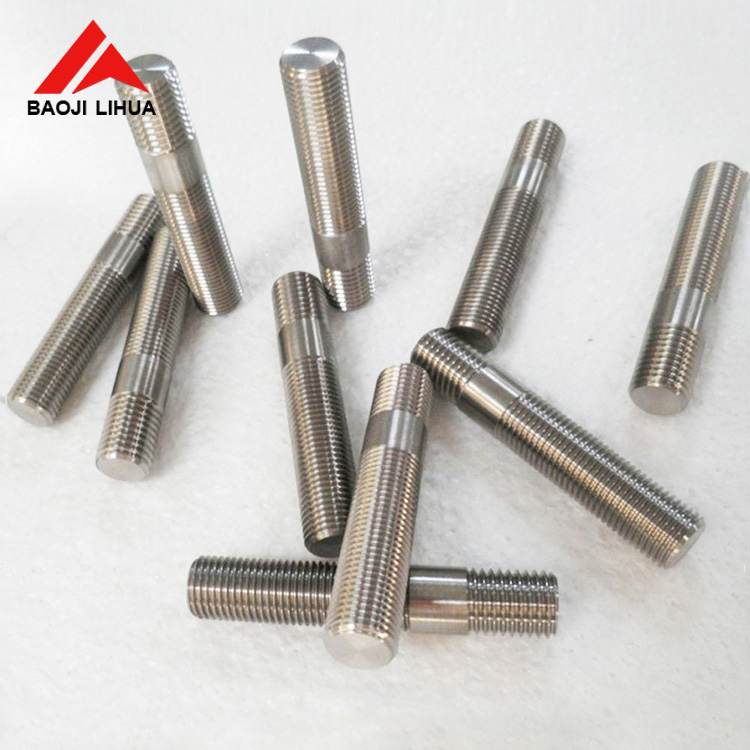
Analyzing thermal fatigue, creep resistance, and chemical stability of Ti-6Al-4V Grade 5 fasteners versus austenitic stainless steels in Montenegrin industrial operations.
In modern high-performance automotive engineering, internal combustion turbo-charging systems, and heavy-duty industrial prime movers, mechanical connections at the exhaust manifold junction bear unprecedented thermo-mechanical stress. For commercial fleet operations, custom performance tuners, and heavy industrial maintenance workshops in the municipality of Pljevlja, Montenegro, the choice of fastener materials directly dictates mean-time-between-failures (MTBF), exhaust sealing reliability, and unscheduled downtime prevention.
Exhaust stud bolts are subjected to rigorous cyclical temperatures ranging from ambient sub-zero continental winter cold snaps (regularly below -10°C in the mountainous northern Montenegrin elevations) to continuous operational exhaust gas temperatures (EGT) exceeding 750°C to 850°C. Under such radical thermal gradients, conventional Class 8.8, 10.9, or austenitic stainless steel (such as AISI 304 or 316) studs suffer extensive metallurgy degradation. Stainless steel fasteners commonly experience catastrophic galling, micro-fissuring, thread-binding, and irreversible plastic elongation caused by differential thermal expansion between the cast iron/aluminum cylinder head and the turbo manifold flange.
Jovzi Titanium manufactures premium M8, M10, and M12 exhaust stud bolts primarily utilizing aerospace-grade Ti-6Al-4V (Grade 5, UNS R56400) and commercially pure Grade 2 (UNS R50400) titanium. Grade 5 is an alpha-beta alloy containing 6% aluminum and 4% vanadium. The aluminum serves as an alpha-phase stabilizer, expanding the high-temperature strength threshold, while the vanadium stabilizes the beta-phase, providing remarkable fracture toughness, ductile ductility, and amenability to high-load thread rolling.
The fundamental advantage of titanium over steel lies in its superior specific strength and low coefficient of thermal expansion (CTE). Titanium possesses a CTE of approximately 8.6 × 10⁻⁶ / K at elevated temperatures, whereas austenitic stainless steel expands dramatically at 16.0 to 18.0 × 10⁻⁶ / K. When bolted into aluminum cylinder heads (CTE approx. 22 × 10-6 / K) or cast steel exhaust collector housings, Ti-6Al-4V studs drastically diminish cyclic thermal expansion disparity. This mechanical compatibility eradicates manifold warping, reduces thermal tension shearing forces, and stops studs from backing out under heavy vibration harmonics.
| Physical / Mechanical Property | Gr5 Titanium (Ti-6Al-4V) | Gr2 Titanium (CP) | Stainless Steel 316L | High-Tensile Steel 10.9 |
|---|---|---|---|---|
| Density (g/cm³) | 4.43 (42% Lighter than Steel) | 4.51 | 8.00 | 7.85 |
| Ultimate Tensile Strength (MPa) | ≥ 895 – 1000 | ≥ 345 – 450 | 485 – 620 | 1000 – 1040 |
| Yield Strength 0.2% (MPa) | ≥ 828 | ≥ 275 | ≥ 220 | ≥ 900 |
| Thermal Expansion (20-100°C, 10^-6/K) | 8.6 | 8.6 | 16.5 | 11.5 |
| Thermal Conductivity (W/m·K) | 6.7 (Superior Heat Barrier) | 16.4 | 16.3 | 42.6 |
| Chloride Stress Corrosion Resistance | Immune / Exceptional | Immune / Exceptional | Susceptible to Pitting | Severe Rust & Oxidation |
| Surface Galling Tendency | Negligible (Rolled Threads + PVD) | Low with Anti-Seize | Very High (Cold Welding) | Moderate (Rust Siezure) |
A critical technical distinction in Jovzi Titanium’s manufacturing protocol is the implementation of precision CNC thread rolling post heat-treatment, rather than abrasive single-point thread cutting. Thread rolling exerts compressive cold work within the titanium root radii, producing continuous grain-flow lines that run parallel to the flank profile. This metallurgical continuity prevents notch sensitivity, increasing thread fatigue resistance by over 300% under cyclical manifold harmonic resonance.
Furthermore, in the climate conditions of northern Montenegro, rapid sub-zero cold starts followed instantaneously by aggressive exhaust manifold thermal loading create extreme shock waves. Ti-6Al-4V retains exceptional Charpy V-notch impact toughness and ductile flexibility even down to cryogenic levels, completely outperforming brittle high-carbon steels that frequently snap flush inside the cylinder head casting during winter operations.
Bridging heavy industry demands, energy infrastructure maintenance, commercial transport, and extreme motorsport fabrication in the Northern Region.
Pljevlja houses Montenegro's primary coal mining basin (Rudnik Uglja Pljevlja). Heavy transport haulers, excavators, and diesel engine generators operate continuously in sulfurous, abrasive dust. Grade 5 titanium exhaust manifold studs prevent acidic sulfur gas degradation and endure the violent continuous vibration of 16-liter heavy diesel engines without snapping.
The Termoelektrana Pljevlja thermal energy complex demands reliable fasteners in extreme chemical environments. High-temperature flue-gas bypasses, specialized waste-heat extraction manifolds, and emergency power turbines utilize our titanium studs and valve components to eliminate corrosive oxidation caused by high flue sulfur concentrations.
Northern Montenegro's timber harvesting vehicles operate across rugged mountain terrain (Ljubišnja mountain range). Haulage trucks experience severe continuous exhaust backpressure during steep descent engine retarder (Jake brake) operation. Jovzi Gr5 stud bolts guarantee that exhaust flanges never develop thermal leaks or blow out gaskets.
Balkan motorsport and Montenegrin hillclimb events (such as the Tara and Glava Zete championships) require maximum power-to-weight optimization. Switching to Jovzi M8/M10 Gr5 titanium exhaust studs and 12-point aero flange nuts saves unsprung and engine-bay mass while facilitating rapid trackside turbo swap-outs with zero risk of thread seizure.
Pljevlja experiences severe snowy winters requiring heavy winter road maintenance via magnesium chloride and salt compounds. Steel chassis bolts and exposed exhaust hardware rust and disintegrate within two seasons. Titanium is 100% chemically impervious to chloride-induced galvanic corrosion and atmospheric salt decay.
Navigating the transition toward green compliance, European logistics integration, and predictive industrial fleet maintenance.
The industrial ecosystem in Pljevlja is experiencing a pivotal transformation. Aligned with Montenegro’s accession path toward the European Union (EU) and strict adoption of European environmental standards, both municipal entities and commercial operations are actively upgrading machinery to satisfy emissions regulations, operational safety benchmarks, and life-cycle cost reduction mandates.
Historically, procurement managers in northern Montenegro relied upon cheap, zinc-plated carbon steel studs sourced through secondary regional trade intermediaries. However, lifecycle analyses conducted across local transport depots reveal that replacing snapped steel studs inside cylinder head manifolds requires extensive workshop labor, EDM spark extraction, and re-tapping of threaded holes. The labor downtime and financial cost of extracting a single seized bolt in a heavy-duty hauler frequently exceeds the initial purchase price of an entire set of high-spec titanium studs by a factor of twenty.
Consequently, the regional market is accelerating toward high-reliability aerospace alloys. Modern maintenance protocols across Balkan industrial sectors increasingly prescribe Grade 5 Ti-6Al-4V fasteners with PVD (Physical Vapor Deposition) or titanium anodized coatings. These surface treatments further mitigate micro-fretting and prevent galvanic potential disparity when interfacing with dissimilar metals such as aluminum cylinder head castings or cast nickel turbo housings.
Delivering certified aerospace and metallurgical components globally from Baoji, China's Titanium Valley.
Founded in 2006 in Baoji, Shaanxi, our factory directly taps China's primary titanium sponge supply chain, ensuring premium smelting purity and raw material consistency.
Backed by 4 senior and 5 intermediate metallurgical engineers, specializing in CNC machining, cold heading, and precision rolled threads per DIN, ASME, and ISO.
ISO 9001 certified quality management. Every batch includes EN 10204 3.1 Mill Test Certificates with chemical and physical reports from the authorized BaoTi Test Center.
With an 81–90% international export ratio, we manage global DDP, CIF, and express shipping with moisture-proof, anti-scratch wooden and vacuum export packing.
Addressing the technical, logistics, and metallurgical questions most frequently raised by regional engineers and purchasing agents.