High-Performance Titanium & Composite Solutions for Hanoi
Direct supply from Baoji manufacturing centers to industrial clusters across Hanoi, Bac Ninh, and Hai Phong.
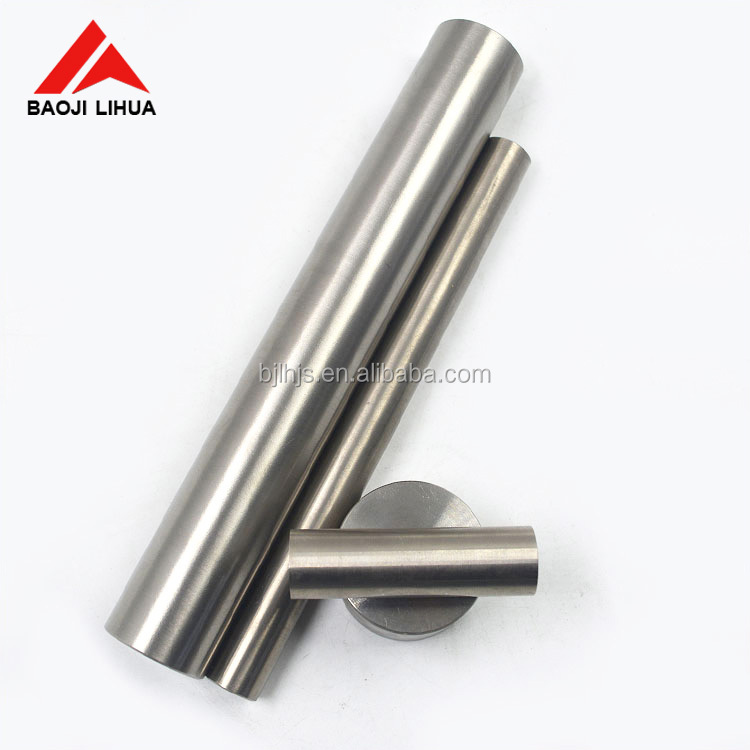
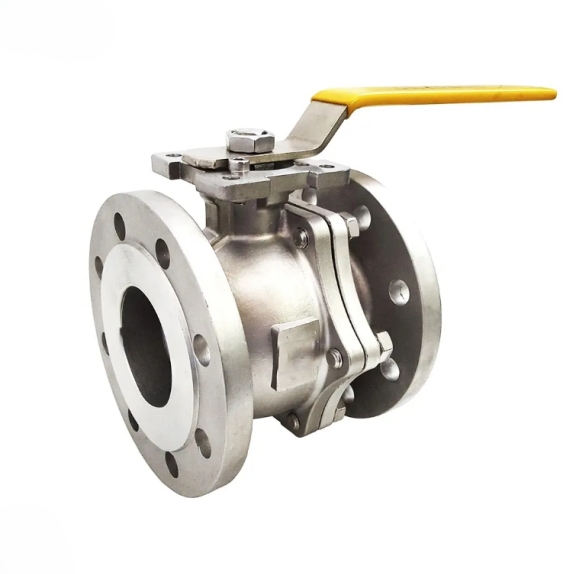
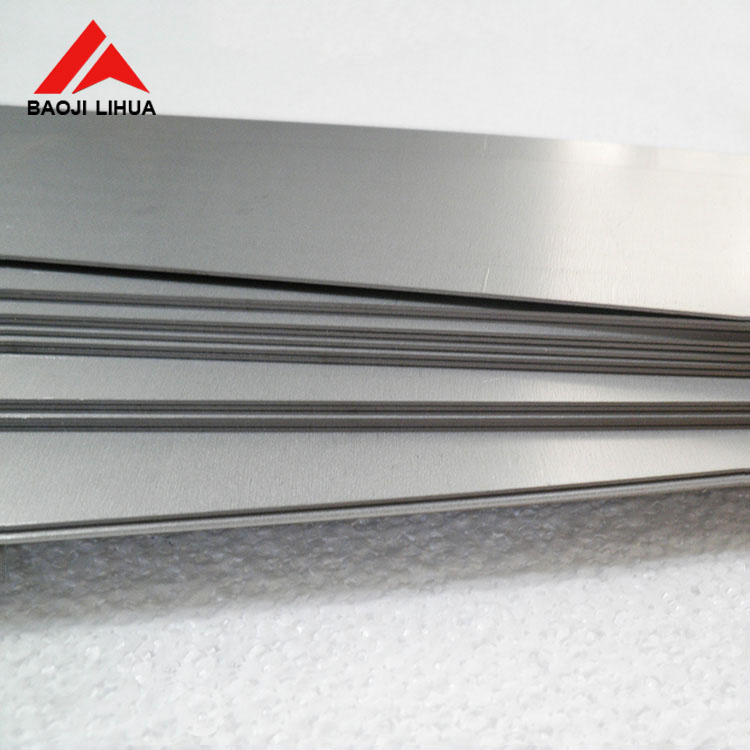
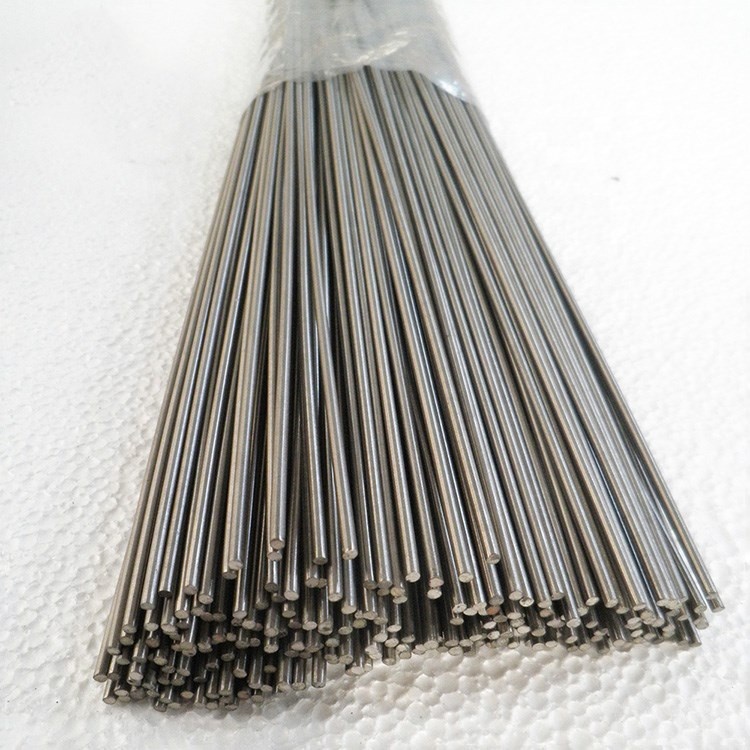
Engineering Fundamentals: Titanium Clad Copper Sheets for Modern Electrochemical Systems
In electrochemistry, hydrometallurgy, and high-current surface finishing, design engineers encounter an enduring physical paradox: unalloyed copper exhibits superlative electrical conductivity (approximating 100% IACS, or $58 \times 10^6\ \text{S/m}$) but degrades rapidly under hot acid electrolytes, wet chlorine, and caustic galvanizing chemistry. Conversely, commercially pure titanium (ASTM B265 Grade 1 or Grade 2) exhibits an unyielding passive titanium dioxide ($\text{TiO}_2$) rutile surface layer capable of resisting aggressive chemical attacks, yet its electrical volume conductivity is merely ~3.1% IACS.
Titanium Clad Copper Sheets (also classified under layered bimetallic composite plates, busbars, and conductive transition inserts) resolve this fundamental operational paradox. By metallurgically fusing an outer shell of corrosion-proof Grade 1 or Grade 2 titanium onto a core of Oxygen-Free High Thermal Conductivity (OFHC) or electrolytic tough pitch (ETP) copper (UNS C11000 / C10200), engineers achieve an electrode plate and busbar structural element offering massive current transport capacity with near-zero interfacial ohmic degradation alongside absolute resistance to acid mists, fluorides, and oxidizers.
Explosive Cladding Dynamics
Utilizing controlled detonation front velocity, explosive welding generates localized fluidization across the Ti-Cu interface. The continuous multi-wave pattern establishes true atomic lattice continuity without thermal microstructural embrittlement.
Controlled Hot-Roll Diffusion
Secondary vacuum hot-pack reduction rolling refines the multi-layered bimetal composite thickness. This ensures uniform cladding tolerances down to ±0.10 mm across large sheet areas while homogenizing interfacial shear resistance.
Titanium TIG Edge Sealing
To prevent corrosive electrolytes from wicking into the copper substrate through exposed plate perimeters, our CNC workshop executes high-vacuum titanium seal welding or protective edge fold-overs, assuring zero delamination over years of tank immersion.
Metallurgical Bond Quality: Mitigating Intermetallic Ti-Cu Phases
When titanium and copper are heated improperly beyond critical transformation thresholds ($>850^\circ\text{C}$), brittle intermetallic equilibrium compounds such as $\text{TiCu}$, $\text{Ti}_2\text{Cu}$, $\text{Ti}_3\text{Cu}_4$, and $\text{TiCu}_4$ form along the boundary zone. These phases severely diminish mechanical shear resilience and induce micro-void fracture during thermal cycling.
At our manufacturing facility in Baoji, Shaanxi, cladding parameters are strictly governed under sub-critical transient temperatures and microsecond contact durations. As certified via EN 10204 3.1 Mill Test Certificates and localized metallurgical microscopy, the diffusion zone of Jovzi composite sheets is maintained below $5\ \mu\text{m}$. The resulting interfacial shear strength consistently surpasses 135 to 150 MPa, vastly outperforming the ASTM B898 baseline standard of 130 MPa.
Specification Matrix: Jovzi Titanium-Clad Copper vs. Industry Baselines
Design engineers configuring electrochemical production cells in the Hanoi capital corridor require audited physical, electrical, and mechanical metrics to compute operational lifespans and energy losses. Below is our engineering parameter index:
| Performance Dimension | ASTM B898 Standard Specification | Jovzi Titanium Clad Sheet (Export Spec) | Operational Significance for Hanoi Industrial Plants |
|---|---|---|---|
| Cladding Material | ASTM B265 Grade 1 or Grade 2 | ASTM B265 Gr1 / Gr2 (Baoji Virgin Sponge Origin) | Resists concentrated $\text{H}_2\text{SO}_4$, $\text{HCl}$ drag-out, and plating mist. |
| Substrate Core Metal | ASTM B152 C11000 (ETP Copper) | UNS C10200 (OFHC) or UNS C11000 Copper | Conductivity ≥ 98-100% IACS, preventing hot spots under high current loads. |
| Interfacial Shear Strength | Min. 130 MPa (18.8 ksi) | 135 – 155 MPa (Validated via BaoTi Lab) | Zero delamination under repetitive thermal cycling and dynamic mechanical cleaning. |
| Bonding Integrity (UT) | Class A or Class B (per client contract) | ≥ 99.5% Continuous Bond Area (ASTM A578 Level C) | Prevents localized resistance spikes, heat build-up, and chemical infiltration. |
| Cladding Thickness Range | Typically 1.0 mm to 2.5 mm | 0.8 mm up to 4.0 mm (±0.08 mm tolerance) | Customizable based on bath chemical aggressiveness vs. overall mass efficiency. |
| Contact Resistance | Not explicitly defined in baseline codes | < 0.00015 Ω·cm² at Clad Interface | Eliminates parasitic energy loss across electroplating rectifiers and busbars. |
Every production run is mapped via automated Ultrasonic (UT) C-Scan imagery, recording wave attenuation along 10 mm grid intervals. Procurement directors in Northern Vietnam receive the raw UT inspection report along with third-party verification issued by the BaoTi Test Center prior to customs dispatch.
Localized Application Scenarios Across the Hanoi Industrial Ecosystem
The industrial footprint of Northern Vietnam has evolved from basic assembly into high-precision, electro-chemical, and microelectronic manufacturing. The Greater Hanoi economic sphere—encompassing industrial nodes along the Red River Delta—demands world-class corrosion-resistant metallurgical conductive hardware.
PCB & Semiconductor Plating
Deployed in Bac Ninh (Yen Phong, Que Vo) and Thai Nguyen high-density interconnect (HDI) PCB continuous plating tanks, titanium-clad copper sheets serve as high-amperage anode rails and hanger bars, preventing copper salt contamination in ultra-pure acid copper baths.
Chlor-Alkali & Chemical Plants
Operating across Hai Phong coastal complexes and Phu Tho industrial centers, titanium-clad copper busbars act as high-efficiency inter-cell electrical connectors within membrane-cell electrolyzers, resisting saturated wet chlorine gas and aggressive brine.
Automotive Electrodeposition (ED)
Automotive manufacturing plants in Vinh Phuc and Hanoi use titanium-clad copper plates in cathodic electrodeposition primer tanks. The composite material provides electrical stability across long immersion spans without passivation decay.
Anodizing Jigs & Electrowinning
Fabricators in Hung Yen utilize Ti-Cu composite busbars for structural anodizing racks and metallurgical recovery cells. The high current carrying capacity speeds up anodized oxide formation while lowering overall kWh consumption per ton.
Technical Advantage: Preventing Micro-Arcing & Thermal Drift in Tropical Humid Facilities
Northern Vietnam’s climate brings extreme relative humidity during the monsoonal spring (the "Nồm" weather phenomenon), where ambient factory humidity regularly hits 95% to 100%. Under these conditions, traditional bare copper busbar-to-electrode contact joints oxidize within days, forming poorly conductive copper carbonates and cupric oxides.
This progressive joint degradation causes contact micro-arcing, significant voltage drop, and fire hazards. Upgrading to Jovzi’s precision machined titanium clad copper conductive plates isolates the joint interface entirely from ambient humidity and corrosive acid vapours. The outer titanium boundary does not tarnish, keeping contact resistance stable through years of non-stop operation.
Industrial Transformation & Sourcing Trends in Northern Vietnam (2025–2030)
Vietnam’s national master plan for high-tech industries and green manufacturing is driving substantial shifts in the sourcing of specialized non-ferrous metallurgical materials:
Stricter Environmental Compliance
New pollution standards from Vietnam’s Ministry of Natural Resources and Environment (MONRE) demand zero bath contamination and closed-loop electroplating. Titanium cladding eliminates the heavy metal leaching caused by corroded copper busbars falling into treatment tanks.
Electrochemical Power Conservation
With regional industrial electricity tariffs under scrutiny, facilities are retrofitting old mechanical clamps with explosion-bonded Ti-Cu composite busbars. This change cuts voltage drops by 15-28%, delivering immediate electrical power savings across high-load operations.
Rapid Land-Border Supply Corridors
Direct highway connections from Baoji through Guangxi (Pingxiang) across the Huu Nghi Border Gate into Hanoi allow customs-cleared truck freight to arrive in just 4 to 6 days, completely bypassing ocean shipping congestion at transshipment ports.
Optimized Logistics & Form E Preferential Tariff Benefits
Under the ASEAN-China Free Trade Area (ACFTA), titanium clad composite sheet materials imported into Vietnam are eligible for preferential duty treatment using Form E Certificates of Origin. When coupled with cross-border overland routes (Pingxiang → Lang Son → Hanoi Expressway), delivery transit from our Baoji factory warehouse directly to production gates in Hoa Lac, VSIP Bac Ninh, or Dinh Vu Hai Phong can be achieved reliably within 5 to 7 calendar days.
Selection Guide: Determining Clad Ratios, Thicknesses & Geometries
Procuring the optimal composite configuration requires balancing continuous current density against structural deflection limits. Use the technical equations and selection parameters below:
| Typical Cross-Section / Profile | Copper Core Dimensions | Ti Clad Skin Thickness | Rated Continuous Current ($35^\circ\text{C}$ Amb) | Primary Industrial Use Case |
|---|---|---|---|---|
| Flat Composite Sheet / Bar | 10 mm × 50 mm | 1.0 mm Gr2 Ti | 1,250 – 1,450 Amperes | PCB Electroplating Tank Hanging Rails |
| Heavy Duty Plate Busbar | 12 mm × 100 mm | 1.5 mm Gr2 Ti | 2,800 – 3,200 Amperes | Chlor-Alkali Anode/Cathode Main Distribution |
| Square Clad Anode Bar | 25 mm × 25 mm | 1.2 mm Gr1 Ti | 1,500 – 1,750 Amperes | Continuous Coil Anodizing & Pickling Tanks |
| Tubular / Cylindrical Composite | Ø 32 mm Solid Rod | 1.5 mm Gr2 Ti | 1,800 – 2,100 Amperes | High-Speed Precious Metal Barrel Plating |
| Custom Transition Block | Per CAD Drawing | 2.0 – 3.0 mm Ti | Per System Spec | Electrolytic Copper Foil Drum Machine Connectors |
Current Density Calculation Heuristic: To avoid internal heating within enclosed plating rooms, Jovzi recommends sizing the copper core for a current density between 2.0 and 2.5 A/mm² under forced air circulation, or 1.5 to 1.8 A/mm² under stagnant ambient conditions. Because Grade 1 and Grade 2 titanium carry an electrical resistance roughly 30 times higher than pure copper, current contribution from the outer titanium sheath should be neglected during safe ampere load calculations.
Why International Engineering Teams Choose Jovzi Titanium
Jovzi Titanium Industry Co., Ltd.
Established in 2006 in Baoji, Shaanxi Province—known worldwide as China’s "Titanium Valley"—Jovzi has spent over 19 years delivering traceable, precision titanium, nickel, and metallurgical composite products to industrial clients across Europe, North America, and Southeast Asia.
- Engineering Bench Strength: 4 senior metallurgical engineers and 5 intermediate tooling specialists supervising bimetallic bonding operations.
- ISO 9001 Certified QMS: Rigorous quality management system with documented, lot-by-lot physical traceability from ingot sponge to finished goods.
- Certified BaoTi Testing: Independent chemical, shear strength, and elongation reports from the authorized BaoTi National Test Center available for every run.
- OEM & Custom Fabrication: Comprehensive in-house CNC milling, water-jet slicing, thread rolling, drilling, and vacuum TIG edge encapsulation to your drawings.
Certified Material Traceability
Every consignment shipped to Hanoi is issued an authentic EN 10204 3.1 Mill Test Certificate detailing exact heat numbers, chemical composition, interfacial shear test curves, and ultrasonic bonding percentages.
Standard export packaging includes vacuum-sealed protective wrapping, reinforced foam buffers, and solid fumigated wooden crates designed to safeguard mirror-finish faces during overland trucking across the border.
Frequently Asked Questions: Sourcing Titanium Clad Copper in Hanoi
Direct technical and logistical answers for plant managers, sourcing directors, and design engineers.