Featured Industrial Titanium & Composite Offerings
Metallurgical Fundamentals of Titanium Clad Plates
In high-salinity, high-temperature marine environments such as those encountered in Monaco's Mediterranean waters, conventional stainless steels (including AISI 316L and even high-molybdenum austenitics) are notoriously prone to localized pitting, crevice corrosion, and chloride-induced stress corrosion cracking (CSCC). For massive engineering systems—such as superyacht hull heat-exchanger sea chests, vacuum distillation shells, seawater-source district cooling condensers, and luxury coastal architectural pilings—specifying solid titanium Grade 2 or Grade 5 is economically prohibitive and structurally inefficient due to titanium's lower modulus of elasticity compared to structural carbon steel.
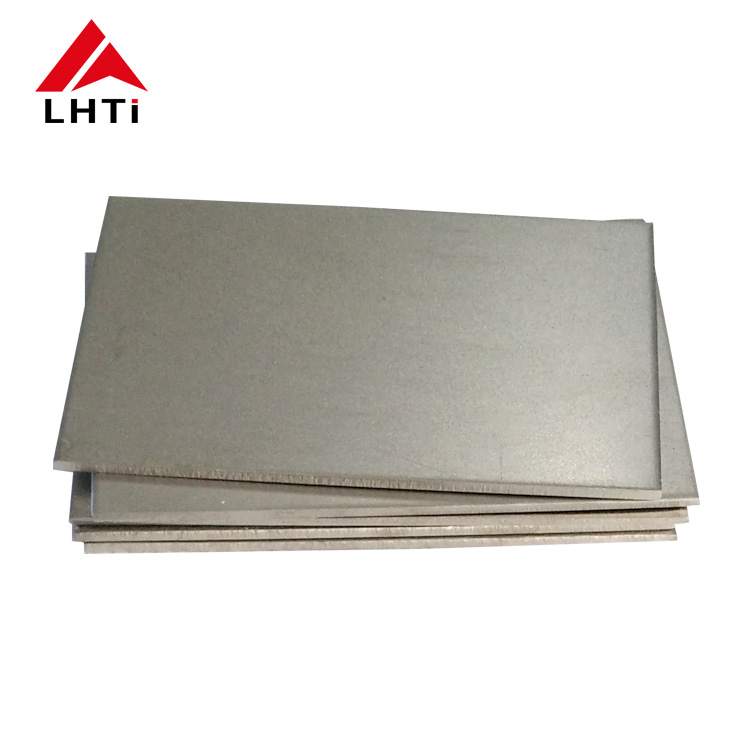
Titanium Clad Plate technology solves this dilemma. By metallurgically bonding a corrosion-resistant cladding layer (typically ASTM B265 Grade 1 or Grade 2, 1.5mm to 12mm thick) onto a load-bearing backing steel (such as ASME SA516 Gr. 70, SA264, or 316L Stainless Steel, 10mm to 120mm thick), engineers achieve the near-infinite galvanic corrosion resistance of commercially pure titanium combined with the superior tensile strength, fatigue endurance, and direct weldability of heavy carbon steel plates.
Key Technical Parameter: Under explosive welding (EXW), the detonation velocity is strictly controlled between 2,000 and 3,200 m/s. This creates an oblique high-velocity collision (the "flyer plate" impact) producing localized surface jetting that cleans oxide films at the collision front, generating a distinct wavy metallurgical interface with continuous plastic deformation and zero brittle Fe-Ti intermetallic phase crystallization.
According to ASTM B898 (Standard Specification for Reactive and Refractory Metal Clad Plate) and ASME Section VIII, Division 1, Appendix 13, titanium clad composite plates fabricated by Jovzi Titanium must undergo comprehensive non-destructive examination (NDE). Every plate dispatched to the Côte d’Azur is subjected to 100% automated Ultrasonic Testing (UT) conforming to ASTM A578 Level C, guaranteeing a bonding area ratio exceeding 98% to 99.8% with zero unbonded voids larger than 25mm diameter in critical shell zones.
| Clad Layer / Base Layer | Bonding Process | Min. Shear Strength (MPa) | Tensile Strength (Base) | Typical Marine Application |
|---|---|---|---|---|
| ASTM B265 Gr. 1 + SA516 Gr. 70 | Explosion Cladding (EXW) | ≥ 140 MPa (Avg 185 MPa) | 485 - 620 MPa | Monaco District Seawater Heat Exchangers |
| ASTM B265 Gr. 2 + SA516 Gr. 60/70 | Explosion + Hot Rolling | ≥ 150 MPa (Avg 210 MPa) | 415 - 550 MPa | Superyacht Exhaust Gas Scrubbers & Silencers |
| ASTM B265 Gr. 7 (Ti-Pd) + 316L | Vacuum Hot Roll Clad | ≥ 165 MPa (Avg 220 MPa) | 515 - 650 MPa | Hyper-Saline Brine Evaporator Headers |
| ASTM B265 Gr. 5 + Structural Steel | Direct Detonation Bond | ≥ 190 MPa (Avg 245 MPa) | ≥ 550 MPa | Naval Armor, High-Impact Splash Zone Deflectors |
Localized Application Scenarios in Monte Carlo & Monaco
Superyacht Refit & Marine Exhaust Scrubbers
Port Hercule and nearby La Ciotat / Cannes refit yards service the world's most sophisticated superyachts. Jovzi's titanium clad plates (Gr.2/316L) provide the ultimate material solution for IMO Tier III-compliant SOx/NOx marine exhaust gas scrubbers and wet exhaust overboard collector boxes. They withstand acidic sulfurous condensation at 180°C alongside intermittent warm Mediterranean seawater quench cycles with zero risk of pitting or wall thinning.
Seawater Geothermal Heat Pump Loops
The Principality of Monaco is a world pioneer in sea-water heat pumps, drawing deep Mediterranean water to heat and cool luxury complexes across Fontvieille and the Mareterra offshore development. Jovzi supplies explosion-bonded Ti/Carbon steel tube sheets and clad channel heads for large plate-and-shell evaporators, completely eliminating microbiologically influenced corrosion (MIC) and barnacle fouling common in warm coastal seawater.
Desalination & Luxury Coastal Architecture
For high-capacity reverse osmosis (RO) desalination skids supplying Monaco's coastal private residences and mega-yacht moorings, our titanium-clad pressure vessel walls withstand up to 75 bar operating pressures. Furthermore, exterior structural pilings for over-water terraces utilize thin-clad titanium plates to eliminate splash-zone repainting, cathodic maintenance, and structural corrosion for a design lifespan exceeding 60 years.
Mediterranean Trends Driving Clad Plate Adoption
Replacement of CuNi & Duplex
Naval architects in Monaco are systematically phasing out 90/10 Copper-Nickel (CuNi) and 2205 Duplex alloys in high-turbulence seawater systems. Titanium clad plates eliminate erosion-corrosion velocity limits (allowing flow rates exceeding 6 m/s without protective oxide film shear), significantly reducing piping diameters and equipment footprint.
Monaco Yacht Show ESG Metrics
Monaco's strict environmental charters reward superyachts equipped with zero-leakage, zero-toxicity ballast water treatment and catalytic scrubbers. Jovzi’s titanium composites ensure 100% resistance to ozone and active chlorine biocides utilized in electrochlorination BWMS units, avoiding maintenance downtime during peak summer charters.
65% Weight Reduction vs. Solid Alloy
By employing high-yield carbon steel backings clad with a slender 2.0mm titanium face instead of heavy solid superalloys, marine fabricators cut dry vessel displacement by up to 40% to 65% in structural seawater compartments, lowering fuel burn and optimizing superyacht ballast distributions.
Zero Maintenance Lifecycle ROI
While initial acquisition of explosion-clad plates involves precise metallurgical lead planning, the total cost of ownership (TCO) across a 30-year lifecycle is 45% lower than epoxy-coated carbon steel or standard 316L, which require drydock recoating or replacement every 4 to 6 years in Mediterranean salt fog.
Why Monaco & Riviera Engineers Rely on Jovzi
Headquartered in Baoji, Shaanxi Province—known worldwide as China’s Titanium Valley—Jovzi Titanium Industry Co., Ltd. has specialized in non-ferrous and reactive metal production since 2006. Backed by 4 senior metallurgical engineers and 5 intermediate technical specialists, we engineer, roll, explode, machine, and certify high-precision titanium clad plates, forgings, fasteners, and fluid handling components.
Unlike standard brokers, our fully integrated production facility controls every step: vacuum sponge selection, double-melt VAR ingot synthesis, explosive bonding firing fields, computerized hot-roll levelers, and automated 5-axis CNC edge-milling. Every plate delivered to Monte Carlo includes traceable EN 10204 3.1 Mill Test Certificates and can be independently validated by the state-authorized BaoTi Test Center.
Strict Quality Verification & Testing Standards
Jovzi clad plates shipped to European naval architecture firms, maritime yards, and process engineers conform to rigorous classification society procedures: