Custom OEM
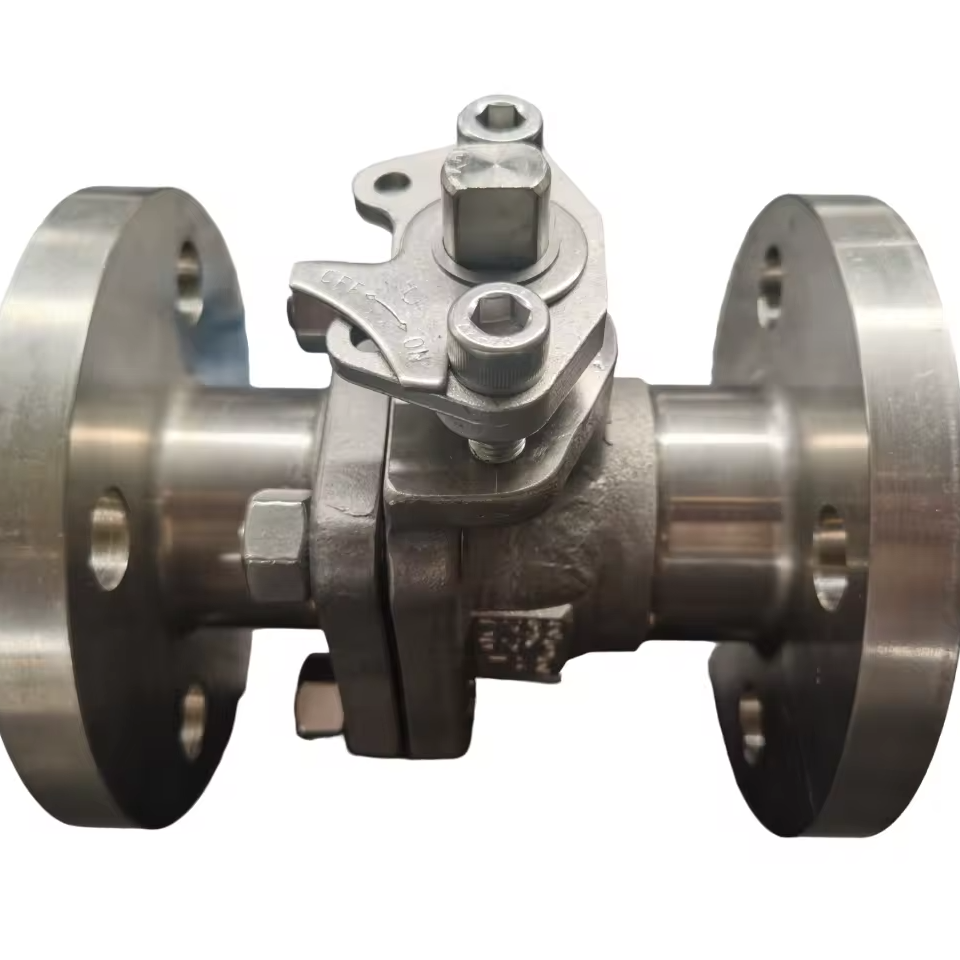
Manufactured strictly to ASME B16.48, ASME B16.5, ASTM B381, and ASTM F136 requirements with raw mill origin in China's Titanium Valley.
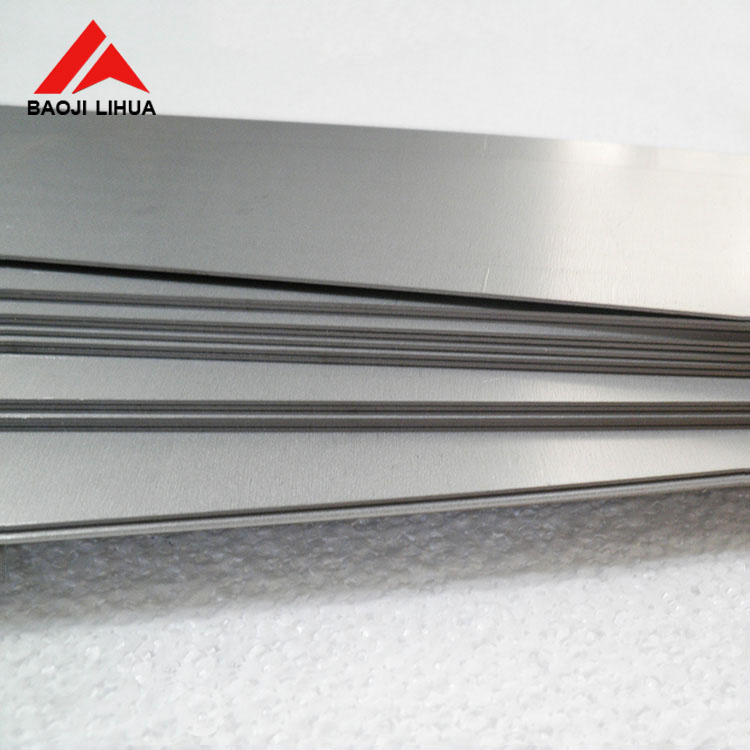
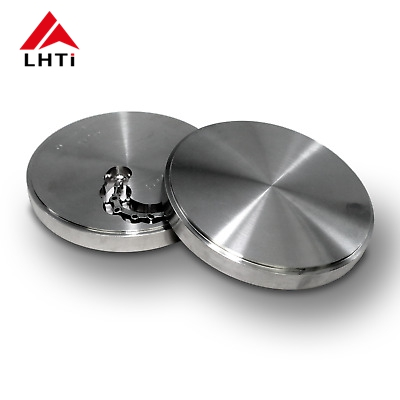
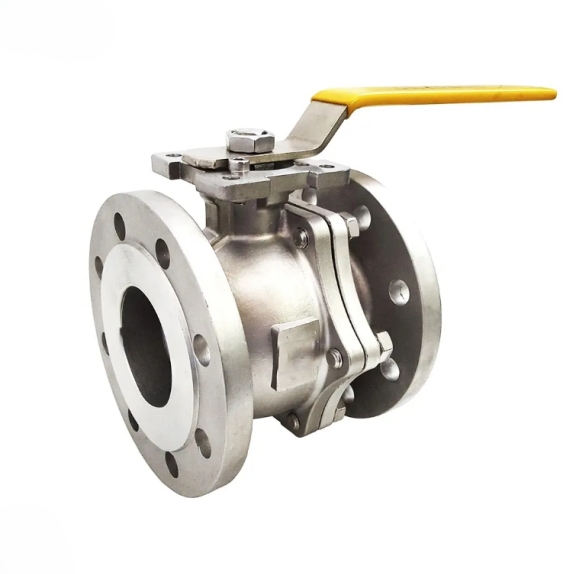
A deep-dive technical assessment into why titanium figure-8 spectacle blinds have displaced duplex steel across Norwegian North Sea operations.
Procurement teams, EPC contractors, and marine engineers in the greater Oslo engineering corridor—stretching from Lysaker to Drammen and Kongsberg—frequently issue RFQs for Titanium Spectacle Blind Flanges (Figure-8 Blinds) to ASME B16.48 and NORSOK L-005. A spectacle blind is fundamentally a safety isolation device comprised of a solid disc (blind) and an open ring (spacer) connected by a central bridge or web. In mission-critical North Sea topside modules and subsea manifolds, maintenance engineers cannot rely on valve shutoff alone; regulatory standards mandate an indisputable, visual confirmation of pipeline isolation during routine pigging, hydro-testing, or hazardous hydrocarbon cleaning.
In Oslo's high-specification engineering eco-system, mechanical failure is not an option. Marine salt spray, sour crude containing hydrogen sulfide ($H_2S$), extreme hydrostatic pressures, and sub-zero Arctic currents quickly induce pitting, crevice degradation, and chloride stress corrosion cracking (CSCC) on traditional 316L stainless or even 2205 Duplex steels. As an authoritative manufacturer and direct exporter situated in China's Titanium Valley (Baoji), Jovzi Titanium bridges the supply-chain gap by manufacturing forged ASTM B381 Grade 2 and Grade 5 spectacle blinds that satisfy the rigorous criteria set forth by Equinor TR2000 and NORSOK specifications.
Titanium instantly forms a continuous, tenaciously adhering $TiO_2$ rutile oxide layer upon ambient atmospheric exposure. In hot aerated seawater, chlorinated biocides, and splash-zone conditions common to the North Sea, titanium spectacle blinds experience a corrosion rate of less than 0.001 mm/year, completely preventing catastrophic crevice leaks.
With an engineered density of approximately 4.51 g/cm³ compared to roughly 7.9 g/cm³ for Inconel 625 or Super Duplex 2507, titanium spectacle blinds deliver up to 43% structural deadweight reduction. For offshore floating production storage and offloading (FPSO) vessels designed in Oslo, this weight delta dramatically decreases pipeline stress moments.
Machined utilizing 5-axis CNC machining centers directly from normalized ASTM B381 forgings rather than sheared plate stock. We maintain precise face finishes with serrated concentric or spiral grooves ($Ra\ 3.2\text{ to }6.3\ \mu\text{m}$) tailored for high-integrity soft iron, PTFE, or titanium-jacketed gaskets under intense bolt torque.
Engineering houses in Oslo service both domestic installations across the Norwegian Continental Shelf (NCS) and export turnkey skid packages globally. The primary operational implementations for titanium spectacle blind flanges include:
Topside Seawater Injection & Firewater Systems: Seawater cooling circuits aboard oil platforms leverage titanium piping (ASTM B338/B861) to bypass the micro-fouling and microbiologically influenced corrosion (MIC) that plagues copper-nickel alloys. In these lines, Jovzi Titanium's spectacle blinds act as switchable flow diverters during filter backwashing and heat-exchanger isolation.
Subsea Chemical Injection Manifolds: Subsea tiebacks requiring the downhole injection of methanol, scale inhibitors, and corrosion inhibitors operate under Class 600, 900, and 1500 pressure ratings. Titanium spectacle blinds engineered with high-strength Grade 5 (Ti-6Al-4V) provide the necessary yield strength (>825 MPa) while preventing galling when paired with molybdenum disulphide-coated fasteners.
Oslo Fjord Maritime Scrubbers & Green Propulsion: Under strict IMO 2020 sulfur emission caps and regional Scandinavian environmental frameworks, maritime vessels calling at the Port of Oslo install exhaust gas cleaning systems (scrubbers). The sulfuric acid condensation generated inside scrubber washwater loops rapidly destroys stainless steels. Jovzi supplies compact, customized spectacle blinds and spade spacers in ASTM B265/B381 Grade 2 to isolate scrubber washwater circuits during port maintenance.
| Material Specification | UNS Designation | Min. Yield Strength (MPa) | Pitting Resistance (PREN) | Density (g/cm³) | Oslo Marine Suitability |
|---|---|---|---|---|---|
| Titanium Grade 2 (CP Titanium) | UNS R50400 | 275 | Immune (Oxide Layer) | 4.51 | Optimal Topside / Seawater |
| Titanium Grade 5 (Ti-6Al-4V) | UNS R56400 | 828 | Immune (Oxide Layer) | 4.43 | Optimal High-Pressure Subsea |
| Super Duplex 2507 | UNS S32750 | 550 | ~42 | 7.80 | Risk of Crevice Pitting >25°C |
| Austenitic Stainless 316L | UNS S31603 | 220 | ~25 | 8.00 | Susceptible to Stress Cracking |
The engineering landscape in Norway is rapidly transforming. Three distinct macro-trends are driving an exponential rise in titanium spectacle blind consumption:
Decarbonization and Offshore Carbon Capture & Storage (CCS): Projects such as the Northern Lights initiative off the western coast of Norway are pioneering the transportation and subsea permanent storage of dense-phase liquefied $CO_2$. Dense-phase $CO_2$ streams containing trace moisture and sulfur dioxides create an aggressively acidic carbonic environment. Standard pipeline steels experience extreme embrittlement and rapid thinning. Jovzi is working alongside international contractors to validate titanium blind isolation assemblies for long-term CCS wellhead tie-ins.
Electrolyzer Stacks for Green Hydrogen: With Norway's abundant hydroelectric capacity, green hydrogen production hubs are expanding along coastal logistics nodes. Alkaline and PEM electrolyzers feature corrosive lye solutions and high-temperature demineralized water circuits. Jovzi's titanium spectacle blinds provide zero-ion contamination guarantees, preventing catalytic catalyst poisoning inside membrane electrode assemblies.
Subsea Electrification & Weight Optimization: As platforms are retrofitted to receive clean shore power, topside load capacities are heavily constrained. Engineering consultancies in Oslo are executing brownfield lightweighting campaigns, mandating that heavy cast iron and copper-nickel piping valves and blinds be systematically replaced with aerospace-derived titanium assemblies.
Headquartered in Baoji, China's Titanium Valley, Jovzi Titanium Industry Co., Ltd. has delivered precision metallurgy, forged solutions, and verified reliability to worldwide buyers since 2006.
Founded in 2006 in Baoji, our facility operates over 1,000–3,000 m² of dedicated manufacturing infrastructure. We convert virgin sponge into precision forgings under the supervision of 4 senior and 5 intermediate titanium metallurgical engineers.
Every single spectacle blind flange shipment is accompanied by a genuine EN 10204 3.1 Mill Test Certificate detailing heat numbers, chemical balance, and Charpy impact values. Independent 3rd-party mechanical and ultrasonic test reports from the authorized BaoTi Test Center are supplied on demand.
With an international export ratio of 81–90% across Western Europe and North America, our multi-currency trade desk supports multi-currency settlements (USD, EUR, NOK) and incoterms including CIF Oslo, FOB Shanghai, CIP, and DDP directly to your fabrication yard.
Addressing the technical, regulatory, and supply-chain inquiries common to Scandinavian offshore procurement.
Send your bill of materials, piping class specifications, or CAD drawings directly to our engineering desk. We provide fully compliant technical quotations, MTC validation, and competitive direct-from-mill pricing within 8 hours.