Engineering Whitepaper: Titanium Threaded Rods in the Bruges Maritime Ecosystem
As the international trade node connecting Northern Europe through the Port of Zeebrugge (Port of Antwerp-Bruges), Bruges presents one of the most mechanically demanding and chemically corrosive operating environments in the world. Maritime loading docks, cryogenic LNG terminal vaporizers, nearby offshore wind turbine foundations in the Belgian North Sea, and inland chemical plants along the Baudouin Canal systematically expose traditional metallic fasteners to severe degradation.
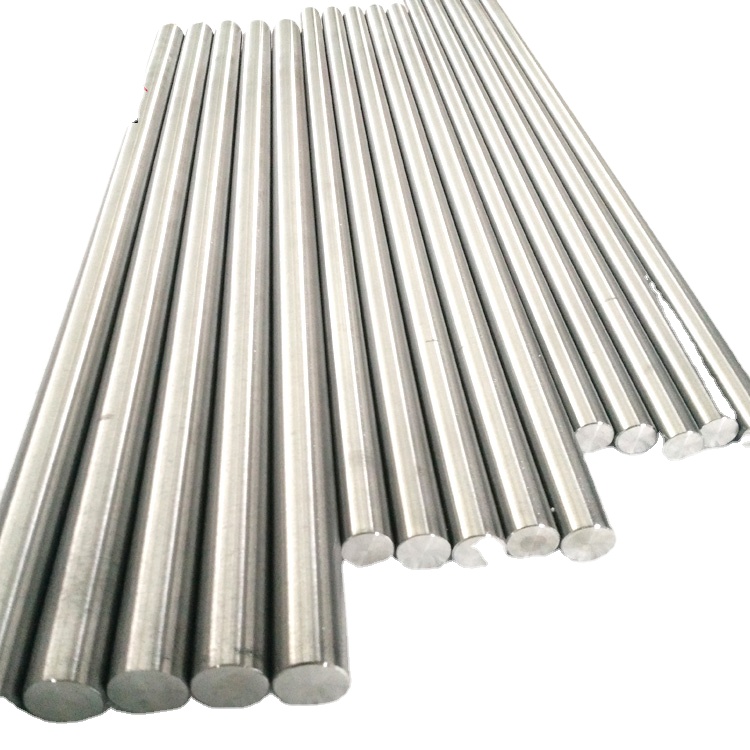
Standard austenitic stainless steels (such as AISI 304 and marine-grade AISI 316L) routinely suffer from severe pitting, crevice corrosion, and chloride-induced stress corrosion cracking (CSCC) when submerged in high-salinity seawater or exposed to splash-zone cycles. As specialized titanium threaded rod manufacturers and global exporters, Jovzi Titanium Industry Co., Ltd. supplies Flemish engineers with precision all-thread rods and double-ended stud bolts engineered from commercially pure Grade 2 (UNS R50400) and alpha-beta alloy Grade 5 (Ti-6Al-4V, UNS R56400). Titanium instantly develops a tenacious, self-healing rutile (TiO₂) passive oxide film, delivering absolute immunity to ambient seawater pitting, regardless of microbiological activity or prolonged hydrodynamic exposure.
Metallurgical Comparison & Mechanical Performance
When engineering structural anchorages, pipe flange assemblies, or subsea installations around Zeebrugge, material selection defines the operational lifespan and maintenance cycles of critical assets. The following technical matrix highlights the comparative advantages of our titanium threaded rods versus legacy marine alloys:
| Material Specification |
Yield Strength (Rp 0.2, MPa) |
Tensile Strength (Rm, MPa) |
Density (g/cm³) |
PREN Value |
Resistance to Marine Crevice Corrosion |
| CP Titanium Grade 2 (ASTM B348) |
≥ 275 - 450 |
≥ 345 |
4.51 |
Immune (TiO₂) |
Excellent (< 80°C constant immersion) |
| Titanium Grade 5 / Ti-6Al-4V (ASTM B348) |
≥ 828 |
≥ 895 |
4.43 |
Immune (TiO₂) |
Superior strength with absolute seawater immunity |
| Titanium Grade 7 / Ti-0.15Pd (ASTM B348) |
≥ 275 |
≥ 345 |
4.51 |
Immune (TiO₂/Pd) |
Exceptional in acidic & high-temp crevice brines (> 250°C) |
| Stainless Steel 316L (EN 1.4404) |
≥ 220 |
520 - 680 |
8.00 |
~ 23 - 25 |
Poor (Susceptible to crevice pitting under marine silt) |
| Super Duplex Stainless (EN 1.4410 / 2507) |
≥ 550 |
750 - 1000 |
7.80 |
≥ 42 |
Moderate to high; risk of intermetallic embrittlement |
Beyond unmatched corrosion resistance, titanium boasts an exceptional strength-to-weight ratio. At roughly 56% the weight of steel, our Grade 5 rolled-thread rods offer structural tensile strength exceeding 895 MPa. This mass reduction critically alleviates deadweight on offshore wind topsides, coastal crane gantry attachments, and cantilevered marine exhaust collectors.
Thread Rolling Integrity vs. Cut Threads
A primary failure mode of structural fasteners in dynamic coastal environments is dynamic fatigue caused by tidal buffeting and turbulent wake. Jovzi Titanium utilizes dedicated cold and warm thread rolling machinery rather than single-point machine turning for the majority of our standard DIN 975 / DIN 976 studs. Thread rolling plastically deforms the titanium crystal structure, maintaining continuous metallurgical grain flow through the thread roots. This process induces compressive residual stresses across root radiuses, resulting in a 30% to 45% increase in dynamic fatigue resistance and virtually eliminating root galling tendencies during high-torque assembly in coastal Flemish workshops.
Offshore Wind Farms (Belgian North Sea)
J-tube clamps, transition-piece secondary steel mountings, cathodic protection bracket fixings, and offshore radar platform anchoring. Gr5 studs guarantee unyielding shear and cyclic load capacity without cathodic hydrogen cracking.
Zeebrugge LNG Regasification & Bunkering
Cryogenic threaded rods fabricated for LNG vaporizer manifolds and sub-zero fuel bunkering connections. Grade 5 ELI (Gr23) maintains exceptional notch toughness and ductility down to -196°C, eliminating brittle fracture risks.
Chemical & Agro-Fertilizer Corridors
Reactor lining securement, heat exchanger tube-sheet tie-rods, and chlor-alkali electrolysis cells along the Bruges-Ghent axis. CP Grade 2 and Grade 7 rods deliver impervious performance against moist chlorine gas and nitric solutions.
Maritime Naval & Luxury Yacht Retrofit
Propulsion strut fastening, ballast valve assemblies, marine scrubber flanging, and titanium exhaust structural hanging. Absolute immunity to galvanic degradation when paired with composite carbon fiber structures or titanium exhaust tubing.
Municipal Water Treatment & Desalination
Coastal brine injection plants and municipal water reclaim units utilizing high-pressure reverse osmosis (RO). Grade 2 tie rods and full-threaded hardware withstand hypochlorite cleaning flushes and concentrated high-chloride brines.
Strategic Market Trends in West Flanders (2025–2030)
The consolidation of the Port of Antwerp-Bruges has created Europe's dominant roll-on/roll-off and chemical handling super-hub. Three pivotal industry trends are driving increased procurement of specialized titanium hardware in the Bruges region:
1. North Sea Clean Energy & Offshore Hydrogen Pilots
With Belgium advancing its offshore energy zones (including Princess Elisabeth Island), balance-of-plant (BoP) engineers are rejecting zinc-plated and standard marine-grade stainless fasteners due to costly offshore maintenance cycles. Sourcing titanium threaded rods eliminates subsea maintenance interventions across the projected 30-year operational design life of offshore substations and electrolyzer platforms.
2. Stringent IMO Scrubber & Alternative Fuel Regulations
Maritime vessels transiting through the North Sea Emission Control Area (ECA) operate under rigorous SOx and NOx emissions ceilings. Hybrid and closed-loop marine exhaust gas scrubbers generate highly acidic, warm sulfur-chloride wash water. Where nickel-copper alloys fail due to aggressive acid pitting, Jovzi's Grade 2 and Grade 7 threaded fasteners and ASME flanging components deliver fail-safe reliability for ship repair yards throughout Zeebrugge and Oostende.
3. Circular Lifecycle Economics Over Initial Capex
Flemish procurement leaders are prioritizing Life-Cycle Cost (LCC) models over initial purchase price. In critical coastal infrastructure, the financial impact of fastener seizure, unplanned downtime, and hazardous chemical leaks far outweighs the minor raw-material delta of titanium. Jovzi Titanium's direct mill-to-port export routes ensure competitive mill pricing, neutralizing intermediate distributor markups across Belgium.
Why European Engineers & Buyers Partner with Jovzi Titanium
Headquartered in Baoji, Shaanxi — recognized globally as "China’s Titanium Valley" — Jovzi Titanium Industry Co., Ltd. integrates the complete titanium manufacturing continuum, from raw titanium sponge melting to precision finished threaded hardware.
Full Mill Traceability
Every shipment is delivered with comprehensive EN 10204 3.1 Mill Test Certificates detailing heat number, microscopic grain size, precise chemical spectrometry, and tensile elongation data. Authorized independent testing by the National BaoTi Test Center is provided upon request.
Precision Machining Fleet
Our workshop houses high-precision CNC multi-axis turning centers, hydraulic forging presses, and specialized thread-rolling systems capable of delivering metric sizes (M3 to M64) and imperial configurations (1/4" to 2-1/2") in custom cut lengths up to 3000mm.
Direct Export Logistics to Belgium
With 19+ years of export experience and an 81–90% global export volume, we maintain seamless delivery channels directly to Zeebrugge, Antwerp, and Brussels airports via DDP, CIF, or express airfreight, packaged in seaworthy, non-coniferous fumigated wooden crates.
What specific titanium grades are recommended for offshore marine hardware in Zeebrugge?
For non-structural, high-corrosion applications (such as cable conduit hangers, sea chests, and pipe flange securement), commercially pure Grade 2 Titanium (ASTM B348 / UNS R50400) is ideal due to its superior ductility, weldability, and complete seawater immunity. For heavy structural anchoring, high-pressure flange bolt-ups, and mooring brackets, Grade 5 (Ti-6Al-4V / UNS R56400) is required to provide high yield strength (≥ 828 MPa) comparable to Class 10.9 structural steel while cutting weight by over 40%.
How does titanium prevent galvanic corrosion when coupled with other metals in port structures?
Titanium is cathodically noble. When directly bolted to less noble metals (such as carbon steel or aluminum) in an active electrolyte like North Sea seawater, it accelerates the galvanic consumption of the mating material. To prevent this, our engineering team advises utilizing non-conductive insulating sleeve kits (such as G10/FR4 or PTFE washers and sleeves) when mounting titanium threaded rods through dissimilar structural flanges.
What thread manufacturing method is used, and how do you prevent thread galling?
We primarily roll threads on specialized forming dies. Rolled threads generate smooth, burnished root radiuses free from micro-tears typical of machine-cut threads, greatly minimizing galling. For field assembly, we recommend applying anti-seize lubricants containing molybdenum disulfide (MoS₂) or specialized nickel-based pastes to eliminate galling during high-torque tensioning.
Can Jovzi supply customized lengths and metric/imperial thread profiles for legacy installations?
Yes. In addition to standard DIN 975 and DIN 976 one-meter and two-meter all-thread rods, we manufacture custom stud bolts (DIN 976 Form A/B), double-end studs, and engineering drawings with UNC, UNF, and metric coarse or fine threads. Custom CNC chamfering, flat ends, and driving slots are readily produced per your CAD drawings.
What are the standard delivery lead times and customs arrangements for shipments into Flanders, Belgium?
Standard titanium bar and rod sizes are dispatched from inventory within 5 to 7 days. Custom CNC machining and rolling of non-standard studs typically require 15 to 25 days depending on lot volume. We handle export documentation, CE/RoHS material compliance declarations, and can quote CIF Port of Zeebrugge or DDP directly to your facility in West Flanders.