Precision Titanium Mill Products & Welding Components
Full-spectrum traceability from vacuum-arc remelted ingots to finished aerospace, chemical, and medical hardware for Germany's advanced processing plants.
Precision Titanium Welding Wire: Metallurgy, Atmospheric Protection, & Normative Compliance
Welding titanium and its reactive alloys presents unique thermo-chemical challenges that demand uncompromising control over raw materials, interstitial purity, and protective shielding. When titanium exceeds 400°C during welding operations, its chemical affinity for oxygen (O), nitrogen (N), hydrogen (H), and carbon (C) escalates exponentially. Atmospheric pick-up causes severe interstitial embrittlement in the heat-affected zone (HAZ), resulting in catastrophic micro-cracking and loss of fracture toughness. Jovzi Titanium Industry Co., Ltd., based in China's Titanium Valley (Baoji), engineers precision filler wires compliant with AWS A5.16 / ASME SFA-5.16 and European standard DIN EN ISO 24034, engineered to satisfy the strict structural integrity mandates of Berlin's advanced engineering institutes.
Our drawing process integrates multiple intermediate vacuum anneals conducted at pressures below 10-3 Pa, preventing subsurface oxide film formation. Subsequent chem-mechanical bright shaving and automated ultrasonic solvent degreasing ensure that every meter of wire has zero residual drawing lubricants, chlorinated compounds, or iron surface contaminations. This guarantees that German welding coordinators (Schweißfachingenieure - IWE) achieve porosity-free root passes and clean silvery-white weld beads on vital assemblies.
| AWS A5.16 Classification | DIN EN ISO 24034 Equivalent | Nominal Chemistry | Max Interstitials (O / H / N / C) | Key Mechanical & Weld Properties |
|---|---|---|---|---|
| ERTi-1 | S Ti 0120 (Ti 99.8) | Commercially Pure Ti | O: 0.10% | H: 0.005% | N: 0.02% | C: 0.03% | Maximum ductility, superior cold forming, deep drawing applications |
| ERTi-2 | S Ti 0130 (Ti 99.6) | Commercially Pure Ti | O: 0.18% | H: 0.008% | N: 0.03% | C: 0.03% | Standard industrial workhorse; optimal strength-to-toughness balance |
| ERTi-5 | S Ti 6400 (Ti-6Al-4V) | 6% Al, 4% V, Bal. Ti | O: 0.18% | H: 0.012% | N: 0.04% | C: 0.05% | Yield strength ≥ 828 MPa; high-fatigue aerospace & exhaust structures |
| ERTi-7 | S Ti 0140 (Ti-Pd) | CP Ti + 0.12-0.25% Palladium | O: 0.18% | H: 0.008% | N: 0.03% | C: 0.03% | Immunity to crevice corrosion in acidic chlorides and brine environments |
| ERTi-12 | S Ti 0150 (Ti-Mo-Ni) | 0.3% Mo, 0.8% Ni, Bal. Ti | O: 0.22% | H: 0.008% | N: 0.03% | C: 0.03% | Elevated temperature performance up to 300°C; crevice corrosion resistant |
| ERTi-23 (ELI) | S Ti 6401 (Ti-6Al-4V ELI) | 6% Al, 4% V Extra Low Interstitials | O: 0.13% | H: 0.008% | N: 0.03% | C: 0.03% | Exceptional fracture toughness at cryogenic temps and surgical implant safety |
Wire form packaging is rigorously configured for automatic orbital TIG, manual GTAW, GMAW, and Wire Arc Additive Manufacturing (WAAM): straight lengths (1000 mm flag-tagged with heat numbers) and precision layer-wound spools (D100, D200, D300, and K300 steel baskets) sealed inside dry argon-purged aluminized moisture-barrier barrier bags.
Localized Application Scenarios across Berlin's Industrial Ecosystem
Meeting the specialized metallurgical demands of Berlin's technology parks, aerospace corridors, and research hubs.
Berlin-Adlershof (WISTA Science Hub)
In Germany's premier science park, laser beam welding (LBW) and vacuum micro-plasma welding systems require ultra-fine ERTi-1 and ERTi-2 wires (0.8 mm - 1.2 mm diameter). Used extensively in synchrotron beamlines, optical satellite chassis, and quantum sensing vacuum envelopes requiring non-magnetic, ultra-low outgassing joints.
Brandenburg Aerospace Corridor
The aerospace manufacturing belt extending from Dahlewitz through Ludwigsfelde demands high-strength ERTi-5 (Ti-6Al-4V) and ERTi-9 filler wires for gas turbine compressor casings, bypass ducting, and lightweight structural brackets. Complete compliance with AMS 4954 and full ultrasonic cleanliness certification are standard requirements.
Siemensstadt 2.0 & Hydrogen Infrastructure
Berlin's historic industrial zone is pioneering the energy transition. Welding electrolyzer stacks, fuel cell plates, and high-pressure hydrogen pipelines requires Grade 7 (Ti-Pd) and Grade 12 (Ti-Mo-Ni) wires, where trace palladium additions eliminate embrittlement in reducing hydrogen-rich environments.
Berlin-Buch Medical Biomechanics Hub
Surgical device manufacturers and implant specialists leverage our medical-grade ASTM F136 Gr5 ELI and ERTi-23 welding rods. Specially spooled wires feed custom micro-TIG stations assembling orthopedic joint anchors, pacemakers, and biocompatible maxillo-facial mesh structures.
CleanTech Innovation Park Marzahn
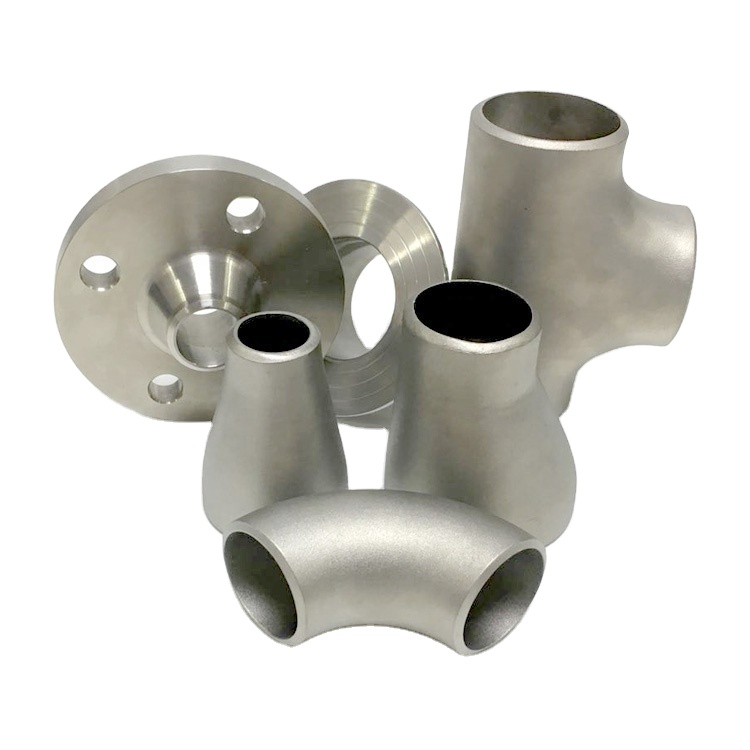
Chemical plant fabricators and wastewater treatment specialists rely on seamless Gr2 concentric reducers, ASTM B363 fittings, and ERTi-2 consumables for heat exchanger bundles, flue gas scrubbers, and chlorination tanks requiring total passivity against chloride stress cracking.
Market Evolution: Trends Shaping Titanium Fabrication in Germany
The manufacturing sector in Germany is undergoing a generational shift driven by sustainability, additive fabrication methods, and rigorous traceability standards under DIN EN ISO 3834-2. In the Berlin-Brandenburg economic area, three pivotal developments are accelerating the adoption of premium titanium filler materials:
1. Wire Arc Additive Manufacturing (WAAM) Industrialization: Fabricators across Berlin are moving away from traditional subtractive machining of monolithic titanium blocks—which historically resulted in "buy-to-fly" waste ratios of over 85%—toward robotic WAAM technologies. WAAM demands spooled wire with micro-dimensional tolerances (diameter variation under ±0.02 mm), smooth cast and helix specifications, and continuous spool-to-spool cleanliness to prevent feeding stall and arc wander during multi-hour depositions.
2. Decarbonization via Green Hydrogen & Power-to-X: Under Germany's National Hydrogen Strategy (Nationale Wasserstoffstrategie), Berlin's research and industrial alliances are building large-scale PEM (Proton Exchange Membrane) and alkaline electrolyzers. Because titanium resists catastrophic corrosion from both low pH acidic membranes and hot alkaline electrolytes, demand for ERTi-7 and ERTi-12 welding wire has spiked for joining bipolar plates, cell manifolds, and high-pressure interconnects.
3. Strict Adherence to DIN EN 10204 3.1 & 3.2 Full Material Genealogy: Procurement managers in Germany reject materials lacking authentic mill provenance. The German market prioritizes complete traceability: heat number melt history, multi-element chemical analysis including trace gaseous elements (O, N, H), mechanical elongation testing, and third-party laboratory verification (such as BaoTi CNAS Test Center reports) matching European standard DIN EN 10204 Type 3.1 inspection certification.
Engineered in Baoji's Titanium Valley • Delivered Seamlessly to Berlin
Founded in 2006 in Baoji, Shaanxi—the heart of China's titanium mill industry—Jovzi Titanium Industry Co., Ltd. combines raw material smelting access with world-class CNC precision machining, precision wire drawing, and dedicated metallurgical testing.
Senior Metallurgy Team
Supervised by 4 senior and 5 intermediate metallurgical engineers, overseeing vacuum induction melting, hot-rolling, cold-drawing, and inert gas spooling workflows.
BaoTi Test Center Guarantee
Every export heat is cross-validated with authentic EN 10204 3.1 mill test certificates, with independent physical/chemical test reports issued by the accredited BaoTi Test Center.
Direct German Logistics
19+ years export expertise handling multimodal rail (Chongqing/Xi'an to Duisburg/Berlin hub), air cargo via Berlin Brandenburg Airport (BER), and sea freight to Hamburg/Rotterdam with DDP delivery.
Flexible Production & Low MOQ
Starting from 1 kg for titanium test bars and 5 kg for specialized filler wire. Customized wire diameters (0.8 mm to 5.0 mm), tailored spools, and custom alloy blends manufactured to drawing.
Frequently Asked Questions by German Welding & Sourcing Engineers
Direct answers addressing European standards compliance, customs handling, quality documentation, and logistics to Berlin.
Request Certified Titanium Welding Wire & Mill Stock for Berlin Delivery
Consult with Jovzi's metallurgical engineering desk. Send your required specifications (grade, diameter, spool configuration, EN 10204 3.1 requirements) for immediate technical review and competitive quotation within 8 hours.