AWS A5.16
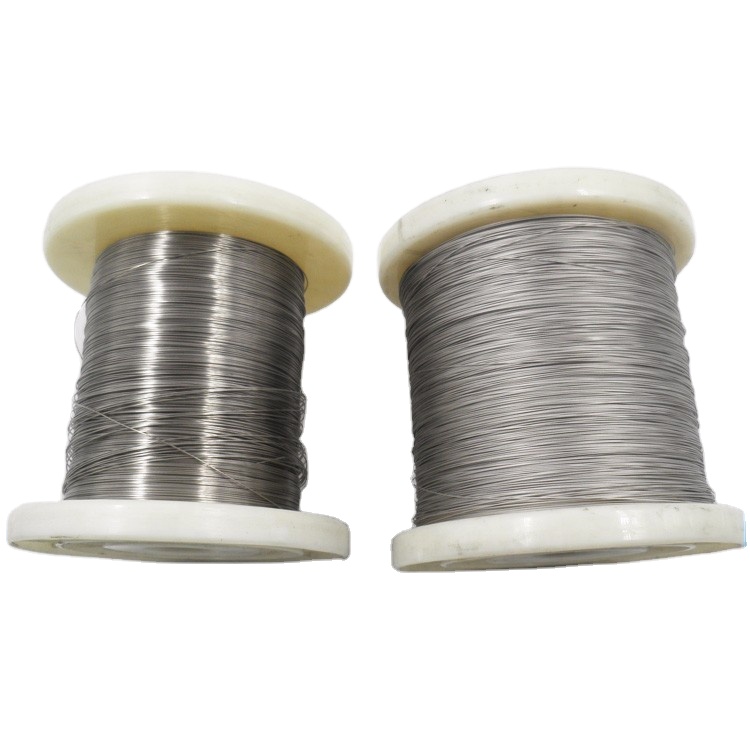
Best Price Aws A5.16 ERTi-2 0.05mm Pure Titanium Fishing Wire
- Standard: AWS A5.16 / ASTM B863
- Grade: ERTi-2 (CP Grade 2)
- Diameter: From 0.05mm Spool
Precision-machined fasteners, ASTM-certified titanium mill products, and weld-ready exhaust hardware manufactured in Baoji and dispatched globally with complete EN 10204 3.1 chemical and mechanical traceability.
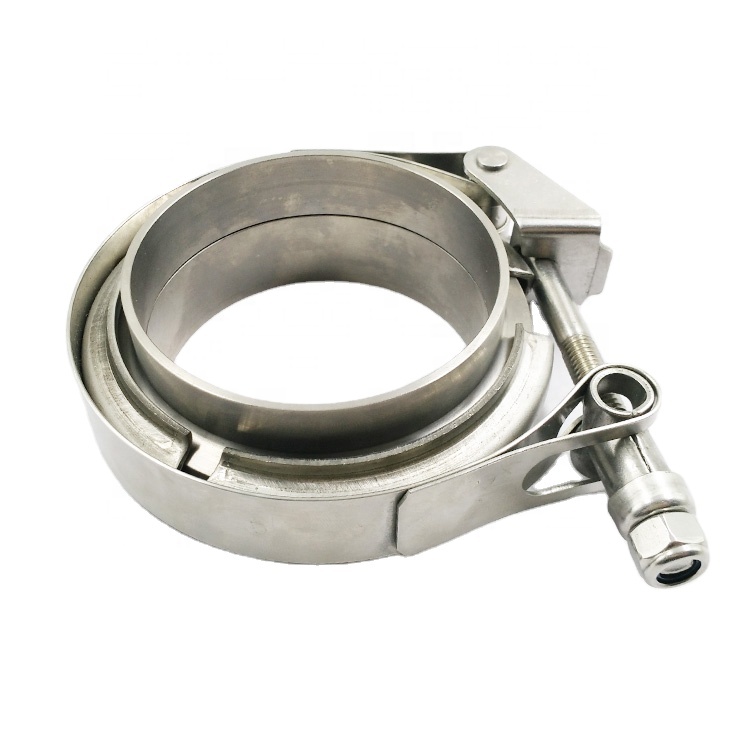
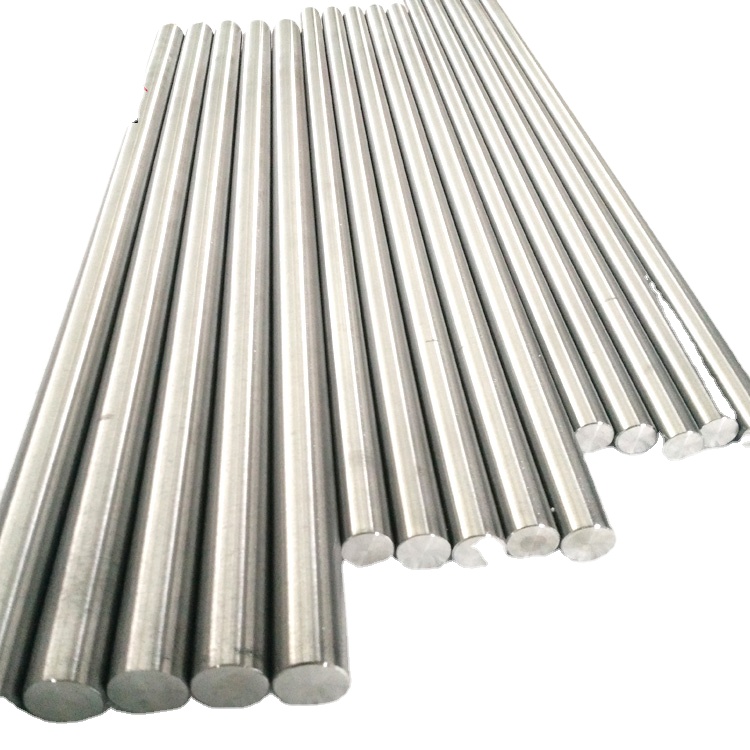
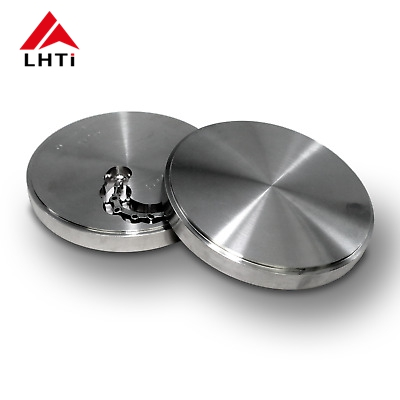
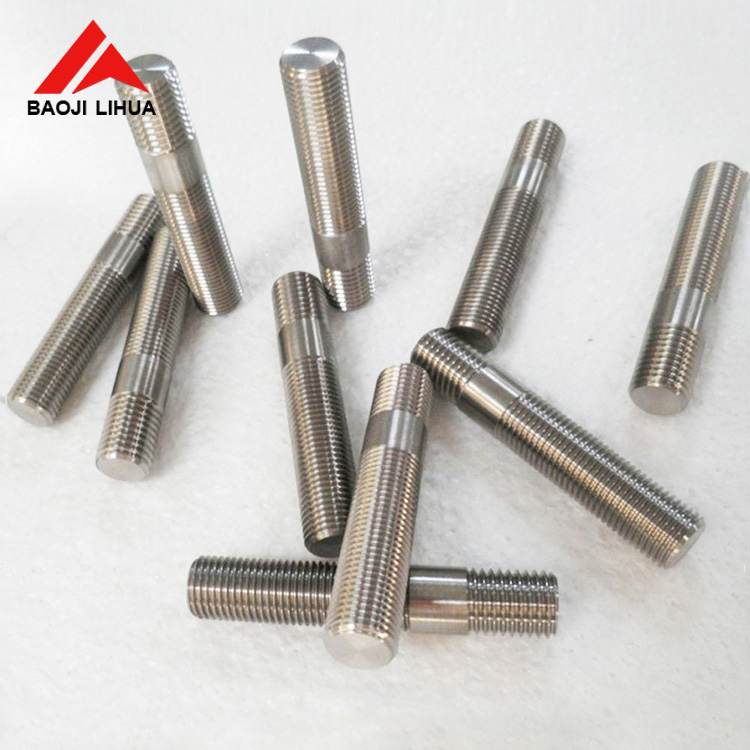
In high-stress exhaust systems, mechanical vibration and cyclic thermal expansion are the primary mechanisms driving structural fatigue. Conventional automotive and commercial marine exhaust layouts frequently rely on standard austenitic stainless steels—such as AISI 304 or 321—configured with wire-braided flex joints. However, when deployed in arduous operating environments, these traditional joints suffer premature catastrophic failure through work hardening, intergranular stress-corrosion cracking (SCC), and high-frequency internal friction attrition between internal braiding wires.
Jovzi Titanium Industry Co., Ltd. re-engineers modern exhaust flexibility utilizing Commercially Pure Titanium Grade 1 (UNS R50250) and Grade 2 (UNS R50400). Titanium possesses an exceptional strength-to-density ratio (density of ~4.51 g/cm³ versus ~8.0 g/cm³ for stainless steels) alongside a significantly lower modulus of elasticity (approximately 105 GPa compared to 200 GPa for structural steel). This lower elastic modulus provides intrinsic compliance, enabling our multi-ply hydroformed titanium bellows convolutions to absorb axial compression, lateral deflection, and angular rotation at far lower reactionary loads on exhaust manifold studs, turbocharger housings, and catalytic converters.
Unlike mechanical roll-formed joints that introduce localized residual stress concentrations across the convolution crests, Jovzi utilizes continuous liquid hydroforming. This process ensures uniform wall thickness across each individual convolution, completely mitigating wall-thinning vulnerabilities and preventing thermal micro-fractures under prolonged 650°C exhaust pulses.
A critical failure point in conventional flex couplers is the internal gas turbulence that impinges directly upon bare internal corrugations. Jovzi solves this through an integrated, CNC-machined Grade 2 directional solid inner liner.
1. Laminar Exhaust Dynamics: Eliminates backpressure buildup and whistling harmonics at extreme flow velocities, shielding bellows convolutions from direct flame wash.
2. Axial Sliding Expansion Joint: One end of the internal titanium liner remains unconstrained, allowing seamless longitudinal elongation as temperatures surge, preventing internal binding or axial deformation under full boost pressure.
3. Anti-Resonant Harmonic Damping: The inner sleeve acts as a mechanical barrier against resonant exhaust pulses emitted by multi-cylinder turbo diesel or race-tuned engines.
| Material Designation | Tensile Strength (MPa) | Density (g/cm³) | Elastic Modulus (GPa) | Thermal Expansion (×10¯&sup6;/K) | Chloride Pit Resistance |
|---|---|---|---|---|---|
| CP Grade 1 Titanium (UNS R50250) | ≥ 240 | 4.51 (Ultra-Light) | 103 | 8.6 | Immune (Ambient / Marine) |
| CP Grade 2 Titanium (UNS R50400) | ≥ 345 | 4.51 (Optimal Balance) | 105 | 8.6 | Immune (Ambient / Marine) |
| AISI 304 Stainless Steel | ≥ 515 | 8.00 | 193 | 17.2 | Susceptible to SCC & Pitting |
| AISI 321 Stabilized Stainless | ≥ 515 | 8.02 | 193 | 16.6 | Moderate (Sensitization Risk) |
| Inconel 625 (Nickel Alloy) | ≥ 827 | 8.44 (Very Heavy) | 207 | 12.8 | Exceptional (Cost Prohibitive) |
David stands as the primary logistics hub, commercial gateway, and agro-industrial powerhouse of Western Panama. Operating at the crossroads of the Pan-American Highway and the Golfo de Chiriquí, machinery and vehicular fleets in David face distinct mechanical and environmental stressors.
David serves as the central artery for freight hauling between Costa Rica (via Paso Canoas) and Panama City. Heavy refrigerated cargo trucks and intermodal freight haulers frequently operate along severe incline transitions from the tropical sea-level heat of David to the mountainous terrain of Boquete and the Cordillera Central.
Continuous torque spikes and dramatic engine rocking over uneven road grades crack rigid stainless downpipes. Jovzi Titanium flex pipe bellows install directly after the turbocharger downpipe, isolating up to 25mm of engine travel while slashing unsprung weight and surviving constant high-sulfur diesel exhaust gas surges without thermal degradation.
Operating directly out of Puerto Pedregal and serving the commercial fishing, shrimp trawling, and charter fleet of the Gulf of Chiriquí, vessels are exposed to hypersaline tropical waters, high humidity, and continuous salt-spray wash.
Stainless steel flex joints frequently experience rapid pitting corrosion and catastrophic chlorine-induced stress crack failures within 12 to 18 months of marine service. Grade 2 titanium forms an instantaneous, tenacious titanium dioxide (TiO&sub2;) passivation layer that remains virtually indestructible in seawater splash zones, offering marine operators in Chiriquí a zero-maintenance, permanent dry/wet exhaust decoupling solution.
Western Panama boasts an intense culture of competitive off-road 4×4 overland racing, mud-bogging, and track tuning. Race fabricators across David demand ultra-lightweight titanium architectures capable of withstanding extreme vibration and mud submersion.
Our CP Grade 1 and Grade 2 titanium flex pipe bellows, paired with our Gr1/Gr2 precision V-band clamps and pie cuts, empower local speed shops in David to build turnkey, featherweight titanium exhaust tracts that never rust, shed 40% to 50% of factory exhaust mass, and accommodate extreme chassis flex without cracking welds.
Over the last five years, procurement professionals, fleet maintainers, and heavy fabrication workshops in David have shifted away from low-grade replacement consumables toward Life-Cycle Cost (LCC) Optimization. In the equatorial climate of Chiriquí, where ambient temperatures consistently exceed 32°C and relative humidity approaches 90%, the replacement intervals for generic flexible joints represent unacceptable labor downtime and lost hauling revenue.
Furthermore, the expansion of the David logistical corridor—connecting agricultural production in Tierras Altas to national and global supply chains—demands maximum fleet reliability. Transport operators cannot risk downpipe failures that lead to under-cab exhaust gas leaks, turbocharger backpressure surges, or sensor communication faults along the Pan-American transit. Titanium exhaust flex joints, once considered an exclusive motorsport novelty, are rapidly establishing themselves as standard equipment for commercial duty cycles where long-term uptime is non-negotiable.
Titanium’s reactivity with atmospheric gases (oxygen, nitrogen, and hydrogen) at temperatures above 400°C requires strict procedural control. To ensure that workshops in David achieve aerospace-grade weld integrity, Jovzi mandates the following protocol:
Degrease the flex pipe cuffs and adjoining exhaust tubing with dedicated acetone. Mechanically clean with stainless steel wire brushes reserved strictly for titanium. Never use chlorinated solvents.
Purge the internal tube volume with 99.999% high-purity industrial argon before striking an arc. Maintain continuous back-purge until the root pass cools below 300°C to prevent crystalline embrittlement.
Utilize a large #12 to #16 gas lens with a secondary trailing shield. Match amperage carefully (typically 45–75 Amps for 1.0mm–1.2mm wall) with AWS A5.16 ERTi-2 filler wire to prevent root burn-through.
Verify weld oxide coloration. Bright silver or pale straw gold indicates full shielding integrity. Violet, dark blue, or powdery gray/white deposits reveal severe interstitial contamination and must be excised.
Established in 2006, Jovzi Titanium Industry Co., Ltd. operates in the epicenter of China’s "Titanium Valley" in Baoji, Shaanxi Province, supplying precision-forged and CNC-machined non-ferrous solutions worldwide.
Our production processes follow rigorous ISO 9001:2015 certified quality controls. From raw sponge titanium selection to final vacuum annealing, dimensional CMM inspection, and hydrostatic bellows leak testing, every production step is systematically documented.
We eliminate procurement ambiguity. Every shipment to David arrives accompanied by authentic EN 10204 3.1 inspection certificates displaying actual melt heat chemistry and mechanical yield/tensile values, verified by the state-authorized BaoTi Test Center.
Supported by 4 senior and 5 intermediate metallurgical engineers, we manufacture custom flex joints, non-standard inlet/outlet diameters (from 38mm up to 127mm), integrated slip-fit cuffs, and CNC-machined titanium flanges built precisely to your CAD/STEP files.
Clear technical answers addressing customs routing, logistics transit, material verification, and application engineering for importers across Western Panama.
From high-end motorsport exhaust fabrication in Western Panama to severe-duty commercial transport and maritime operations in the Gulf of Chiriquí, Jovzi Titanium delivers verifiable metallurgical superiority, competitive mill-direct pricing, and dependable technical consultation.