Engineered Titanium Portfolio & Recommended Assemblies
Direct manufacturer supply from Baoji "China Titanium Valley" — fully certified mill products, forged piping flanges, CNC hardware, and process components.
1. Engineering Integrity: The Metallurgy & Structural Necessity of Titanium Blind Flanges
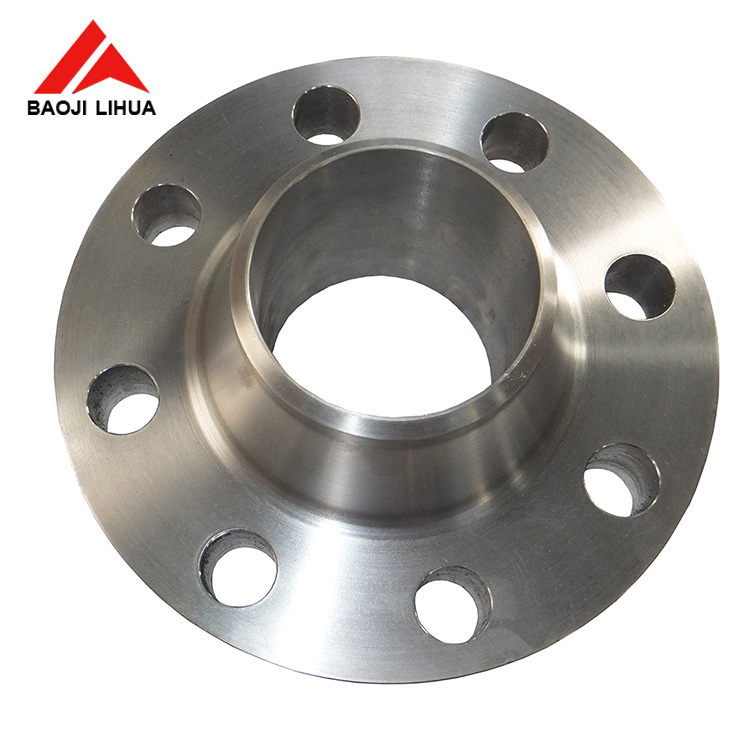
A titanium blind flange (also designated as a blank flange or Type 05 flange under EN 1092-1) serves as an impermeable terminal closure in high-pressure piping manifolds, chemical autoclaves, offshore drilling risers, and industrial heat exchangers. Unlike standard slip-on or weld neck flanges, a blind flange possesses no concentric bore; its circular plate structure withstands maximum hydrostatic thrust and cyclic bending stresses exerted by the line fluid. In corrosive environments where ferric chloride ($FeCl_3$), wet chlorine gas, hypochlorite solutions, nitric acid, sour petroleum fluids containing dissolved $H_2S$, and hot concentrated brines are present, conventional 316L stainless steel, 2205 Duplex, and even Super Duplex 2507 alloys suffer premature breakdown of their chromium-oxide protective barrier, resulting in severe pitting, stress corrosion cracking (SCC), and catastrophic flange gasket blowout.
Titanium blind flanges bypass these material limitations through the spontaneous formation of a tenacious, chemically passive, self-healing rutile and anatase titanium dioxide ($TiO_2$) ceramic film. This surface passivation layer reforms within milliseconds upon micro-abrasion or scratch in oxygen-bearing fluids, providing corrosion rates lower than 0.02 mm/year across operational pH ranges from 2.0 to 12.0. By procuring forgings produced in full conformance with ASTM B381, ASME B16.5, and European Pressure Equipment Directive (PED 2014/68/EU Module H / CE certification), piping engineers eliminate joint-end erosion-corrosion, prevent environmental hydrogen embrittlement via controlled interstitial metallurgy, and significantly reduce assembly tare weights by approximately 45% compared to nickel-based superalloys (such as Hastelloy C-276 and Inconel 625).
| Material Specification | UNS / EN Grade | Yield Strength ($R_{p0.2}$, MPa) | Tensile Strength ($R_m$, MPa) | Density ($g/cm^3$) | Primary Industrial Use Environment |
|---|---|---|---|---|---|
| CP Titanium Gr1 | UNS R50250 / 3.7025 | ≥ 170 | ≥ 240 | 4.51 | Cryogenic piping, deep-drawing blind diaphragms, ultra-low stress manifolds |
| CP Titanium Gr2 | UNS R50400 / 3.7035 | ≥ 275 | ≥ 345 | 4.51 | Chlor-alkali plants, marine cooling, seawater desalination, exhaust blanks |
| Ti-6Al-4V Gr5 | UNS R56400 / 3.7165 | ≥ 828 | ≥ 895 | 4.43 | Offshore subsea manifolds, hyperbaric risers, aerospace hydraulic blanking |
| Ti-0.15Pd Gr7 | UNS R52400 / 3.7235 | ≥ 275 | ≥ 345 | 4.51 | Reducing acids ($HCl$, dilute $H_2SO_4$), crevice corrosion isolation zones |
| Ti-0.3Mo-0.8Ni Gr12 | UNS R53400 / 3.7105 | ≥ 345 | ≥ 483 | 4.54 | High-temperature brine crystallization, geothermal pressure caps (> 200°C) |
| Super Duplex 2507 | UNS S32750 / 1.4410 | ≥ 550 | ≥ 750 | 7.80 | Seawater handling (susceptible to localized crevice pitting over 60°C) |
| Hastelloy C-276 | UNS N10276 / 2.4819 | ≥ 355 | ≥ 790 | 8.89 | Severe acids (excessive weight penalty, nearly double titanium mass) |
2. CE Certification & Advanced Forging Standards: ASME B16.5, DIN & EN 1092-1
European Directive PED 2014/68/EU mandates that pressure vessel attachments and pipeline blind flanges installed in critical safety loops inside the EEA comply with strict material verification protocols. For an international supplier and exporter, obtaining CE marking requires strict adherence to EN 10204 Type 3.1 or 3.2 inspection certificates, where chemical compositions (carbon, oxygen, nitrogen, hydrogen, iron, and palladium balances) and room-temperature/elevated-temperature tensile figures are proven by independent mechanical and laboratory assays.
At Jovzi Titanium, blind flanges originate from VAR (Vacuum Arc Remelted) ingot billets sourced directly within the Baoji industrial base. We discard sub-standard plate-torching techniques that yield micro-cracked heat-affected zones (HAZ). Instead, blind blanks undergo closed-die or open-die rotary forging under computer-governed hydraulic presses to induce isotropic grain refinement per ASTM B381 (F1, F2, F5, F7, F12). Subsequent solution annealing in high-vacuum resistance furnaces relieves residual stresses, precluding distortion during bolt torque application.
ASME B16.5 Dimensional Envelope
Class 150, 300, 600, 900, 1500, and 2500 pressure classes. Nominal pipe sizes (NPS) ranging from 1/2" up to 24" (and ASME B16.47 Series A/B for large diameters up to 48"). Bolt circle tolerances maintained within ±1.0 mm.
EN 1092-1 Type 05 Geometry
Full European standard compliance across PN6, PN10, PN16, PN25, PN40, PN63, and PN100 ratings. Precision face-machining including Raised Face (Type B1/B2), Flat Face (Type A), and Tongue/Groove profiles.
Controlled Gasket Finish (Ra 3.2–6.3 μm)
Serrated concentric or spiral grooves machined per ASME Section VIII rules to ensure reliable compression and seal retention with PTFE, expanded graphite, or titanium-jacketed kammprofile gaskets.
3. Procurement Guide: Technical Selection & Galvanic Isolation Strategies
When engineering procurement specialists design piping networks containing mixed alloys, blind flanges are often targeted for cost optimization. However, substituting titanium components with improperly certified or incorrectly paired materials creates catastrophic operational vulnerabilities. The following engineering strategies are critical for global EPC contractors and procurement managers:
Mitigating Crevice Corrosion: Specifying Titanium Grade 7 or 12
While Grade 2 commercially pure titanium functions exceptionally well in ambient-temperature saline solutions and neutral hypochlorites, it exhibits vulnerability to crevice corrosion beneath flange gasket surfaces when process brine temperatures exceed 75°C (167°F) at acidic pH levels (≤ pH 5). For such thermodynamic profiles, specifying ASTM B381 Grade F7 (alloyed with 0.12%–0.25% Palladium) or Grade F12 (0.3% Mo, 0.8% Ni) is imperative. The noble palladium micro-alloying shifts the mixed corrosion potential electrochemically into the stable passive region, effectively eliminating localized crevice attack even in aggressive boiling chloride media.
Galvanic Isolation Protocols in Dissimilar Metal Piping
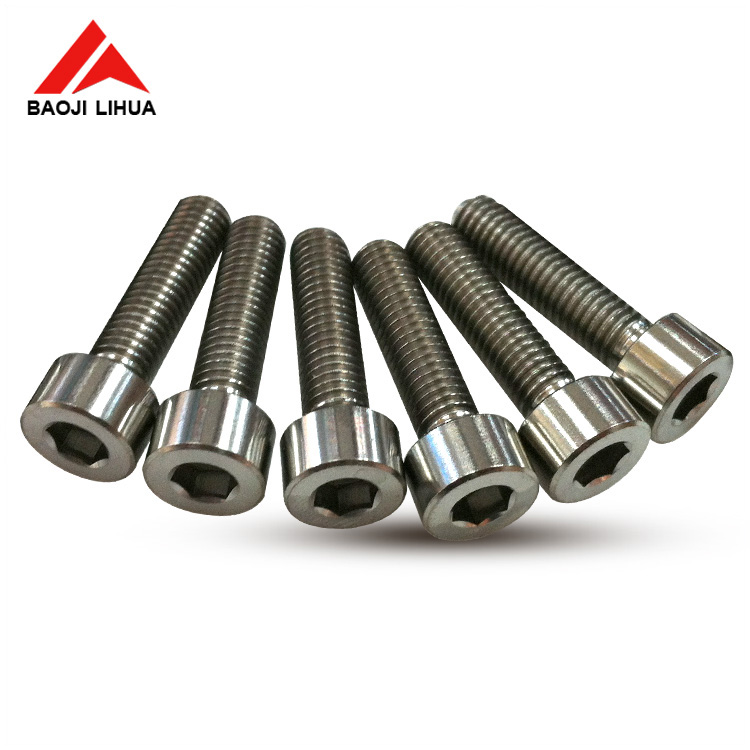
Titanium resides on the extreme noble (cathodic) end of the galvanic series. If a titanium blind flange is bolted directly onto a carbon steel or stainless steel companion mating flange without dielectric insulation, the less noble companion flange will suffer accelerated galvanic galvanic oxidation. Procurement packages must integrate dielectric flange insulation gasket kits comprising G-10 / G-11 epoxy-glass retaining gaskets with PTFE seals, accompanied by high-dielectric mylar or Nomex bolt sleeves and double insulating washers, or utilize dedicated Gr5 titanium fasteners (DIN 912 or stud bolts) to maintain structural compatibility.
4. Future Market & Procurement Trends: Hydrogen, CCUS, and Closed-Loop Circularity
The global demand for high-integrity titanium blind flanges is accelerating rapidly, moving beyond classical oil & gas and aerospace markets into the new energy landscape:
Green Hydrogen (PEM)
Proton Exchange Membrane (PEM) electrolyzers require ultra-pure, non-leaching terminal blind plates and distribution manifolds that resist acidic fluoride-ion leachates while operating under high differential pressures.
Supercritical $CO_2$ & CCUS
Carbon Capture, Utilization, and Storage involves high-pressure dense-phase $CO_2$ combined with condensed water and trace sulfur/nitrogen oxides ($SO_x/NO_x$), demanding titanium’s complete immunity to carbonic acid attack.
Near-Net-Shape Forging
Advanced hot-die forging technologies drastically reduce raw sponge input, achieving buy-to-fly ratios near 1.2:1 (down from 3.5:1), lowering procurement unit costs while maintaining superior mechanical fatigue properties.
Digital Material Passports
European and US supply chains increasingly mandate QR-coded and blockchain-verified metallurgical genealogy, logging furnace run numbers, scrap ratio verifications, and ultrasonic C-scan non-destructive testing directly into the cloud.
5. Jovzi Titanium Advantage: Baoji Manufacturing Hub & Global Export Infrastructure
Headquartered in Baoji, Shaanxi — recognized globally as "China's Titanium Valley" — Jovzi Titanium Industry Co., Ltd. (founded in 2006) represents over 19 years of dedicated manufacturing, forging, and high-precision CNC machining expertise. Operating within a state-of-the-art facility covering 1,000–3,000 m², our manufacturing line is backed by 4 senior and 5 intermediate metallurgical and mechanical engineers. We serve demanding procurement programs across North America, Western Europe, Southeast Asia, Japan, and the Middle East, with export transactions consistently accounting for 81%–90% of our production volume.
Direct Raw Sponge Control
Direct supply contracts with primary local sponge reduction mills allow Jovzi to select grade-0 and grade-1 low-interstitial titanium sponge. We maintain strict control over interstitial elements ($O \le 0.15\%$, $H \le 0.010\%$, $Fe \le 0.15\%$) to deliver maximum fracture toughness.
BaoTi Certified Testing
Every shipment comes accompanied by an EN 10204 3.1 Mill Test Certificate. On-demand, independent third-party physical, metallurgical, and microstructural verification is performed by the nationally accredited BaoTi Test Center, ensuring global compliance.
Turnkey Export & Custom Packaging
Seamless execution of FOB, CFR, CIF, CIP, FCA, CPT, DDP, and DDU Incoterms with major logistics carriers. Every blind flange is degreased, chemically passivated, sealed in anti-scratch protective wrapping, and packed in reinforced, seaworthy fumigated timber crates.