Shape Memory
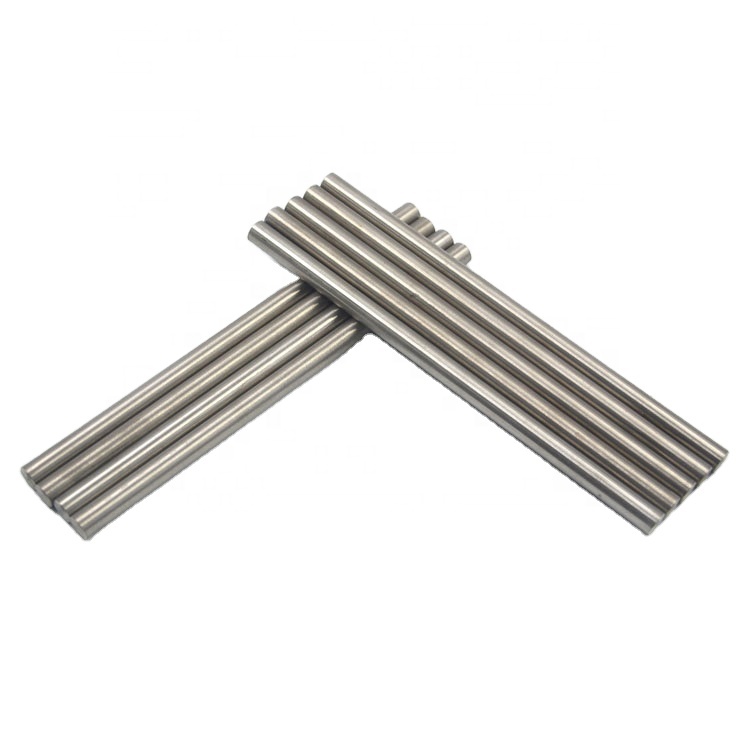
Nickel Titanium Alloy Super Elastic & Shape Memory Nitinol Bar
- Material: NiTi SMA
- Elasticity: Superelastic
- Traceability: MTC 3.1 Supplied
Manufactured to ASTM, ASME, DIN, and AWS specifications with complete EN 10204 3.1 chemical and mechanical traceability verified by the BaoTi Test Center.
In modern process industries—spanning petrochemical processing, offshore oil and gas extraction, seawater desalination, and high-performance automotive motorsport engineering—piping systems frequently navigate abrupt variations in volumetric flow, pressure differentials, and aggressive corrosive chemistries. Within these flow networks, the titanium reducer functions as a mission-critical flow-conditioning butt-weld fitting. Standardized under ASTM B363 (Standard Specification for Seamless and Welded Unalloyed Titanium and Titanium Alloy Welding Fittings) and ASME B16.9 (Factory-Made Wrought Buttwelding Fittings), titanium reducers bridge differing nominal pipe sizes (NPS) while safeguarding the structural integrity of the line against turbulent flow erosion, cavitation, and stress corrosion cracking.
The metallurgical rationale for specifying titanium over duplex stainless steels, high-nickel alloys (such as Hastelloy C-276 or Inconel 625), or cupronickel lies within titanium's spontaneous passivation capability. Upon air or moisture exposure, titanium instantly synthesizes an adherent, chemically inert, and self-healing rutile-structured oxide protective layer (TiO2). This passive film exhibits extraordinary resistance to wet chlorine gas, chlorates, chlorites, perchlorates, hypochlorites, and high-velocity brine solutions up to extreme fluid velocities (exceeding 30 m/s), where conventional copper-nickel alloys suffer devastating impingement attack.
Technical Insight: While concentric reducers align centerlines and are preferred for vertical fluid transport, horizontal gas cooling lines, or pump discharge setups, eccentric reducers preserve a flat-bottom or flat-top profile to eliminate vapor pocket accumulation (cavitation prevention at centrifugal pump suctions) or slurry phase accumulation in horizontal runs.
Employed predominantly in vertical piping stacks where symmetrical fluid convergence prevents localized eddy creation and differential shear wall stress, optimizing pressure drop profiles.
Specified on horizontal pump suction nozzles (flat-side-up) to eliminate high-point vapor locking, avoiding catastrophic impeller erosion and NPSH degradation in aggressive fluids.
From commercially pure Grade 2 for general chemical duty to Grade 7 (0.15% Palladium) for severe non-oxidizing acid reducing media, each alloy offers distinct electro-potential stability.
Selecting the precise grade for an industrial butt-weld reducer requires balancing yield strength, formability during hydroforming or hot-pressing, weldability, and crevice corrosion vulnerability in hot chloride streams (exceeding 70°C). The table below outlines the primary alloys specified under ASTM B363 / ASTM B861 / ASTM B862:
| Titanium Grade | UNS Number | Nominal Composition | Tensile Strength (Min) | Yield Strength (Min) | Primary Application Environment |
|---|---|---|---|---|---|
| Grade 1 | R50250 | CP Pure Ti (Low O2) | 240 MPa | 170 MPa | Deep-draw complex pressings, plate heat exchangers, low-pressure subsea lines. |
| Grade 2 | R50400 | CP Pure Ti (Standard) | 345 MPa | 275 MPa | Workhorse for chemical process plants, offshore cooling water, flue gas desulfurization. |
| Grade 5 | R56400 | Ti-6Al-4V (Alpha-Beta) | 895 MPa | 828 MPa | High-strength structural connections, lightweight aerospace ducting, racing exhaust systems. |
| Grade 7 | R52400 | CP Ti + 0.15% Pd | 345 MPa | 275 MPa | Reducing acid conditions (dilute HCl, H2SO4), elevated chloride crevices (>80°C). |
| Grade 9 | R56320 | Ti-3Al-2.5V (Near-Alpha) | 620 MPa | 483 MPa | Hydraulic lines, offshore coiled tubing, high-pressure motorsport exhaust junctions. |
| Grade 12 | R53400 | Ti-0.3Mo-0.8Ni | 483 MPa | 345 MPa | Intermediate high-temp chloride crevice resistance where Grade 7 palladium cost is prohibitive. |
A resilient global supply chain requires procurement professionals to balance metallurgical certification, manufacturing methodology (seamless hydroforming vs. welded cold rolling), raw material sponge independence, and non-destructive testing (NDT) rigor. Below is an authoritative technical analysis of the top 10 global manufacturers and suppliers recognized for engineering-grade titanium pipe reducers.
Headquartered in China's Titanium Valley since 2006, Jovzi integrates local raw sponge forging with precision CNC machining and cold hydroforming. Specializes in ASTM B363 seamless concentric/eccentric reducers, ASTM B381 forgings, and custom exhaust reducers with EN 10204 3.1 MTCs from BaoTi Test Center.
The flagship state-owned mill in China establishing national standards for titanium metallurgy. Supplies prime aerospace ingots and large-diameter heavy-wall titanium butt-weld fittings for naval defense and nuclear infrastructure.
A premier North American distributor and fabricator maintaining deep inventories of ASME SB363 Grade 2 and Grade 5 piping components, catering to rapid-response maintenance turnarounds across the Gulf Coast petrochem corridor.
A European leader in high-performance metallurgy, providing precision Grade 2 and Grade 5 pipe reducers, flanges, and piping skids engineered for North Sea offshore platforms and sour-gas extraction scrubbers.
World-renowned ASME Code fabricator specializing in reactive metals (Ti, Zr, Ta). Produces custom thick-wall welded titanium reducers, ASME Section VIII pressure vessels, and specialized piping systems for chlor-alkali production.
Pioneers in high-integrity tubular engineering. Alleima supplies seamless cold-worked titanium and zirconium tubing and associated transition fittings for fertilizer plants, nuclear heat exchangers, and subsea hydraulic bundles.
An established Asian exporter of specialty alloy fittings, supplying seamless butt-weld concentric reducers in Grade 2 and Grade 7 for Middle Eastern desalination mega-projects and Asian pharmaceutical synthesis units.
Master stockist and exporter servicing South America and the US Gulf Coast. Focuses on ASTM B363 butt-weld reducers, elbows, tees, and flanges with complete material test reports for emergency plant maintenance shutdowns.
Central European supplier offering precision-formed titanium piping reducers conforming to strict DIN 2616 and EN specifications for European chemical reactors, pulp bleaching autoclaves, and marine scrubbers.
Specialized in extreme-temperature and severe corrosion fittings. While renowned for Monel and Inconel, their dedicated reactive metals department fabricates high-wall titanium Grade 5 and Grade 12 reducers for aerospace testing bays.
In evaluating titanium reducer suppliers, engineering auditors must differentiate between seamless butt-weld reducers (manufactured from extruded or pilgered ASTM B861 hollow billets) and welded reducers (formed from ASTM B265 plate with an automated longitudinal butt-weld seam per ASTM B862). Each method yields precise geometrical, grain-boundary, and residual stress characteristics that influence service longevity:
1. Seamless Hydroforming / Cold Die Swaging: Ideal for high-pressure classes (Schedule 40, Schedule 80, Schedule 160) up to NPS 8. A seamless tube shell undergoes progressive hydraulic press swaging or radial induction-assisted tapering. Because titanium has a lower modulus of elasticity (~105 GPa) than stainless steel (~200 GPa), significant springback must be compensated for during die design. Following forming, fittings undergo intermediate vacuum or inert atmosphere recrystallization annealing (650°C–700°C) to eliminate work hardening and restore optimal elongation (≥20% in Gr2).
2. Welded & Calibrated Construction: For large-diameter piping runs (NPS 10 to NPS 48), titanium plate is CNC waterjet cut to conical flat developments, roll-formed into truncated conical segments, and joined via mechanized Gas Tungsten Arc Welding (GTAW) or Plasma Arc Welding (PAW). Crucially, molten titanium reactively absorbs interstitial embrittling gases (oxygen, nitrogen, hydrogen) at temperatures exceeding 427°C. Consequently, welding requires complete trailing-shield and root-purge shielding using 99.999% pure argon. 100% radiographic examination (RT) or phased-array ultrasonic testing (PAUT) along the weld line is mandatory per ASME Section VIII Division 1 guidelines.
| Critical Inspection Parameter | Standard Reference | Acceptance Criteria | Procurement Significance |
|---|---|---|---|
| Wall Thickness Thinning | ASME B16.9 / ASTM B363 | Minimum 87.5% of nominal wall (t) | Ensures transition zone withstands hoop stress without localized rupture. |
| Surface Liquid Penetrant (PT) | ASTM E165 / ASME Sec V | Zero linear indications; no cracks/laminations | Identifies surface micro-fissures originating from cold forming or die scoring. |
| Radiographic Testing (RT) | ASME Sec V Art 2 / ASTM E1032 | UW-51 / UW-52 Level 1 Soundness | Verifies complete weld penetration and lack of tungsten inclusion or porosity. |
| Interstitial Gas Chemistry | ASTM B363 (Table 1 limits) | O ≤ 0.25%, N ≤ 0.03%, H ≤ 0.015% | Guarantees no environmental embrittlement occurred during hot forming/welding. |
The global market for titanium pipe fittings is undergoing structural shifts driven by global energy transitions, green hydrogen infrastructure, next-generation nuclear reactor coolant networks, and deep-sea mineral extraction. Strategic procurement leaders should monitor three prominent industry developments:
Electrolyzer stacks producing green hydrogen require demineralized ultra-pure water feedlines and wet Cl2 scrubbing where Grade 2 and Grade 7 reducers are supplanting nickel alloys due to zero ion leaching.
Procurement frameworks across the EU and North America increasingly demand raw sponge heat-to-ingot tracking via secure QR/RFID coding stamped onto fitting bevels, curbing counterfeit gray-market materials.
Over 60% of China's titanium manufacturing resides in Baoji's Titanium Valley cluster. International EPC contractors are increasingly bypassing third-party trading intermediaries to establish direct factory agreements for reduced lead times.
Founded in 2006 in Baoji, Shaanxi, Jovzi Titanium Industry Co., Ltd. combines nearly two decades of precision metallurgical manufacturing with an export footprint reaching major industrial markets worldwide.
Sourcing directly from prime local sponge-to-ingot melters ensures uncompromised chemistry control, complete heat traceability, and defense against sub-tier supply chain volatility.
Equipped with heavy CNC turning centers, hydraulic swaging presses, and atmospheric vacuum annealing furnaces to manufacture seamless reducers up to NPS 12 with precision bevels per ASME B16.25.
In addition to our factory-level ISO 9001 quality management workflow, independent mechanical, spectrographic, and corrosion testing reports issued by the authoritative BaoTi Test Center are provided on request.
Products are fabricated strictly to ASTM B348, ASTM B363, ASTM B381, ASME B16.5, ASME B16.9, and DIN 912, guaranteeing full dimensional and chemical interoperability with global engineering specs.
With over six years of specialized OEM manufacturing and buyer-label programs, our engineering staff converts 2D and 3D CAD/STEP models into tight-tolerance custom titanium fittings and assemblies.
Offering versatile commercial terms (FOB, CIF, EXW, CIP, DDP) with seaworthy export packing, customized scratch-resistant labeling, and rapid engineering replies in 8 hours or less.
In-depth technical answers addressing common metallurgical, hydrodynamic, testing, and operational inquiries from process engineers and procurement teams.
Consult with Jovzi Titanium’s metallurgical engineers in Baoji. Send your 2D/3D drawings, bill of materials, piping schedules, or required ASTM specifications for prompt technical evaluation and factory-direct pricing.
Send an Inquiry