Precision Engineered Titanium Forgings & Custom Components
Manufactured to aerospace, subsea chemical, and racing tolerances. Select any product below for direct engineering drawings, dimensional specs, and batch volume quotes.
1. The Industrial Geography of China Titanium Forgings: Why Baoji Dominates Global Supply
In the arena of non-ferrous metallurgy, titanium stands out as the ultimate balance of high specific strength, extreme galvanic endurance, and superior temperature thresholds. For industrial procurement teams in Europe, North America, and the Asia-Pacific, selecting a competent forging partner is not merely a transaction; it represents a comprehensive risk assessment spanning upstream ore reduction, double and triple vacuum arc remelting (VAR), thermomechanical processing, and strict ultrasonic inspection regimes. China currently accounts for more than half of the world's raw titanium sponge manufacturing and refined titanium mill processing, with the geographic epicenter situated firmly in Baoji, Shaanxi Province — widely recognized as "China Titanium Valley."
The concentration of capital equipment, metallurgical research institutions, and certified testing facilities in Baoji provides an unmatchable structural advantage. Jovzi Titanium Industry Co., Ltd., founded here in 2006, operates within this dense cluster. Local access to prime Grade 0 vacuum-distilled sponge titanium, combined with immediate collaboration alongside state-level research bodies like the authorized BaoTi Test Center, guarantees that titanium forgings produced in this region maintain microstructural uniformity, free from high-density inclusions (HDI) or low-density interstitial defects (LDI).
Thermomechanical Integrity: From Ingot to Forged Disc, Ring, and Billet
During the transformation of a cylindrical ingot into an ASTM B381 titanium forged ring, blind flange, or custom-shaped block, mechanical grain refinement is achieved through sequential open-die upset-and-draw procedures. This eliminates the coarse, columnar as-cast dendritic structure, transmuting it into a finely equiaxed or bimodal (duplex) microstructure.
This grain refinement directly enhances fatigue life, fracture toughness, and zero-defect ultrasonic penetrability. For mission-critical applications — such as subsea blowout preventers (BOPs), centrifugal chemical impellers, nuclear reactor tube sheets, and automotive motorsport connecting hardware — Chinese tier-1 titanium forging manufacturers utilize automated open-die hydraulic hammers ranging from 1,250 tons to 10,000 tons, followed by precision CNC roughing and finish turning.
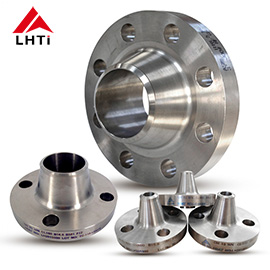
Open-Die Free Forging
Ideal for heavy stepped shafts, rectangular blocks, discs up to 2,000mm outer diameter, and heavy-wall cylinders. Yields dense, pore-free billets with uniform grain flow.
Seamless Ring Rolling
Hot radial-axial ring rolling machines produce ASTM B381 seamless rings with near-net geometry, maximizing material utilization and circumferential hoop tensile strength.
Precision Closed-Die Forging
Engineered for complex shapes like valve bodies, pipe elbows, automotive connecting rods, and aerospace structural brackets with minimal draft angles and tight tolerances.
Metallurgical Benchmark: Titanium Grades & Forging Specifications
Strategic grade selection prevents over-engineering expenses while eliminating catastrophic in-service degradation. Review physical benchmarks below per ASTM/ASME standards.
| Titanium Grade | UNS / Composition | Forging Window (°C) | Min Tensile (MPa) | Min Yield (MPa) | Primary Industrial Field |
|---|---|---|---|---|---|
| Grade 1 (CP-4) | UNS R50250 (Unalloyed) | 800 – 900 | 240 | 170 | Deep-drawn plates, heat-exchanger shells, high ductility parts |
| Grade 2 (CP-3) | UNS R50400 (Unalloyed) | 820 – 950 | 345 | 275 | Chemical flanges, B381 rings, electroplating racks, exhaust systems |
| Grade 5 (Ti-6Al-4V) | UNS R56400 (α+β Alloy) | 880 – 960 (Sub-transus) | 895 | 828 | Aerospace fasteners, racing wheel bolts, offshore risers, turbine discs |
| Grade 7 (Ti-0.15Pd) | UNS R52400 (CP + Palladium) | 820 – 950 | 345 | 275 | Extreme reducing chemical media, severe crevice corrosion environments |
| Grade 9 (Ti-3Al-2.5V) | UNS R56320 (Near α) | 850 – 950 | 620 | 483 | High-pressure hydraulic lines, cycling sports frames, marine shafts |
| Grade 12 (Ti-Mo-Ni) | UNS R53400 (Dilute Alloy) | 850 – 970 | 483 | 345 | Elevated-temperature chemical process equipment, valve balls |
| NiTi (Nitinol) | 55% Ni – 45% Ti (SMA) | 750 – 850 | 750 – 960 | 100 – 500 | Superelastic medical guidewires, actuators, aerospace deployables |
2. Product Development Trends: Next-Generation Titanium Forging Technology
The global titanium forging sector is undergoing unprecedented technological transformation driven by aerospace decarbonization, semiconductor ultra-pure processing requirements, and extreme deep-sea exploration. Top Chinese manufacturers have moved far beyond low-margin commodity ingot sales, heavily investing in advanced metallurgical workflows:
A. Isothermal and Near-Beta Forging: Traditional hot forging causes rapid heat dissipation when cold die steel contacts glowing titanium billets, resulting in an inhomogeneous "chilled skin" that must be heavily machined away. Isothermal forging — wherein molybdenum-alloy dies (TZM) are induction-heated to identical billet temperatures inside vacuum or protective argon enclosures — allows superplastic metal flow. This yields near-net-shape components with complex ribs and webbings, driving Buy-to-Fly (BTF) weight ratios down from 10:1 to less than 2:1.
B. Closed-Loop Electron Beam Cold Hearth Melting (EBCHM): While dual VAR remains the workhorse standard, leading Baoji mills utilize multi-torch EBCHM systems. This technology creates high-vacuum melt pools where low-density inclusions (such as titanium nitrides) are thoroughly dissolved, and high-density tungsten carbide or tool-steel contaminants sink to the skull bottom. The result is ultra-clean forging stock meeting strict rotating aerospace disc specifications.
C. Hybrid Additive-Forging Workflows: Wire Arc Additive Manufacturing (WAAM) is now combined with intermediate forging strokes. By applying cyclic localized compressive deformation to additive depositions, internal micro-porosity is mechanically closed, and the typical columnar grain growth is broken up into isotropic equiaxed grains, rivaling conventional wrought properties at a fraction of lead time.
3. Future Sourcing Trends: Strategic Advice for International B2B Buyers (2025–2030)
Managing titanium supply chain risk has become a board-level priority for global procurement executives. Fluctuations in raw sponge pricing, shifts in regional energy tariffs, and evolving trade regulations necessitate forward-looking procurement methodologies:
Index-Linked Raw Sponge Hedging
Rather than accepting fixed spot prices subject to merchant volatility, international buyers are establishing formula-based contracts linked directly to published Chinese 0-grade sponge benchmarks.
Pre-Machined Proof & Rough Forgings
Importing fully black (as-forged) billets involves shipping 30%–50% redundant unworked skin weight. Savvy buyers request proof-turned and rough-machined forgings, reducing freight overhead and exposing sub-surface flaws before export.
Decentralized Quality Validation
Contracting ISO 17025 accredited laboratories — such as the BaoTi Test Center — to issue EN 10204 3.1 or 3.2 inspection certifications ensures third-party verification of chemical and mechanical data prior to ocean container loading.
Why Jovzi Titanium Industry Is Your Premier Forging Partner
Founded in 2006 in Baoji, Jovzi Titanium Industry Co., Ltd. has developed into an integrated manufacturer and exporter delivering high-integrity titanium, nickel, tantalum, and molybdenum components to over 30 countries across North America, the European Union, Southeast Asia, and the Middle East.
Our engineering backbone comprises 4 senior metallurgists and 5 intermediate mechanical engineers who oversee every stage of transformation. From drawing review to final coordinate measuring machine (CMM) dimensional verification, our manufacturing processes eliminate porosity, ensure continuous directional grain flow, and maintain the precise tight tolerances specified by our clients.
Integrated Machining Arsenal
Our CNC facilities feature multi-axis turning-milling centers, heavy-duty horizontal lathes, CNC thread-rolling units, and deep-hole drilling machinery capable of machining hollow valve balls, ASME B16.5 flanges up to 24", and thin-walled exhaust components.
Complete Traceability (EN 10204 3.1)
Every forging heat is permanently marked with laser-etched or stamped heat numbers corresponding to mill test reports. Spectrometric chemical analysis, room and elevated temperature tensile checks, and Charpy V-notch impact data are systematically recorded.
Ultrasonic Testing (AMS 2631 / ASTM B381)
All forged rounds, rectangular billets, and ring blanks undergo 100% straight-beam and angle-beam ultrasonic testing (UT) according to AMS 2631 Class A1 / AA or ASTM B381 Class A, ensuring zero internal voids, laminations, or micro-cracks.
Procurement & Engineering FAQ: Titanium Forgings
Direct answers to technical, commercial, and metallurgical queries frequently raised by engineering procurement specialists.
ASTM B348 strictly governs titanium and titanium alloy bars and billets produced via conventional hot rolling or extrusion, intended primarily for machining stock. In contrast, ASTM B381 is the governing specification for titanium forgings (including forged rings, discs, contoured shapes, and flanges). ASTM B381 enforces specific forging reduction ratios (typically minimum 3:1 or 4:1 from ingot), ensuring complete mechanical break-up of as-cast dendritic crystals, directional grain orientation, and elevated fracture toughness across transverse and radial test axes.
Ti-6Al-4V exhibits a distinct beta transus temperature around 995°C ± 15°C. If hot forging is performed entirely above the beta transus (β-forging), coarse transformed-beta acicular microstructures form; this enhances creep resistance and fracture toughness but degrades low-cycle fatigue and ductility. When forging below the transus (α-β forging, typically 900°C–950°C) with sufficient deformation strain, an equiaxed globular α in transformed β matrix is achieved, providing superior tensile strength and high-cycle fatigue life for racing and aerospace components.
Titanium readily absorbs hydrogen at temperatures above 400°C, which can cause severe delayed hydride-induced embrittlement. Our facilities utilize electrically heated furnaces with calibrated inert or micro-oxidizing atmospheres rather than hydrocarbon-rich open gas flames. Post-forging vacuum annealing (typically at 650°C–750°C at < 10^-3 Pa vacuum) is deployed whenever specified, ensuring final hydrogen content remains strictly within specification (≤ 0.0125% / 125 ppm per ASTM B381).
Every production batch includes an EN 10204 3.1 inspection certificate detailing full chemical composition (including interstitial elements: C, O, N, H, Fe), room-temperature tensile and yield strengths, percent elongation, and reduction of area. On request, we provide 100% Ultrasonic Testing (UT) per AMS 2631 or ASTM B381, Liquid Penetrant Testing (PT) for surface cracks per ASTM E1417, dimensional CMM reports, and independent third-party metallographic verification issued by the BaoTi Test Center.
For standard titanium round bars, ASME B16.5 plate flanges, and stock exhaust tubing, MOQ starts at 1 piece or 1 kg. For customized open-die and closed-die forgings requiring dedicated die tooling or specific forging molds, MOQ depends on billet geometry (typically 100 kg to 500 kg). Tooling fabrication typically takes 15–20 days; sample batch forgings are delivered within 10–15 days; full commercial production runs average 25–35 days with expedited air express or sea freight options.
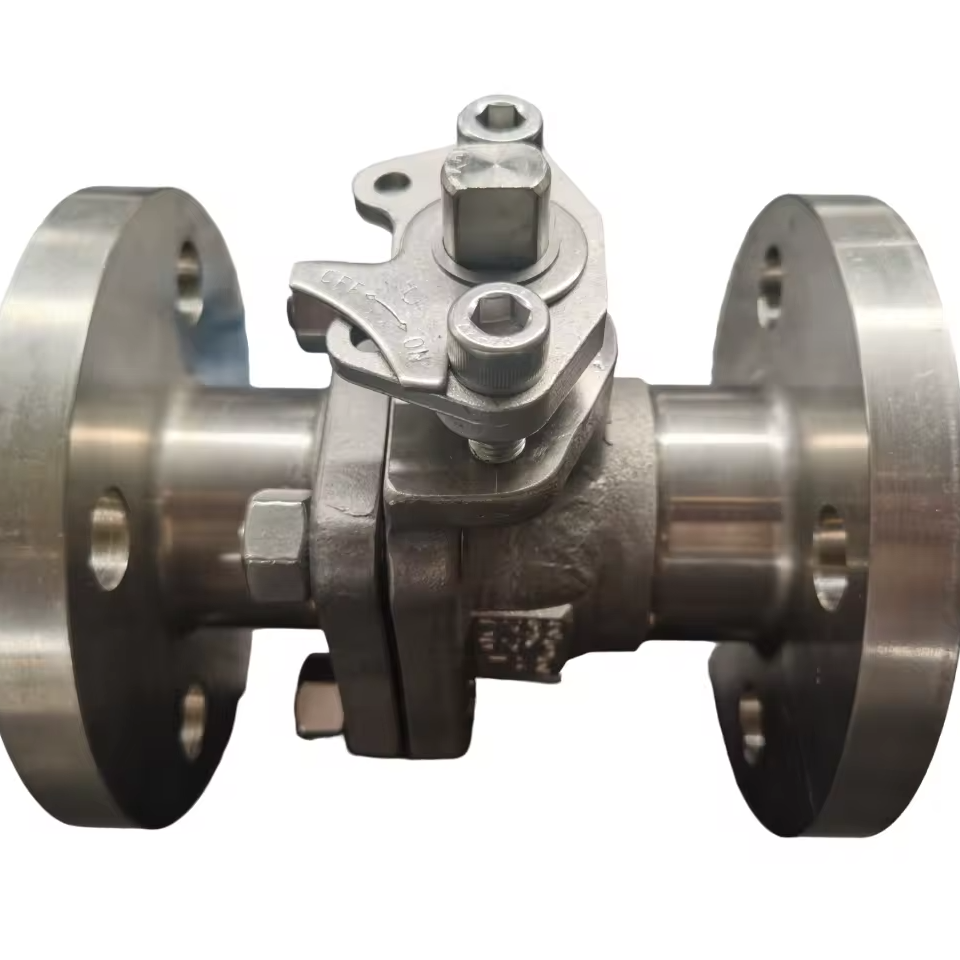
Yes. Jovzi specializes in manufacturer-direct production of titanium and titanium alloy valve balls, including solid, hollow-casing floating balls, and trunnion-mounted balls engineered from Gr2, Gr5, and Gr12 alloys. Additionally, our radial-axial ring rolling partners forge seamless titanium rings up to OD 1,074mm and beyond, compliant with ASTM B381 Grade F2 / F5 / F7 for pressure vessel and subsea pipeline flanges.
Request an Engineered Quote for Titanium Forgings
Send your CAD models (.STEP, .IGS, .DWG) or PDF engineering drawings directly to our metallurgical team. Jovzi provides complete chemical, mechanical, and pricing proposals within 8 hours.
Inquire Now