Precision Titanium Mill Products & Piping Hardware
Direct manufacturer supply from Baoji to the Port of Dili with EN 10204 3.1 chemical & physical certification.
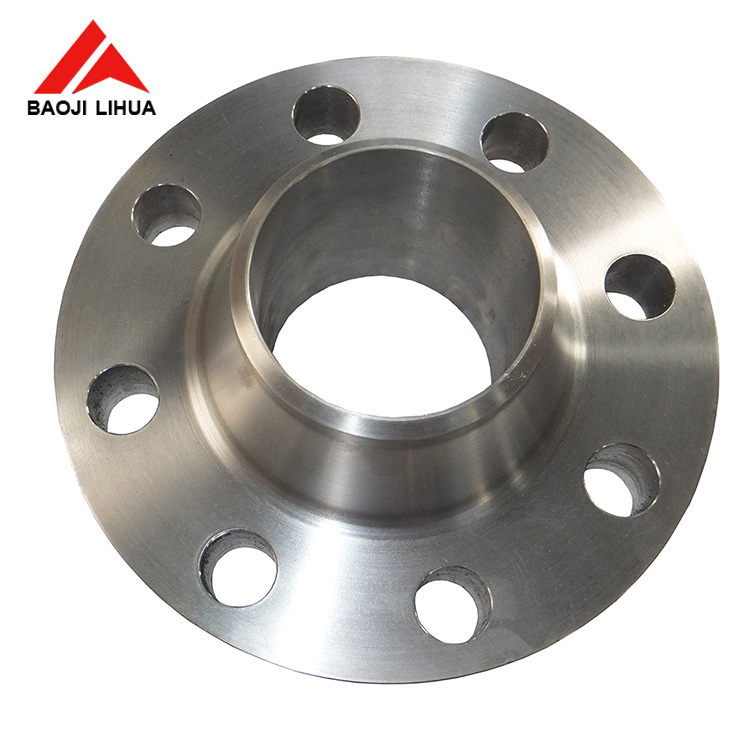
Engineering Overview: ASME B16.5 Titanium Plate Flanges
Comprehensive technical breakdown of design tolerances, metallurgical integrity, and bolting dynamics for critical infrastructure.
Industrial piping networks operating in tropical littoral environments face aggressive corrosion challenges that render standard carbon steel and even standard austenitic stainless steels (such as AISI 304 and 316L) financially and operationally unviable over prolonged service lives. The ASME B16.5 Titanium Plate Flange (also designated as a Slip-On Plate Flange, or Type 01 in EN 1092-1 equivalents) represents an optimum balance of mechanical resilience, compact dimensional foot-printing, and unmatched galvanic resistance against warm marine electrolytes. Fabricated according to strict dimensional constraints, these plate flanges slide over the outer diameter of pipe spools and are secured utilizing two fillet welds—one on the exterior hub-shoulder perimeter and one internally near the flange face boundary.
From a metallurgical perspective, commercial purity Grade 2 (UNS R50400) provides the primary building block for fluid handling networks operating below 200°C. With a minimum tensile yield strength of 275 MPa (40,000 psi) and ultimate tensile strength exceeding 345 MPa (50,000 psi), Grade 2 delivers sufficient ductility for field alignment while preserving high resistance against crevice corrosion under high-salinity circumstances. Where elevated shear resistance, bolt-pretension durability, or dynamic wave-action loads are present—such as in offshore marine structures—Grade 5 (Ti-6Al-4V, UNS R56400) or palladium-stabilized Grade 7 (UNS R52400) forged rings and cut plate blanks provide structural performance rivaling high-strength alloy steels while reducing structural dead-weight by approximately 44%.
Manufactured strictly adhering to the dimensional standards of ASME B16.5 (Pipe Flanges and Flanged Fittings: NPS 1/2 through NPS 24 Metric/Inch Standard), our production line implements high-precision multi-axis CNC face-turning and drilling centers in Baoji. The critical flange sealing interface—whether flat face (FF) or raised face (RF)—is machined with a continuous spiral or concentric phonographic serration ranging between Ra 3.2 μm to 6.3 μm (125 to 250 μin AARH). This specific micro-groove topology ensures controlled embedment into PTFE, flexible graphite, or expanded metallic gaskets, completely eliminating leak paths under cyclical thermal oscillations and transient hydraulic pressure surges.
| ASME B16.5 Flange Parameter | Grade 2 CP Titanium (UNS R50400) | Grade 5 Alpha-Beta Alloy (UNS R56400) | Grade 7 Pd-Stabilized (UNS R52400) |
|---|---|---|---|
| Applicable Material Standards | ASTM B265 (Plate) / ASTM B381 (Forging F2) | ASTM B265 (Plate) / ASTM B381 (Forging F5) | ASTM B265 (Plate) / ASTM B381 (Forging F7) |
| Nominal Chemistry (%) | Ti Balance, Fe ≤ 0.30, O ≤ 0.25, C ≤ 0.08 | Ti Balance, Al 5.5-6.75, V 3.5-4.5, Fe ≤ 0.40 | Ti Balance, Pd 0.12-0.25, Fe ≤ 0.30, O ≤ 0.25 |
| Tensile Strength (Min. MPa) | 345 MPa (50 ksi) | 895 MPa (130 ksi) | 345 MPa (50 ksi) |
| Yield Strength 0.2% (Min. MPa) | 275 MPa (40 ksi) | 828 MPa (120 ksi) | 275 MPa (40 ksi) |
| Pressure Classes Supported | Class 150, Class 300, Class 600 | Class 150 up to Class 2500 | Class 150, Class 300 |
| Gasket Facing Profile | RF / FF Serrated (Ra 3.2 - 6.3 μm) | RF, RTJ (Ring Type Joint) Octagonal | RF / FF Spiral Serrated |
| Primary Corrosion Resistance | Immunity to ambient raw seawater, chlorines | High-velocity cavitation, structural marine | Extreme low pH brines, boiling halides |
Localized Industrial Applications Across Timor-Leste
Targeted engineering deployments addressing coastal industrialization and critical infrastructure around Dili.
Tibar Bay Port & Marine Terminals
The modernization of the Tibar Bay deepwater container facility and regional fuel offloading piers demands mooring line conduits, seawater ballast transfer piping, and marine firefighting systems immune to tropical galvanic pitting. ASME B16.5 titanium plate flanges ensure 40+ year maintenance-free operation under constant saline spray, splash-zone wash, and dynamic tidal shifts.
Dili Seawater Reverse Osmosis (SWRO)
To relieve municipal freshwater deficits along the northern coastal strip of Timor-Leste, modular SWRO and beach-well intake systems rely on high-pressure titanium manifold assemblies. Jovzi's Gr2 plate flanges eliminate pitting and crevice oxidation caused by concentrated brine streams, raw hypochlorite sterilization dosing, and micro-biofouling agents without degrading.
Greater Sunrise & Offshore Support
As offshore gas conditioning modules, floating production storage, and subsea tiebacks converge toward regional operations, titanium slip-on plate and blind flanges handle topside produced-water stripping, wet acid gas compression, and shell-and-tube titanium condenser tie-ins where downtime expenses exceed thousands of dollars per hour.
Coastal Power Generation Facilities
Heavy fuel oil and diesel generation units located near Dili's coastal fringe utilize open-loop seawater cooling circuits. Titanium plate flanges are integrated with plate heat exchangers (PHE) and titanium exhaust flex bellows to isolate vibration, handle sulfurous condensation, and endure high-velocity cooling water flow rates without erosion-corrosion degradation.
Chemical Dosing & Processing Skids
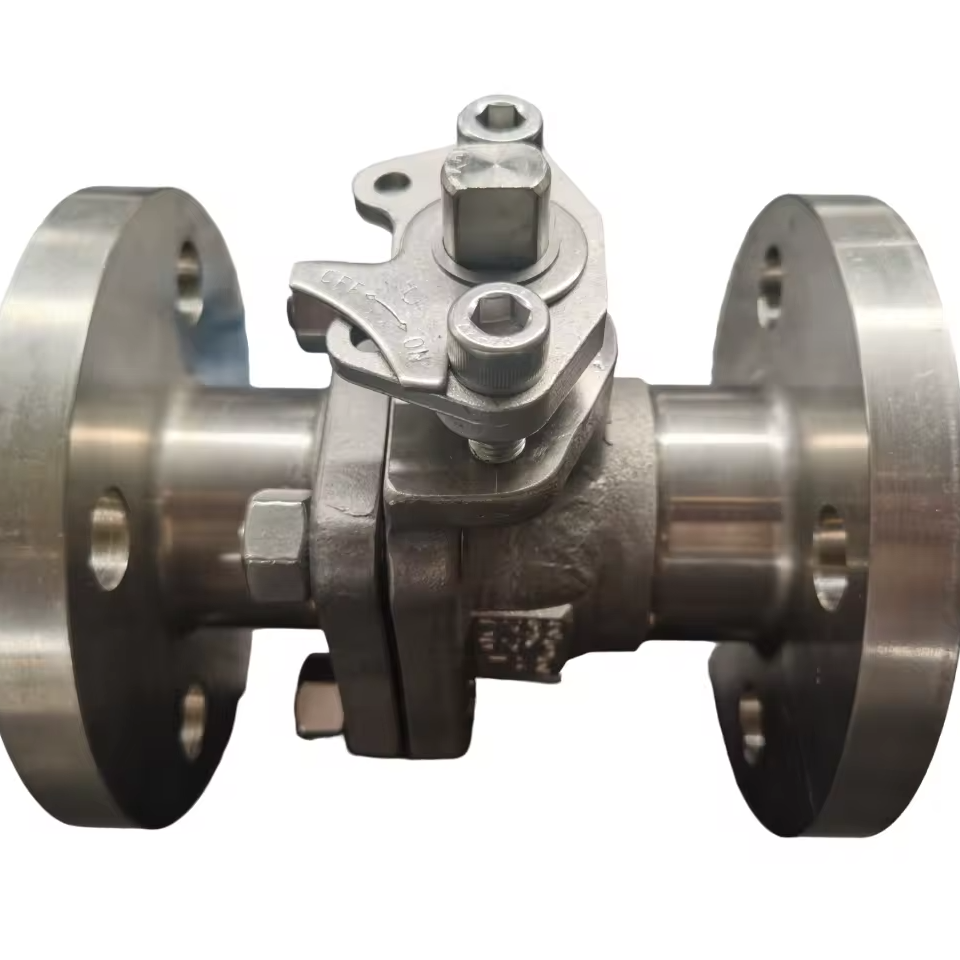
Industrial processing operations handling caustic cleaning batches, chlorine gas dispersion, and acid wash cycles benefit from the chemical passivity of titanium oxide films (TiO2). Plate flanges manufactured to ASME B16.5 Class 150 and 300 tolerances integrate with ASME B363 titanium fittings and valves to safeguard plant integrity.
Subsea Mining & Geological Sampling
Specialized geological sampling operations, acoustic arrays, and benthic survey stations deployed in deep maritime trenches offshore Dili utilize ASME B16.5 Grade 5 flanges. The superior yield strength-to-weight ratio allows pressure housings to endure abyssal hydrostatic loads without inducing structural fatigue.
Dili Procurement Trends: The Shift to Reactive Metals
Strategic analysis of infrastructure investment, maintenance cycles, and supply chain logistics in Timor-Leste.
The industrial landscape in Dili is moving away from high-maintenance, sacrificial carbon steel piping toward lifetime-corrosion-resistant materials. Historically, engineering projects within Timor-Leste accepted frequent recoating, cathodic protection retrofits, and planned piping replacements every 36 to 48 months as standard operating expenses. However, the completion of major commercial nodes, including the Tibar Bay Deepwater Port and expanded coastal infrastructure, has created stringent requirements for continuous uptime. Project owners are recognizing that lifetime-cycle costing (LCC) favors titanium alloys over duplex stainless steels and coated carbon steels, which frequently fail prematurely at field-welded joints in tropical marine conditions.
Concurrently, direct-from-mill supply routes between mainland China's specialized metallurgical hubs and the Port of Dili have significantly lowered traditional logistics overhead. Jovzi Titanium's operations in Baoji capitalize on mature multimodal routes: goods move under optimized transit channels via major maritime routes, arriving with pre-cleared customs documentation, original mill test certificates, and full traceability. Engineering teams in Dili are no longer required to rely on third-tier regional distributors who carry inconsistent material grades and offer limited mill documentation.
Furthermore, technical specifications emerging from Timor-Leste's public works departments, maritime authorities, and private hydrocarbon contractors are transitioning to standardized ASME B16.5 and ASTM B381 compliance. By strictly aligning flange face finishes, bolt circle concentricity, and wall transition radiuses to ASME code, plant engineers in Dili eliminate field fabrication errors and can easily interface with imported OEM equipment like pumps, valves, and heat exchangers.
Why International EPCs Select Jovzi Titanium
Direct manufacturing prowess rooted in Baoji, China's Titanium Valley, backed by verified ISO 9001 governance.
Verified Ingot-to-Flange Traceability
We source raw titanium sponge and melt stock directly from Tier-1 Baoji mills. Every flange, forged ring, and plate cut is assigned a unique heat number physically stamped on the rim, backed by EN 10204 3.1 Mill Test Certificates. Chemical analysis and mechanical tension test verification can also be cross-certified by the independent BaoTi Test Center.
Senior Engineering Staffing
Operating since 2006, Jovzi maintains a specialized technical force including 4 senior and 5 intermediate metallurgical and tooling engineers. Whether your engineering schedule calls for standard ASME B16.5 blind plates, custom reduced bores, or complex DIN/JIS hybrid flanges, our team provides dimensional drawings within 8 hours.
Baoji Industrial Ecosystem
Our 1,000–3,000 m² production facility is positioned in China's "Titanium Valley," giving us immediate access to raw material stock, heavy ring-forging presses, waterjet plate-cutting beds, and specialized chemical etching lines. This integration eliminates intermediate supplier margins and guarantees fast project lead times.
Export-Focused Logistics & Packing
With an export ratio exceeding 80%, Jovzi ships to high-precision buyers across the EU, North America, Southeast Asia, and Australasia. All flanges undergo multi-stage ultrasonic degreasing, sealing face protective cap installation, vapor-corrosion inhibiting wrapping, and rigid seaworthy wooden crating designed for tropical oceanic shipping.
Flexible Commercial Terms
We accommodate diverse procurement frameworks for Timor-Leste and international contractors. Supporting FOB, CIF Dili Port, CFR, EXW, and DDP agreements, we accept payments across multiple currencies (USD, EUR, AUD, CNY) via T/T, Letter of Credit (L/C), PayPal, or secure escrow mechanisms.
Custom Prototyping & OEM Service
Beyond stock ASME B16.5 plate flanges, Jovzi delivers bespoke OEM manufacturing. Using customer STEP, DWG, or PDF drawings, we produce custom-faced adaptors, titanium spectacle blinds, eccentric reducer flanges, and custom CNC threaded connections with small minimum order quantities (MOQ starting from 1 piece).
Procurement FAQ for Engineers in Dili
Direct answers addressing metallurgical validation, logistics, pressure classes, and field installation.
What is the key advantage of an ASME B16.5 Plate Flange over a Weld Neck Flange for coastal facilities?
How does Jovzi guarantee material integrity and prevent counterfeit or scrap titanium?
Which gasket facing surface finish is provided for seawater service?
What are the typical lead times and maritime shipping routes to the Port of Dili?
What precautions should be observed when bolting titanium plate flanges to dissimilar metals?
Request a Tailored Engineering Quote for Dili Projects
Consult directly with our metallurgists in Baoji. Send your bill of materials, project drawings, or piping schedules to receive a verified price quote and production timeline within 8 hours.