Specialized Titanium Mill Products & Processing Components
Seamlessly integrated for Aarhus electroplating plants, marine exhaust retrofits, high-load mechanical fasteners, and process piping skids requiring verifiable EN 10204 3.1 chemical and mechanical traceability.
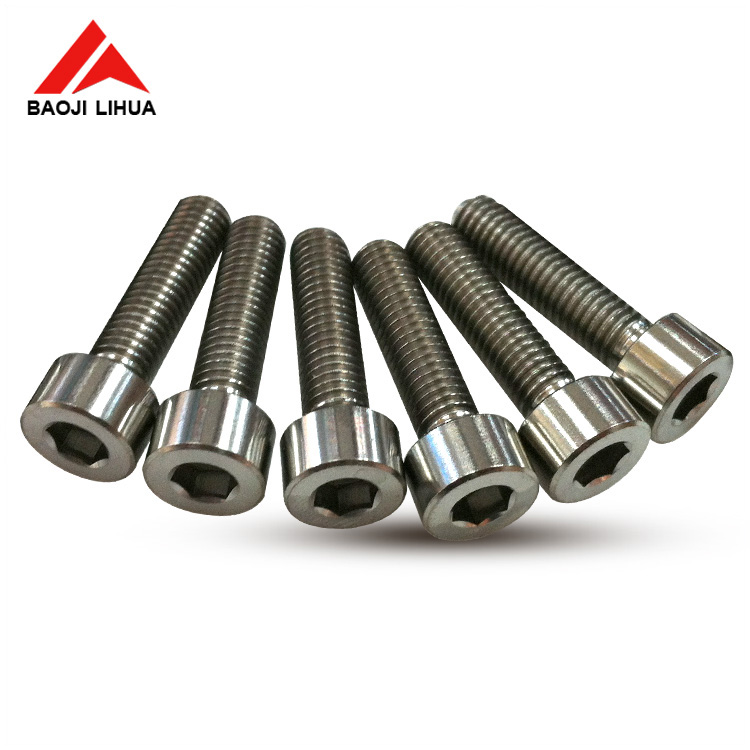
High Quality Gr5 Titanium Bolt M6 M8 M10 DIN912 Titanium Screws
Explore Specifications
Technical Mandate: Continuous Titanium Coiled Tubing in the Kattegat Marine & District Energy Nexus
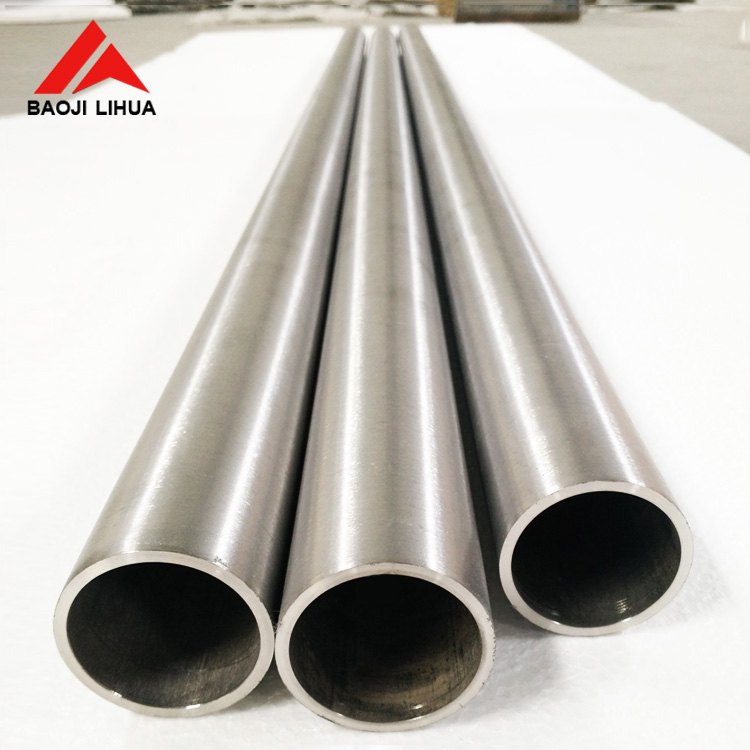
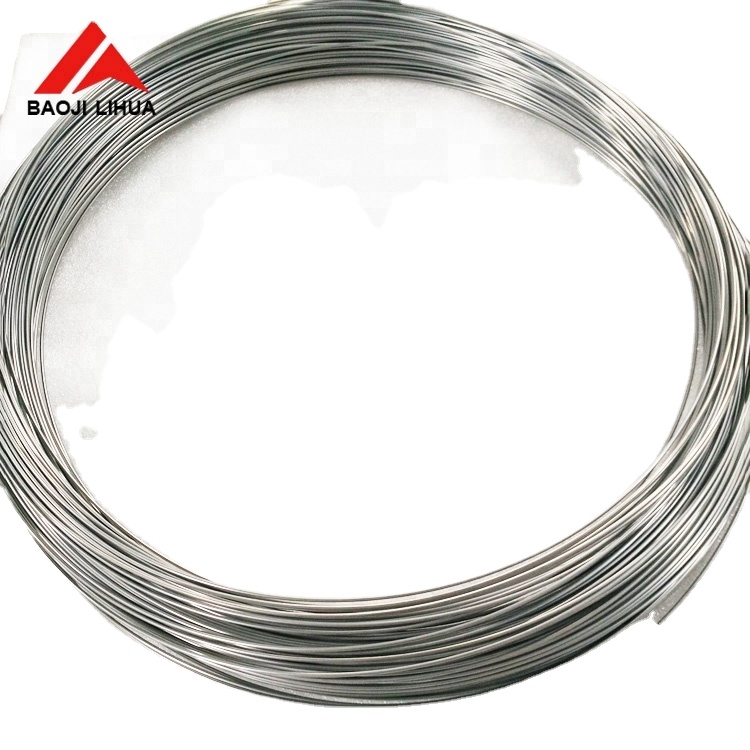
In the contemporary industrial geography of Aarhus and the wider Midtjylland (Central Denmark) region, the acceleration of sustainable infrastructure has elevated material requirements far beyond standard austenitic or duplex stainless steels. The municipality of Aarhus, propelled by ambitious district heating decarbonization mandates and the commercial density of the Port of Aarhus (Aarhus Havn), operates at the intersection of aggressive seawater chemistry, rigorous Danish energy efficiency directives, and stringent European environmental standards. In these high-consequence environments, titanium coiled tubing manufactured according to ASTM B338, ASME SB338, and DIN 17866 has transitioned from an exotic alternative to the primary engineering standard for uninterrupted fluid dynamics.
Unlike straight tubing lines that necessitate periodic orbital welds, mechanical compression fittings, or flanged couplings every 6 to 12 meters, continuous spoolable titanium coil tubing provides continuous runs exceeding 500 to 1,500 meters without a single transverse weld. In heat exchange apparatus exposed to Kattegat coastal waters—characterized by brackish salinity variations (18 to 28 PSU), high dissolved oxygen contents, micro-particulate sand abrasion, and seasonal biological fouling—every mechanical joint represents an embryonic failure site. Under microbially influenced corrosion (MIC) and crevice geometry acidification, traditional materials such as AISI 316L, 904L, and even 2205 Duplex suffer localized depassivation. Conversely, unalloyed commercially pure titanium (ASTM Grade 2, UNS R50400) and palladium-stabilized titanium (ASTM Grade 7, UNS R52400) instantly develop a spontaneous, self-healing rutile-anatase titanium dioxide (TiO2) protective passive layer that exhibits negligible corrosion rates (<0.001 mm/year) under continuous seawater velocities exceeding 6 m/s.
Engineering Grade Comparison: ASTM B338 Titanium Coiled Tubing
| Alloy Grade | UNS Number | Tensile Strength (Min. MPa) | Yield Strength (0.2% Offset, MPa) | Elongation in 2 in. (%) | Pitting Resistance Equivalent (PREN) / Mechanism | Primary Application in Aarhus Industrial Cluster |
|---|---|---|---|---|---|---|
| Grade 1 (CP4) | R50250 | 240 | 170 - 310 | ≥ 24 | Inherent TiO2 Passivation (Immune to Cl- SCC) | Plate-fin deep cryogenic coils, ultra-ductile compact heat exchanges. |
| Grade 2 (CP3) | R50400 | 345 | 275 - 450 | ≥ 20 | Stable oxide film up to 80°C in raw seawater immersion | District heating seawater heat pumps, port ballast cooling loops, marine scrubbers. |
| Grade 7 (Ti-Pd) | R52400 | 345 | 275 - 450 | ≥ 20 | 0.12-0.25% Pd ennobles potential; active crevice resistance >250°C | Chemical injection lines, acidic flue gas condensing, sour condensate recovery. |
| Grade 9 (Ti-3Al-2.5V) | R56320 | 620 | 483 - 655 | ≥ 15 | Near-alpha high-pressure alloy; high fatigue limit | Subsea hydraulic control umbilicals, high-pressure hydrogen gas lines (PtX). |
| Grade 12 (Ti-Mo-Ni) | R53400 | 483 | 345 | ≥ 18 | Mo/Ni additions prevent crevice corrosion in hot brine >100°C | Brine evaporation loops, industrial dairy byproduct thermal concentrators. |
For engineering firms operating out of Aarhus—such as contractors servicing the municipal heating networks, industrial bioreactor skids in Skejby, or maritime service providers berthed along the Kattegat docks—coil tubing eliminates the operational vulnerability of flanged assemblies. The elimination of flanged nodes reduces overall skid weight by up to 35%, eliminates fugitive hydrocarbon or refrigerant emissions under EN ISO 15848-1 compliance, and facilitates tight-radius concentric helical coiling within constrained pressure vessel envelopes.
Aarhus Industrial Application Scenarios
Precision-manufactured titanium coiled tubing engineered to address the specific thermodynamic, chemical, and regulatory demands of Central Denmark's premier industrial ecosystem.
Seawater-Source Heat Pumps
Supporting Aarhus's transition toward 100% fossil-free district heating (Fjernvarme). Grade 2 continuous coiled tubing submerged in raw Kattegat seawater evaporators operates seamlessly without biofouling pitting, resisting both hypochlorite dosing and biological biofilm adhesion over 30+ year design lifetimes.
Offshore Wind Subsea Umbilicals
As the primary staging port for North Sea and Baltic offshore wind farms, Aarhus requires continuous Grade 9 (Ti-3Al-2.5V) tubing for dynamic subsea hydraulic controls. Titanium offers superior strength-to-density ratios and flexural fatigue endurance limits double those of Super Duplex steel under cyclic wave motion.
Agro-Food & Biotech Clean-in-Place
Within the Agro Food Park and Danish dairy clusters near Aarhus, high-temperature Clean-in-Place (CIP) regimes utilize hot nitric acid and chlorinated caustic sanitizers. Grade 2 and Grade 7 coiled heat exchanger loops provide absolute immunity against chloride stress cracking, ensuring ultra-pure food safety standards.
Power-to-X & Green Hydrogen
Facilitating Jutland's expanding PtX and green ammonia initiatives. Titanium coiled tubing delivers non-contaminating, ultra-pure fluid conveyance for PEM and alkaline electrolyzer stack cooling loops, preventing catalytic poisoning caused by iron, copper, or nickel ion leach from inferior alloys.
Localized Industrial Trends Shaping Titanium Procurement in Aarhus
The procurement landscape for advanced alloys across Denmark is undergoing a paradigm shift, dictated by lifecycle carbon assessments, European energy independence agendas, and the rigorous demands of Danish engineering consultants (such as COWI, Rambøll, and regional specialists). In Aarhus, three dominant macro trends govern titanium coiled tubing specifications:
1. Electrification and Industrial Seawater Heat Recovery
With the decommissioning of coal-fired assets at the Studstrup Power Station and municipal mandates to achieve net-zero heating via Kredsløb, mega-scale industrial heat pumps leveraging seawater from the Port of Aarhus basin represent the primary heating architecture. Traditional Cu-Ni (90/10 or 70/30) and high-molybdenum austenitic steels (such as 254 SMO) previously deployed in early-generation heat exchangers experienced accelerated erosion-corrosion at tube inlets and micro-crevice pitting under low-flow winter regimes. Industrial buyers in Aarhus now explicitly specify ASTM B338 Grade 2 seamless or cold-reduced welded/annealed coiled tubing. Titanium's resilience against ammonia (NH3) and hydrocarbon refrigerants (such as R290 propane) commonly chosen in Denmark guarantees zero contamination risk between the seawater intake and closed municipal heating circuits.
2. The Expansion of Port of Aarhus as an Offshore Wind and Maritime Decarbonization Hub
As the Port of Aarhus expands its outer harbor facilities, its role as a premier marshaling port for floating and bottom-fixed offshore wind substructures demands robust subsea umbilical lines, marine scrubber effluent washdown lines, and port-side hydrogen bunkering systems. Maritime operators retrofitting vessels to meet MARPOL Annex VI SOx emissions limits utilize Grade 2 titanium coiled pipes for exhaust gas cleaning system (EGCS) sensor lines and acid injection spargers. In these acidic, sulfurous washwater matrices (pH < 2.5 with sulfuric and sulfurous acid mixtures at 70°C), unalloyed titanium outperforms nickel alloys on both capital expenditure (CapEx) and weight criteria.
3. Transition to Total Cost of Ownership (TCO) and ESG Compliance
Danish procurement managers prioritize long-term Total Cost of Ownership (TCO) over raw material initial purchase costs. While titanium commands a higher per-kilogram raw material cost than super austenitic steels, its lower density (4.51 g/cm³ compared to ~8.0 g/cm³ for stainless steel) means that a given spool length requires approximately 44% less weight of metal. Furthermore, the complete elimination of corrosion allowances permits thin-wall tubing designs (down to 0.7mm or 0.89mm wall thickness per ASTM B338 tolerances), resulting in exceptional thermal conductivity efficiencies across heat transfer barriers. Combined with 100% recyclability and zero operational downtime over three decades, the life-cycle carbon footprint matches Denmark's stringent environmental footprint benchmarks.
Why Aarhus Engineers Partner with Jovzi Titanium
Direct supply from Baoji—China's renowned "Titanium Valley"—backed by stringent metallurgical quality control, ISO 9001 certified operations, and direct freight integration to Aarhus Havn.
Sponge-to-Spool Metallurgical Traceability
Operating from China's primary titanium cluster in Baoji, Shaanxi, our facility selects only vacuum-arc remelted (VAR) Grade 0A titanium sponge. Every master coil is accompanied by an authenticated EN 10204 3.1 inspection certificate recording complete heat numbers, chemical ingress limits (Fe ≤ 0.20%, O ≤ 0.18%, H ≤ 0.015%), and mechanical verification issued by our internal metallurgical laboratory and independently validated by the BaoTi Test Center.
Advanced Cold-Pilgering & Orbital Continuous Welding
Our coil tubing production lines deploy multi-roll cold pilgering and automated continuous gas-tungsten arc welding (GTAW/TIG) within inert argon-shielded chambers (>99.999% purity). Tubes undergo bright vacuum annealing at temperatures between 650°C and 720°C to prevent hydride formation and ensure optimal microstructural grain refinement (ASTM grain size 7 or finer), guaranteeing superior ductility during bending.
Rigorous NDT & Hydrostatic Pressure Testing
100% of our continuous titanium coil tubing undergoes full-length Eddy Current Testing (ET per ASTM E426) to detect subsurface inclusions or wall discontinuities, supplemented by Ultrasonic Testing (UT per ASTM E213) on thick-wall variants. Each spool is hydrostatically proof-tested up to 1,000 bar (14,500 psi) or pneumatic air-under-water tested to guarantee complete integrity under Danish PED 2014/68/EU pressure equipment mandates.
Frequently Asked Questions for Danish Engineering Buyers
Direct answers addressing technical parameters, European standard compliance, customs handling, and logistics to Aarhus.
Does your titanium coil tubing comply with the European Pressure Equipment Directive (PED 2014/68/EU)?
What are the dimensional limits, outer diameters (OD), and continuous spool lengths available for the Aarhus market?
How does titanium Grade 2 compare to 254 SMO (1.4547) and Super Duplex (1.4410) in Kattegat seawater immersion?
What are the lead times and shipping options to the Port of Aarhus or industrial facilities in Central Denmark?
What is the minimum bend radius (MBR) for bending your Grade 2 and Grade 7 continuous coiled tubing?
Which Incoterms and payment terms are supported for Danish commercial entities?
Engineer Your Seawater & Chemical Systems with Titanium Precision
Direct from Baoji Jovzi Titanium Industry Co., Ltd. Send your engineering drawings, coil spool schedules, pressure parameters, or material requisitions to our senior metallurgy and manufacturing team. We provide rapid technical evaluations, custom coil spooling, and verifiable MTC documentation within 8 operational hours.
Inquire Now