ASME B16.48
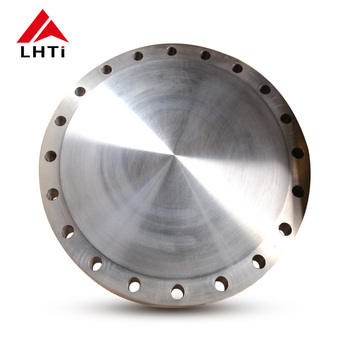
Directly serving Yangon port expansions, Thilawa SEZ industrial infrastructure, and offshore gas processing lines with fully certified titanium products engineered in Baoji Titanium Valley.
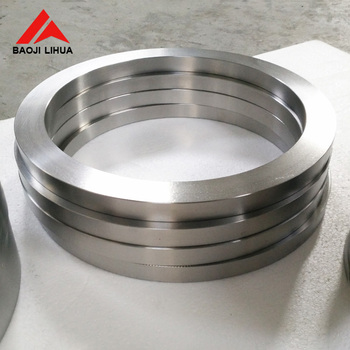
As the commercial, logistics, and maritime nucleus of Myanmar, Yangon occupies a geographically pivotal yet electrochemically severe environment along the Yangon River estuary and the Gulf of Martaban. Industrial operators managing offshore gas landings from the Yadana and Zawtika fields, petroleum storage terminals across Thilawa Special Economic Zone (SEZ), chemical processing units, and high-salinity brackish intake systems operate under conditions characterized by intense thermal gradients, microbially influenced corrosion (MIC), and elevated chloride concentrations. In high-integrity piping architectures, positive line isolation represents the fundamental boundary between operational safety and catastrophic environmental releases. The ASME B16.48 spectacle blind flange—often termed a figure-8 blind—is the premier mechanical safety barrier deployed to ensure unquestionable shut-off during downstream maintenance, hydrostatic inspection, and hazardous unit turnaround operations.
Historically, heavy industrial infrastructure in Yangon relied upon austenitic stainless steels (such as 316L) or high-grade duplex alloys (2205). However, engineers frequently encounter severe pitting corrosion, crevice attack under elastomeric gaskets, and rapid stress-corrosion cracking (SCC) driven by ambient tropical temperatures exceeding 38°C combined with brackish, silt-laden river waters. Transitioning to Commercially Pure Grade 2 (UNS R50400), Ruthenium-enhanced Grade 7 (UNS R52400), or High-Strength Grade 5 (Ti-6Al-4V, UNS R56400) titanium spectacle blinds eliminates pitting vulnerabilities entirely. Jovzi Titanium Industry Co., Ltd., capitalizing on two decades of precision forging within China's Titanium Valley (Baoji), delivers ASME B16.48 and custom-engineered titanium spectacle blinds tailored specifically to withstand the mechanical stresses, seismic design requirements, and aggressive chemical envelopes present throughout greater Yangon.
Technical Metallurgy Summary: Titanium formulates an instantaneous, chemically passive, self-healing titanium dioxide (TiO₂) ceramic film upon air or moisture exposure. In seawater and chloride environments encountered at the Port of Yangon and Thilawa terminals, titanium demonstrates zero pitting and zero crevice corrosion up to at least 80°C (Grade 2) and up to 250°C when alloyed with palladium (Grade 7, UNS R52400), offering virtually unlimited design life compared to conventional marine steels.
A spectacle blind flange features two discs interconnected by a rigid metallic bridge: an open orifice allowing uninhibited process flow matching the internal pipe schedule, and a solid blind disc machined to isolate line pressure completely. Rotating the spectacle blind around a single flange pivot bolt allows plant personnel to inspect line status visually from dozens of meters away—providing absolute mechanical confirmation that cannot be compromised by stuck gate valves, leaking ball seats, or actuator communication loss.
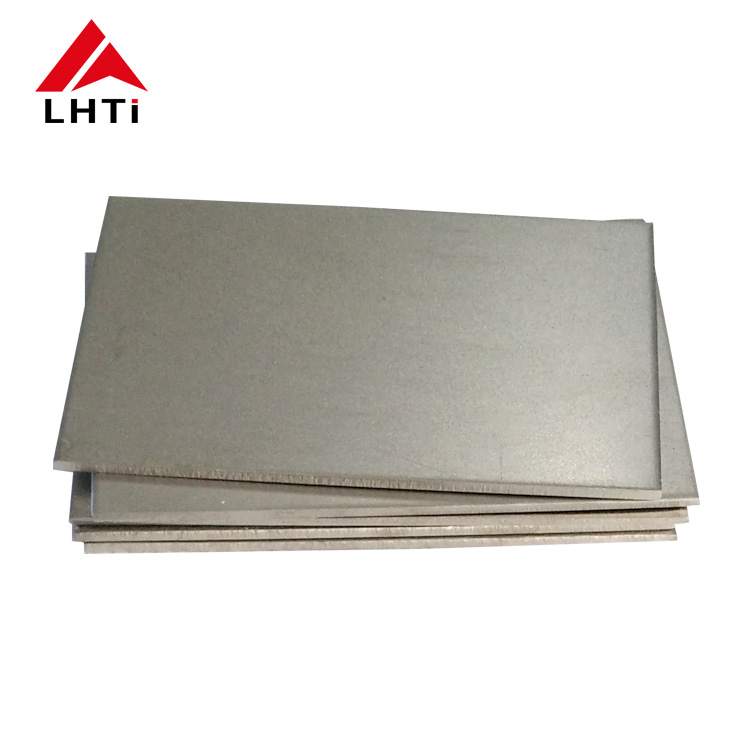
Jovzi Titanium manufactures spectacle blinds from solid forgings conforming to ASTM B381 (Grades F-2, F-5, F-7, and F-12) or precision waterjet-cut and CNC-faced ASTM B265 plate stock. Forging ensures an unbroken internal grain flow oriented along the principal stress vectors, eliminating micro-porosities and catastrophic delamination risks when subjected to full line test pressures according to ASME B16.5 Class 150, Class 300, Class 600, or Class 900 ratings. All gasket contact surfaces feature precision-machined raised faces (RF) with concentric serrations ranging from Ra 3.2 to 6.3 μm (125 to 250 microinches AARH), ensuring immediate seating with spiral-wound PTFE or expanded graphite gaskets without localized galling.
| Titanium Grade | UNS Designation | Min. Tensile (MPa) | Yield 0.2% (MPa) | Recommended Applications Serving Yangon |
|---|---|---|---|---|
| Grade 1 (CP4) | UNS R50250 | 240 | 170 | Low-pressure cryogenic isolation, plate lining, mild chemical washdown |
| Grade 2 (CP3) | UNS R50400 | 345 | 275 | Standard marine seawater lines, Thilawa port intake, cooling loops |
| Grade 5 (Ti6Al4V) | UNS R56400 | 895 | 828 | High-pressure offshore gas tie-ins, Class 900/1500 subsea manifolds |
| Grade 7 (Ti-Pd) | UNS R52400 | 345 | 275 | Hot acidic chlorides, sour offshore condensate lines, sulfur extraction |
| Grade 12 (Ti-Mo-Ni) | UNS R53400 | 483 | 345 | Intermediate-strength elevated temperature refining exchangers |
Piping systems throughout the Yangon division face operating realities drastically different from landlocked continental facilities. Understanding these localized engineering challenges allows Jovzi Titanium to supply components directly targeted to client operational longevity:
1. Thilawa SEZ Marine Petroleum & Chemical Storage Terminals: Located along the maritime interface of Thanlyin-Kyauktan, Thilawa's liquid bulk terminals handle daily transfers of refined hydrocarbons, imported caustic chemicals, and marine fuels. Conventional carbon steel and coated blinds suffer extreme exterior marine atmospheric corrosion coupled with internal condensation attack. Grade 2 titanium spectacle blinds installed between dockside unloading arms and storage tank manifolds eliminate maintenance repainting cycles, zero out rust contamination within high-purity chemicals, and guarantee zero-leakage shutoff during ship unloading sequences.
2. Offshore Natural Gas Receiving & Processing Stations: Myanmar's energy matrix relies heavily on offshore production brought ashore and piped via trunklines entering the Yangon energy ring. These streams contain wet hydrocarbons, entrained chlorides, carbon dioxide (CO₂), and traces of hydrogen sulfide (H₂S). Under high design pressures (Class 600 and Class 900), Jovzi's ASTM B381 Grade 5 forged blinds provide massive mechanical load-bearing capacity combined with complete immunity to sulfide stress cracking, safeguarding compression facilities around Kanbauk-Yangon interconnects.
3. Municipal Desalination, Estuarine Cooling, & Industrial Washdown: Estuarine waters pumped from the lower Yangon River contain heavy suspended sediment and varying salinity due to tidal swings. Copper-nickel (Cu-Ni 90/10) systems traditionally suffer severe impingement and erosion-corrosion. Grade 2 titanium spectacle blinds and matching stub ends withstand fluid flow velocities exceeding 20 m/s without protective layer stripping, making them the benchmark material for long-term cooling loop line positive blanks.
Despite macroeconomic fluctuations, procurement practices across Southeast Asia are pivoting toward lifecycle cost optimization (LCC) rather than initial capital outlay (CAPEX). In Yangon, facilities that installed low-cost duplex or coated carbon steel spectacle blinds during the 2014–2018 infrastructure boom are currently facing unscheduled turnaround shutdowns due to crevice corrosion under flange faces. Engineering consultants managing projects in Myanmar now specify solid titanium blinds for corrosive line boundaries over 2-inch nominal pipe sizes (NPS), recognizing that titanium's indefinite service life eliminates catastrophic replacement costs and toxic flaring events.
Furthermore, local environmental compliance regulations governing industrial discharges into the Hlaing and Yangon River basins are tightening. Plant engineers can no longer risk valve weeping during downstream pipe replacements. The implementation of Jovzi's ASME B16.48 Class 150 and 300 spectacle blinds provides infallible physical segregation, satisfying international health, safety, and environmental (HSE) auditing protocols for overseas joint-venture operators operating in Myanmar.
Direct supply from Baoji Titanium Valley. Full control from vacuum arc remelting (VAR) sponge titanium to forged disc blanks, ensuring pristine grain alignment and zero internal voids.
Every shipment is furnished with comprehensive EN 10204 3.1 inspection certificates. Authorized independent testing via BaoTi Test Center verifies mechanical yield, elongation, and chemistry.
From micro-bore instrumentation blinds up to DN 1200 (48" NPS) oversized forged rings. Fully equipped CNC machining centers produce smooth, phonographic, or concentric serrated faces.
Streamlined sea freight from Shanghai/Guangzhou ports direct to Myanmar Industrial Port (MIP) or Thilawa Port, accompanied by complete consular documentation, phytosanitary crates, and prompt tracking.
Headquartered in Baoji, Shaanxi, China since 2006, Jovzi Titanium Industry Co., Ltd. has spent nearly two decades perfecting non-ferrous metal processing. Our industrial complex houses precision heavy forging presses, computer-controlled ring rolling units, five-axis CNC machining stations, and dedicated ultrasonic immersion testing equipment. Backed by a specialized engineering cadre—including 4 senior metallurgists and 5 intermediate piping engineers—we manufacture pressure components strictly adhering to ASTM, ASME, DIN, and ISO design parameters.
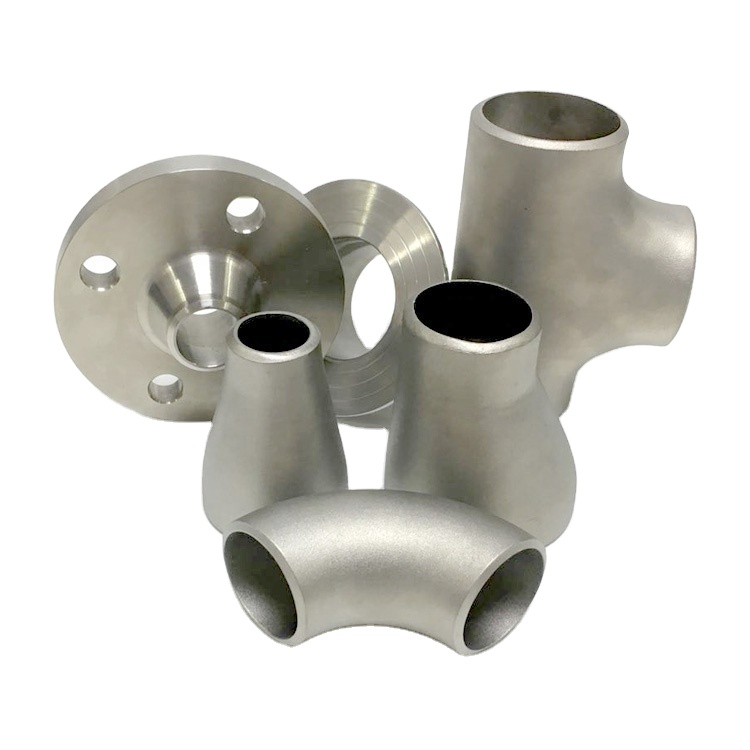
Our export ratio stands between 81% and 90%, supplying top-tier EPC contractors across Southeast Asia, North America, and Europe. Unlike intermediate brokers, Jovzi controls the complete product lifecycle. When supplying spectacle blinds serving Yangon, every unit undergoes strict coordinate measuring machine (CMM) inspection for web thickness, bolt hole pitch circles (PCD), and serration depth. This guarantees drop-in dimensional compatibility between existing ASME B16.5 welding neck or slip-on flanges on site, preventing installation downtime.
Ready to upgrade your marine terminal or chemical piping to maintenance-free ASME B16.48 titanium spectacle blinds? Submit your project drawings, piping schedules, and required pressure classes today for an engineered technical assessment and competitive commercial proposal within 8 business hours.
Get a Quote