Surface Treatment
Precision-machined fasteners, forged structural discs, and specialty aerospace/industrial titanium components manufactured under certified ISO 9001 quality systems and traceable mill test protocols.
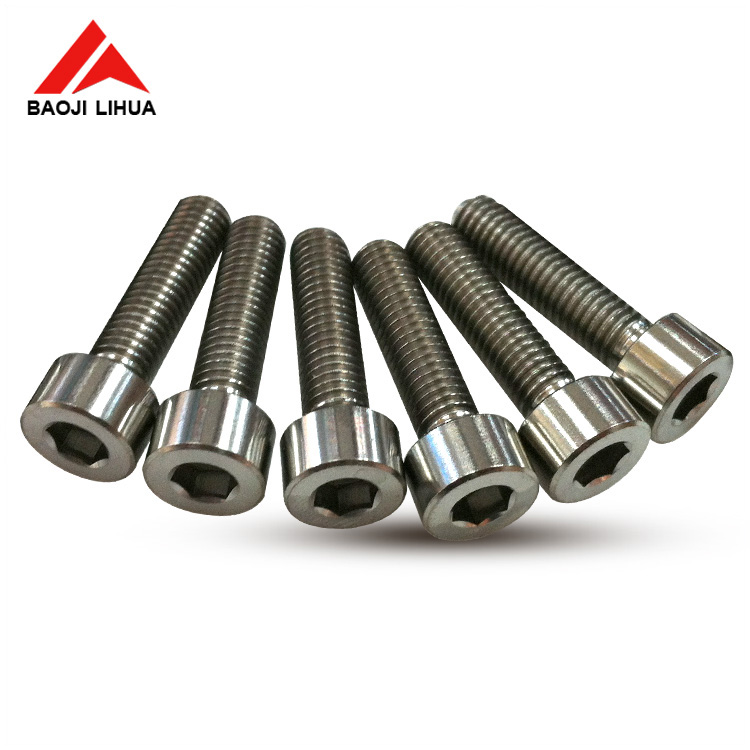
Choibalsan, the administrative and industrial epicenter of Dornod Province in eastern Mongolia, presents one of the most mechanically demanding environments for structural bolting, studs, and piping fixtures in Eurasia. With severe subarctic continental conditions characterized by winter lows falling below -40°C, paired with extreme seasonal temperature swings exceeding 75°C, conventional grade 8.8 and 10.9 carbon steel fasteners often succumb to ductile-to-brittle transition (DBTT) failures, severe atmospheric chloride-sulfide stress corrosion, and chronic vibrational thread loosening.
Sourcing high-integrity titanium studs—specifically ASTM F468 Grade 5 (Ti-6Al-4V), Grade 2 commercially pure titanium, and palladium-stabilized Grade 7—has become a foundational design requirement across regional engineering teams operating in Dornod's heavy industrial sectors. Titanium's close-packed hexagonal (HCP) alpha-phase crystalline structure exhibits no distinct ductile-to-brittle transition temperature, retaining exceptional impact toughness, notch sensitivity resistance, and high tensile elongation under deep freezing conditions where structural steels shatter under cyclical dynamic shear.
At facilities such as the Aduunchuluun coal deposit adjacent to Choibalsan, continuous excavation equipment, vibrating screens, and heavy-haul slurry lines face aggressive abrasive wear and sulfur-rich groundwater. Grade 5 titanium studs provide exceptional fatigue strength on hydraulic flanged linkages, eliminating rust seizure and preventing brittle bolt shear caused by permafrost shock loads.
Thermal power expansion projects in Eastern Mongolia demand stud bolts capable of enduring sulfur dioxide (SO₂), flue-gas desulfurization (FGD) condensates, and high cyclic thermal pressures. Titanium Grade 2 and Grade 12 studs resist crevice corrosion in cooling loop condenser covers, economizers, and steam turbine auxiliary flanges where stainless steel 316L rapidly pits.
Operations in the Matad and Tamtsag basins depend on titanium stud fasteners for wellhead Christmas trees, sour gas separators, and high-salinity water injection manifolds. Titanium Grade 5 ELI and Grade 7 eliminate sulfide stress cracking (SSC) under NACE MR0175 / ISO 15156 severe sour service environments, protecting field operations from catastrophic blowout risks.
Evaluation of structural fastener materials under Eastern Mongolian sub-zero climatic extremes (-45°C operating threshold).
| Alloy Designation | Tensile Strength (MPa) | Yield Strength 0.2% (MPa) | Impact Toughness at -45°C (Charpy V-Notch) | Corrosion Rate (Wet Acidic Slurry) | Weight Density (g/cm³) |
|---|---|---|---|---|---|
| Titanium Gr5 (Ti-6Al-4V) | 895 – 1000 | 828 | Uncompromised Ductile (>38 J) | < 0.005 mm/year | 4.43 |
| Titanium Gr2 (CP Alpha) | 345 – 450 | 275 | High Toughness (>45 J) | < 0.003 mm/year | 4.51 |
| Titanium Gr7 (Ti-0.15Pd) | 345 – 480 | 275 | High Toughness (>42 J) | Virtually Impervious (< 0.001 mm) | 4.51 |
| Stainless Steel 316L | 485 – 580 | 220 | Moderate (Prone to Galling) | 0.12 mm/year (Pitting Risk) | 7.98 |
| Alloy Steel 42CrMo (Grade 10.9) | 1040 | 940 | Brittle Fracture Risk (< 15 J) | > 0.85 mm/year (Severe Rust) | 7.85 |
Eastern Mongolia is experiencing rapid modernization. The expansion of the regional railway logistics corridor connecting Choibalsan to the border ports of Erenhot/Zamiin-Uud and direct linkages via Manzhouli/Sukhbaatar has positioned Dornod as a vital conduit for mineral exports, refined petrochemicals, and heavy industrial machinery. In tandem with Mongolia's "New Recovery Policy," industrial operations across Choibalsan are pivoting from short-lifecycle structural steels to high-durability, lifetime-optimized alloy components.
Previously, engineering contractors in Dornod faced prolonged downtime when purchasing Western titanium fasteners through multi-tiered intermediaries in Ulaanbaatar. Sourcing direct from specialized manufacturing centers such as Baoji ("China's Titanium Valley") has transformed lead times. Standardized ISO metric double-end studs, flange studs, DIN 938/939 studs, and customized ASTM B348 bar turnings can now be delivered to Choibalsan in consolidated, customs-cleared batches, with full mill traceability and specialized zero-galling coatings.
Unlike machined or cut threads which sever the grain structure of the titanium bar, Jovzi studs feature CNC thread-rolling after precision vacuum annealing. This induces compressive residual stresses in the thread roots, escalating fatigue limits by over 300% under high-vibration mining haulage.
Titanium on titanium threads can experience galling under high pre-load torque. Jovzi integrates micro-arc oxidation (MAO), molybdenum disulfide (MoS₂) dry-film lubricants, and specialized thermal oxidation processes, enabling seamless cold-weather installation in Dornod without thread seizure.
Direct rail and expedited container routes from our Baoji facilities ensure fast transit to Dornod via the border ports. Every crate is packed in moisture-sealed barrier wraps and reinforced international timber boxes to prevent surface abrading in transit.
Technical guidance covering material selection, thread torque, certification, and extreme-weather installation.
Whether you require standard DIN/ASME titanium studs or custom-machined fasteners for sub-zero mining, oilfield drilling, or thermal plant retrofits, submit your specifications directly to our metallurgical engineering desk for a comprehensive quote and MTC preview.