ASTM B348
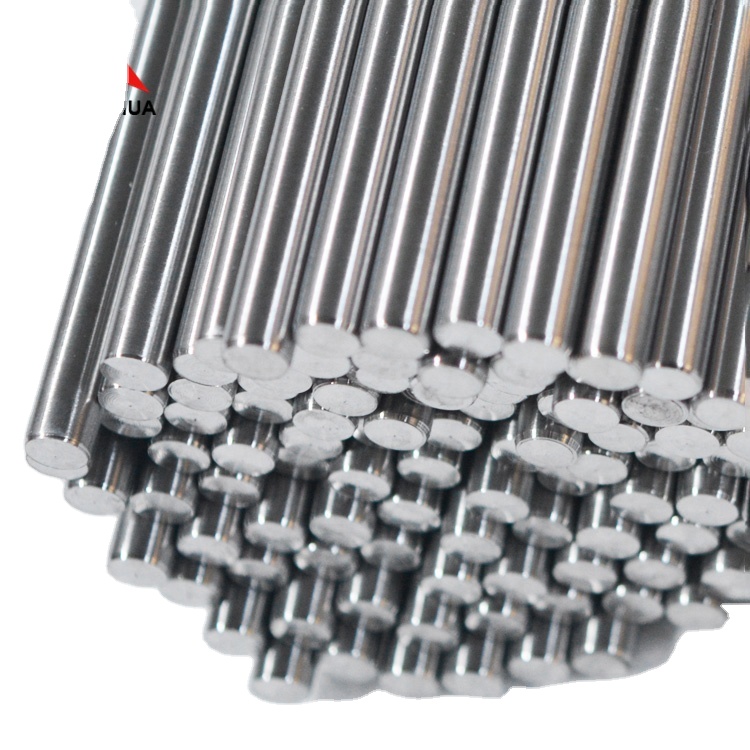
Manufactured under strict ISO 9001 quality controls in China’s Titanium Valley, backed by full EN 10204 3.1 chemical and mechanical inspection data, direct-shipped to Avonmouth docks and Bristol logistics corridors.
In high-consequence fluid conveyance systems, connection failure is not merely an operational inconvenience; it represents severe safety, environmental, and financial hazards. Weld neck flanges (ASME B16.5 Type WN / BS EN 1092-1 Type 11) represent the highest integrity flanged joint configuration available in modern mechanical piping design. Unlike slip-on, socket-weld, or threaded flanges, the weld neck profile is characterized by a long, seamless tapered hub that transitions gradually from the flanged ring down to the outer pipe diameter. This tapered profile ensures that bending moments, mechanical vibrations, high pressure pulses, and thermal expansion forces are progressively distributed across the hub rather than concentrating abruptly at the flange face weld junction.
For engineering contractors, project procurement specialists, and plant asset integrity directors operating across Bristol, South Gloucestershire, and the wider South West England industrial corridor, selecting the appropriate manufacturing source for titanium weld neck flanges demands strict adherence to metallurgical control. Titanium is an allotropic element characterized by remarkable strength-to-weight ratios and exceptional corrosion resistance in saline and chlorinated chemistries. However, its behavioral dynamics during forging, thermal annealing, and orbital fusion welding differ fundamentally from austenitic stainless steels or carbon steels. Sourcing directly from Jovzi Titanium Industry Co., Ltd. ensures that every weld neck component embodies nineteen years of precision forging mastery developed in Baoji—China’s Titanium Valley—fully verified under ISO 9001 frameworks and validated by independent third-party laboratories including the National BaoTi Testing Center.
Design Advantage of Jovzi Tapered Hubs: By utilizing continuous hydraulic ring rolling and precision die-forging, Jovzi aligns the crystalline grain flow directionally along the contour of the tapered hub. This metallurgical alignment yields superior longitudinal yield strength, fatigue resistance under cyclic pressure swings, and absolute zero risk of lamellar tearing or micro-porosity at the butt-weld bevel.
A frequent vulnerability in international piping tenders is the ambiguous specification of titanium grades without due consideration for localized operating temperatures, fluid velocity, aeration levels, and chloride saturation. Jovzi supplies weld neck flanges conforming to ASTM B381 (standard specification for titanium and titanium alloy forgings) and ASTM B363 (seamless and welded fittings), mapped directly against BS EN, DIN, and ISO design parameters:
| ASTM Grade | UNS / Designation | Nominal Chemistry | Tensile Strength (Min) | Yield Strength (0.2%) | Primary Bristol Industrial Usage |
|---|---|---|---|---|---|
| Grade 2 | UNS R50400 (CP-Ti) | Unalloyed Titanium (O ≤ 0.25%, Fe ≤ 0.30%) | 345 MPa (50 ksi) | 275 MPa (40 ksi) | Severn Estuary seawater cooling lines, port intake manifolds, Avonmouth wastewater treatment. |
| Grade 5 | UNS R56400 (Ti-6Al-4V) | 6% Al, 4% V (Alpha-Beta Alloy) | 895 MPa (130 ksi) | 828 MPa (120 ksi) | Filton aerospace static test rigs, high-pressure subsea hydraulic couplings, hyperbaric chambers. |
| Grade 7 | UNS R52400 (Ti-0.15Pd) | CP-Ti + 0.12–0.25% Palladium | 345 MPa (50 ksi) | 275 MPa (40 ksi) | Severe reducing acidic media, acidic chloride environments where crevice corrosion is critical. |
| Grade 12 | UNS R53400 (Ti-0.3Mo-0.8Ni) | 0.3% Mo, 0.8% Ni (Near-Alpha) | 483 MPa (70 ksi) | 345 MPa (50 ksi) | Elevated temperature chemical reactors, brine distillation plants, geothermal heat exchange. |
A weld neck flange’s superior pressure-containment capability relies directly on the precision matching of the bore diameter with the schedule of the mating pipe (Schedule 10S, 40S, 80S, or customized heavy-wall designs). Jovzi CNC-machines the hub bevel strictly in compliance with ASME B16.25 / BS EN ISO 9692-1 to guarantee uniform root penetration during automatic orbital TIG (GTAW) or pulsed plasma-arc welding. Unlike commercial-grade distributors who modify pre-bored flanges resulting in irregular wall thickness, Jovzi executes bespoke inner bore profiling, ensuring an uninterrupted flow path. This eliminates fluid vortex formation, crevice turbulence, and accelerated erosion-corrosion at the internal circumferential weld root—a critical criterion for subsea pipelines operating in high-velocity silt currents across the Bristol Channel.
From advanced aerospace propulsion research around Filton to heavy industrial chemical synthesis in Avonmouth and offshore marine ventures in the Bristol Channel, Jovzi flanges are engineered to withstand the South West's most challenging operational environments.
The aerospace engineering cluster centered around Filton and Aztec West demands elite-grade structural piping for fuel testing rigs, cryo-propellant ground lines, and high-altitude engine environmental simulators. Our Grade 5 (Ti-6Al-4V) and Grade 2 weld neck flanges deliver exceptional strength-to-weight performance, cryogenic toughness, and immune resistance to aviation turbine kerosene (ATK) and synthetic ester lubricants.
The Bristol Channel experiences one of the world's highest tidal ranges, generating ferocious flow velocities, suspended sand scouring, and high biological macro-fouling pressures. Grade 2 and Grade 12 weld neck flanges deployed at the Port of Bristol, Avonmouth docks, and subsea naval installations eliminate micro-biologically influenced corrosion (MIC) and crevice attack common in duplex stainless steels, delivering maintenance-free service lives exceeding 40 years.
The chemical manufacturing clusters bordering the Severn Estuary process aggressive chlorinated intermediates, chlorine dioxide, and sulfuric acid streams. Moreover, emerging South West green hydrogen production projects depend on Jovzi Grade 7 (Ti-0.15Pd) weld neck flanges to prevent hydrogen embrittlement and catastrophic flange neck crevice failure across proton exchange membrane (PEM) electrolyzer fluid headers.
Shifting economic dynamics, decarbonization mandates, and total cost of ownership (TCO) engineering models are accelerating the adoption of titanium over super-austenitic and nickel-alloy alternatives.
Across the United Kingdom, mechanical consulting engineers are conducting deep life-cycle costing (LCC) assessments. Historically, engineering projects in Bristol and Avonmouth defaulted to Super Duplex Stainless Steels (2507, UNS S32750) or high-nickel alloys (Hastelloy C-276, Inconel 625) for seawater cooling and corrosive chemical circuits. However, frequent pitting incidents in warm stagnant seawater, micro-biologically influenced stress cracking in estuaries, and the extreme price volatility of nickel have fundamentally altered procurement calculus.
Titanium Grade 2 and Grade 7 establish a virtually impenetrable, self-healing titanium dioxide (TiO₂) passive film that spontaneously regenerates within milliseconds upon mechanical scratch exposure in oxygen-bearing fluids. The density of titanium (4.51 g/cm³) is approximately 45% lighter than nickel alloys or stainless steels (8.0–8.4 g/cm³), enabling significant structural weight savings on high-elevation piperacks, offshore marine platforms, and aerospace airframe fuel simulation rigs. When lifecycle maintenance shutdowns, flange gasket re-tightening cycles, and corrosion-inhibitor chemical costs are factored into asset management formulas, Jovzi titanium weld neck flanges exhibit an investment payback within 3 to 5 operating years.
Immune to pitting and crevice corrosion across ambient to elevated temperatures in aerated brine, wet chlorine, and sea spray.
Drastically reduces static deadload on cantilevered pipe supports, seismic bracing, and marine offshore module designs.
Tapered hub smoothly transmits longitudinal vibrations and thermal expansions without weld toe fatigue failure.
100% recyclable, extended asset longevity minimizing carbon-intensive plant replacements and unscheduled outages.
Located in the heart of Baoji High-Tech Development Zone, Jovzi combines raw material sponge selection with closed-die forging, high-speed turning, and comprehensive destructive/non-destructive testing.
Every Jovzi flange begins from vacuum-arc remelted (VAR) titanium sponge ingots sourced directly from premier domestic producers. Our closed-die hydraulic forging and ring rolling ensure that the dendritic cast structure is thoroughly broken down, yielding fine, equiaxed alpha grain structures that comply with ASTM B381 microstructural requirements.
We provide full heat-number traceability etched onto every flange rim alongside comprehensive EN 10204 3.1 inspection certificates. On request for critical UK defense or nuclear projects, Jovzi partners with the authorized BaoTi National Test Center to perform independent third-party chemical, tensile, Charpy V-notch, and intergranular corrosion tests.
With 19+ years of dedicated export experience, 81–90% export ratio, and seasoned logistics coordinators, Jovzi manages multimodal shipments to the UK. We accommodate FOB China ports, CIF Bristol / Southampton, or direct DDP air freight to your factory workshop or dockside warehouse in Avonmouth within 7 to 10 transit days.
Authoritative technical, commercial, and regulatory guidance addressing British standards, welding metallurgy, import protocols, and certification compliance.
Under the UK Pressure Systems Safety Regulations (PSSR 2000) and the Pressure Equipment (Safety) Regulations (PER / equivalent to PED 2014/68/EU), piping assemblies operating above 0.5 bar must utilize verified materials with documented safety margins. Jovzi supplies weld neck flanges conforming strictly to ASTM B381, ASME B16.5, or BS EN 1092-1 Type 11. Every batch is certified with an EN 10204 3.1 Mill Test Certificate (MTC) detailing heat numbers, melt origin, chemical composition (including interstitial elements: C, O, N, H, Fe), and ambient/elevated tensile properties. For Category II, III, and IV installations, third-party inspection endorsements by entities such as TÜV, Lloyd’s Register, or DNV are readily accommodated.
Jovzi machines flange facings strictly in accordance with client piping specifications. For standard Raised Face (RF) flanges, we supply a serrated concentric or spiral finish with a surface roughness of Ra 3.2 to 6.3 µm (125 to 250 µin AARH) per ASME B16.5, ensuring optimal bite into PTFE, expanded PTFE, or titanium-jacketed corrugated gaskets. For high-pressure applications, Ring Type Joint (RTJ) facings are precision machined to smooth finishes (Ra ≤ 1.6 µm). Weld neck bevels conform to ASME B16.25 (standard 37.5° ± 2.5° bevel with 1.6mm land) or bespoke J-prep bevels required for automated orbital TIG welding machines.
Welding titanium requires absolute shielding from atmospheric oxygen, nitrogen, and hydrogen at temperatures exceeding 427°C (800°F) to prevent catastrophic interstitial embrittlement. Welders must use High-Purity Argon (minimum 99.999% purity) with a dedicated trailing shield behind the TIG torch and a continuous back-purge inside the pipe until the joint cools below 300°C. AWS A5.16 ERTi-2 filler wire (or matching alloy wire) must be rigorously degreased. Post-weld inspection must verify weld discoloration: a silver or pale straw color indicates acceptable shielding, while deep blue, purple, or gray powdery welds signify severe oxidation requiring weld rejection and excavation.
Grade 2 (unalloyed CP Titanium) provides complete immunity to general corrosion, pitting, and crevice attack in aerated seawater at temperatures up to 80°C. However, in low-pH brines, stagnant crevices beneath flange gaskets, or operating temperatures exceeding 85°C–90°C, Grade 2 can become susceptible to localized crevice corrosion. Grade 7 (containing 0.12%–0.25% Palladium) alters the cathodic polarization curve, drastically reducing the corrosion rate in reducing acids and raising the crevice corrosion threshold temperature in concentrated chlorides to over 250°C. For critical heat-exchanger inlets, reactor vessels, or submerged unventilated manifolds in Avonmouth, Grade 7 is the definitive engineering safeguard.
Standard forged weld neck flanges in common dimensions (1/2" to 8", Class 150/300, DN15–DN200) can be machined, ultrasonically inspected, and dispatched from our Baoji facility within 10 to 15 business days. Urgent shipments are air-freighted via Shanghai/Xi'an to London Heathrow (LHR) or Birmingham (BHX) with bonded road feeder service direct to Bristol within 5 to 7 days transit. Sea freight consignments ship via major liner vessels direct to Port of Bristol (Avonmouth/Royal Portbury) or Southampton (approx. 28–32 days transit). All flanges are individually coated with anti-scratch protective caps, vacuum-sealed with desiccant, and bolted into fumigated, heavy-duty seaworthy plywood crates to eliminate any in-transit mechanical deformation.
Yes. In addition to standard ASME B16.5, ASME B16.47 Series A/B, BS EN 1092-1, and DIN norms, Jovzi specializes in OEM non-standard weld neck forgings. With more than six years of dedicated OEM engineering and 4 senior metallurgical engineers, we manufacture long weld neck (LWN) flanges for nozzle reinforcement, swivel-ring flanges, reducing weld neck flanges, and complex valve bodies according to customer 2D/3D CAD models (STEP, DWG, PDF). Tolerances are maintained down to ±0.05 mm using our multi-axis CNC machining centers.
Connect directly with Jovzi’s engineering and export department. Send your material schedules, ASTM/BS standards, pressure classes, and dimensional drawings for an immediate technical assessment and binding quotation within 8 hours.