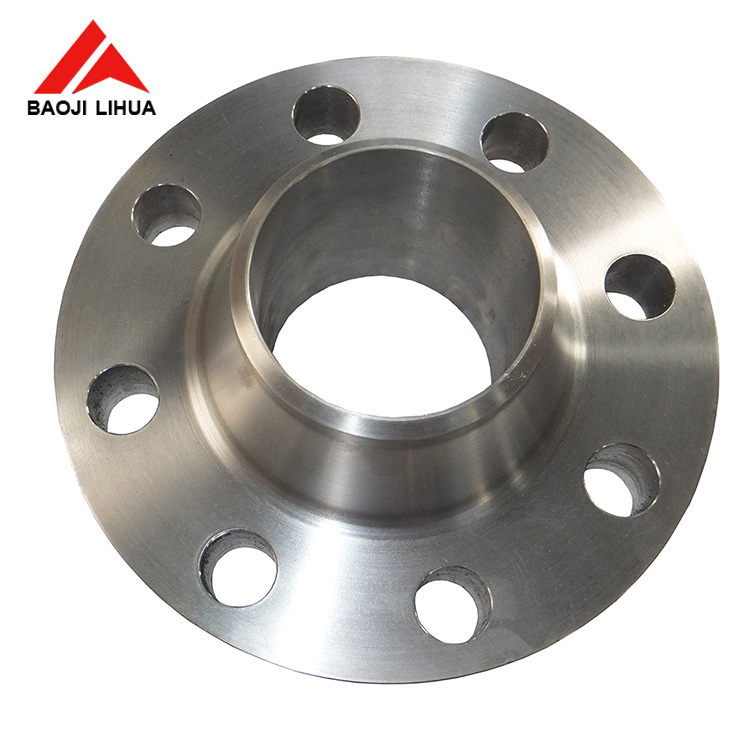
Titanium Blind Exhaust Flange 4" ANSI 150lbs 300 Ibs Class Gr2
- Material: CP Grade 2
- Rating: 150 / 300 lbs
- Standard: ASME B16.5
Engineered to ASTM, ASME, and DIN standards at our ISO 9001 certified manufacturing facility in Baoji, China.
For procurement directors, marine engineering managers, and technical supply officers operating across the Greater Hanshin Industrial Belt and the Port of Kobe, acquiring high-integrity titanium fasteners is fundamental to maintaining system reliability under severe marine, chemical, and thermal operating environments. As Chinese manufacturing continues its technical evolution under international aerospace and pressure equipment standards, Jovzi Titanium Industry Co., Ltd. serves as an ISO 9001 certified bridgehead—coupling high-purity ingot stock from Baoji's "Titanium Valley" with Japanese technical precision.
Kobe’s industrial footprint is unique globally. Positioned at the apex of Osaka Bay, Kobe combines premier shipbuilding berths, chemical complexes, high-speed rail development facilities, and pioneer clean-energy hubs including the world's premier liquid hydrogen terminal on Port Island. In these exacting sectors, conventional austenitic and duplex stainless steels (such as SUS304, SUS316L, or 2205) frequently encounter material thresholds: chloride-induced stress corrosion cracking (SCC), severe crevice corrosion within subsea flanges, and critical thermal fatigue during cyclical cryogenic gas expansion.
Titanium stud bolts—predominantly manufactured from Grade 5 (Ti-6Al-4V) for high-load structural assemblies and Grade 2 (unalloyed CP-titanium) or Grade 7 (Ti-0.15Pd) for extreme chemical media—represent the benchmark solution. By sourcing directly from validated Chinese titanium mills, procurement departments in Hyogo Prefecture resolve the twin challenges of prohibitive domestic material lead times and exorbitant alloy surcharges, without conceding metallurgical standards.
Shipbuilders, port ballast systems, and maritime propulsion plants in Kobe Harbor deploy Gr5 stud bolts to withstand infinite exposure to high-velocity sea sprays, marine biofouling, and cavitation without pitting.
In pilot liquefaction terminals and vacuum-jacketed cryogenic pipelines, Grade 5 ELI (ASTM F136) studs maintain ductile fracture toughness at cryogenic conditions (-253°C) where carbon fasteners become glass-brittle.
Refineries and acid handling plants in the Hanshin industrial corridor require Grade 7 (Palladium-doped) studs for wet chlorine and reducing acid piping where crevice corrosion destroys conventional alloys.
Titanium is not manufactured like mild steel. Thread fabrication on stud bolts requires precise parameters: turning or milling threads cuts grain flow lines, reducing dynamic fatigue life by up to 40%. Jovzi Titanium utilizes CNC thread-rolling equipment on pre-heated, solution-treated, and aged Grade 5 titanium bars. This process continuous-flows the crystal lattice along the thread profile, boosting cycle endurance across dynamic vibration environments such as marine diesel turbochargers and high-speed rail bogeys.
| Fastener Grade | UNS / Standard | Yield Strength (Rp0.2) | Tensile Strength (Rm) | Elongation (%) | Optimal Kobe Application Scenario |
|---|---|---|---|---|---|
| Grade 2 (CP-Ti) | UNS R50400 / ASTM B348 | ≥ 275 MPa | ≥ 345 MPa | ≥ 20% | Seawater cooling loops, ballast water piping, low-stress chemical tanks |
| Grade 5 (Ti-6Al-4V) | UNS R56400 / ASTM B348 | ≥ 828 MPa | ≥ 895 MPa | ≥ 10% | High-pressure marine flanges, exhaust manifolds, turbine housings |
| Grade 5 ELI | UNS R56401 / ASTM F136 | ≥ 795 MPa | ≥ 860 MPa | ≥ 10% | Cryogenic liquid hydrogen valves, medical implants, deep-sea exploration |
| Grade 7 (Ti-0.15Pd) | UNS R52400 / ASTM B348 | ≥ 275 MPa | ≥ 345 MPa | ≥ 20% | High-temperature hydrochloric or sulfuric acid processing, chemical scrubbers |
| Grade 12 (Ti-Mo-Ni) | UNS R53400 / ASTM B348 | ≥ 345 MPa | ≥ 483 MPa | ≥ 18% | Elevated temperature brine heat exchangers, offshore platform piping |
Corporate procurement strategies among Japanese engineering conglomerates have shifted from pure single-source domestic reliance to agile, multi-tier dual sourcing across the Asia-Pacific basin. This realignment is propelled by three distinct forces:
1. Accelerated Decarbonization Mandates: Kobe's transition into a regional clean hydrogen supply port demands aggressive life-cycle assessments (LCA). With titanium lasting 4 to 8 times longer than coated carbon steels in marine atmospheres, asset managers drastically lower embodied operational carbon and eliminate hazardous anti-corrosion repainting regimes.
2. Supply Chain Redundancy and Lead Time Compression: Sourcing high-grade titanium forgings from European mills commonly incurs 24- to 36-week lead schedules. Jovzi Titanium's direct connection to Baoji raw sponge stockpiles allows hot-forged and precision-machined stud bolts to be manufactured, inspected, and delivered to the Port of Kobe within 3 to 5 weeks via direct maritime freight from Qingdao or Shanghai.
3. MTC Verification and Strict Traceability: Historical market concerns regarding inconsistent metallurgy are answered through comprehensive digital documentation. Every lot exported by Jovzi to Kobe buyers includes an EN 10204 3.1 Mill Test Certificate complete with heat numbers, chemical spectrogram readouts, room-temperature tensile evaluations, and third-party validation reports from the authorized BaoTi Test Center.
Headquartered at No. 3 Gaoya Industrial Zone in Baoji's High-Tech Development Zone, Jovzi Titanium Industry Co., Ltd. controls the manufacturing continuum from ingot re-melting through high-speed multi-axis CNC machining. Our engineering core includes 4 senior metallurgical engineers and 5 intermediate tooling specialists who understand Japanese industrial drawings (JIS tolerances, surface roughness Ra standards, and thread chamfering requirements).
Whether your technical department requires full-body double-ended stud bolts for ANSI B16.5 Class 300 flanges, customized reduced-shank studs for elevated thermal expansion, or specialty anodized fasteners for motorsport and marine assemblies, our workshop guarantees micron-level repeatability with 100% thread gauge go/no-go verification prior to vacuum export packaging.
Connect with our senior fastener engineers for prompt sizing consultations, material grade selection assistance, and rapid cost estimation tailored to your engineering delivery schedule.
Inquire Now