Verified Engineering Products Ready for Basel Delivery
Manufactured under strict ISO 9001:2015 quality assurance protocols in Baoji, China (China's Titanium Valley) and delivered directly to the Rhine-Alpine chemical corridor.
Engineering Whitepaper: Titanium Spectacle Blind Flanges in the Basel Industrial Landscape
The tri-border region anchored by Basel (spanning northwestern Switzerland, southern Baden-Württemberg in Germany, and the Haut-Rhin in France) constitutes Europe's most densely concentrated hub for fine chemicals, active pharmaceutical ingredients (APIs), specialty biotechnology synthesis, and advanced agrochemicals. Chemical manufacturing facilities operating across Schweizerhalle, Muttenz, and the Klybeck and Rosental industrial zones demand positive line isolation during operational shutdowns, continuous reactor maintenance, clean-in-place (CIP) regimens, and steam-in-place (SIP) decontamination routines.
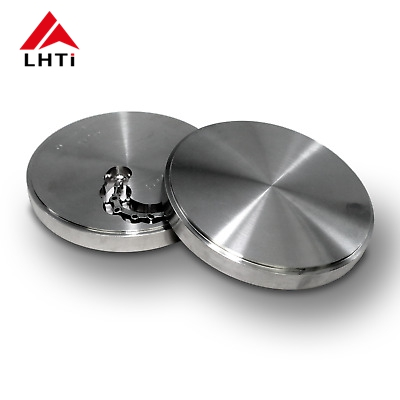
A Titanium Spectacle Blind Flange (also recognized under ASME B16.48 as a figure-8 blind) is a critical dual-function piping accessory. Composed of two metal discs joined by a solid bridge piece—one solid disc to blank off the pipeline, and one open ring matching the inside pipe diameter to maintain full media throughput—it provides foolproof, visible confirmation of whether a line is isolated or in active flow. In an operating environment regulated strictly by SUVA (Swiss Accident Insurance Fund) and European ATEX safety guidelines, substituting temporary paddle blanks or slip blinds with traceable titanium spectacle blinds eliminates human operational error and prevents hazardous cross-contamination.
Absolute Process Safety
Rotating the solid disc into the bolted flange connection delivers 100% mechanical line shutoff. Visual bridge orientation allows Basel safety inspectors to immediately confirm system status without breaking pressurized joints.
Halogen & Acid Resilience
Unsurpassed immunity to brine solutions, metal chlorides (FeCl3, CuCl2), and hot oxidizing organic acids common in pharmaceutical active synthesis, ensuring zero metallic leaching into high-purity API product streams.
Weight Reduction & Ergonomics
At approximately 4.51 g/cm³, titanium is 45% lighter than nickel-chromium alloys and stainless steels. For Basel maintenance personnel manually swapping large-diameter spectacle blinds (DN150 to DN400), this significantly reduces physical fatigue and handling hazards.
Localized Industrial Applications Across the Basel Chemical Corridor
Basel's chemical infrastructure is distinguished by high-mix, low-volume flexibility where modular batch reactors switch formulations on accelerated schedules. Titanium spectacle blind flanges serve three distinct application profiles in the local plants:
1. Active Pharmaceutical Ingredient (API) Synthesis & Purification: In intermediate synthesis lines involving chlorinated solvents (chloroform, methylene chloride) and acidic catalyst quench systems, micro-leakage represents both an operational explosion risk and an environmental catastrophe along the Rhine basin. Grade 2 and Grade 7 spectacle blinds machined to ASME B16.48 Class 150 and Class 300 tolerances provide secure isolation points at reactor feed manifolds, reflux condenser outlets, and distillation column bottoms.
2. Agrochemical Intermediates & Fine Phosphorus Chemistry: Facilities situated along the Schweizerhalle-Pratteln belt process halogenated chemistry under aggressive pH fluctuations. Jovzi Titanium supplies Grade 7 (Ti-0.15Pd) spectacle blinds forged from monolithic ingots per ASTM B381 (UNS R52400 / Grade F-7). The interstitial palladium concentration shifts the corrosion potential of the alloy in reducing acid environments (dilute hydrochloric and sulfuric acid conditions), resisting crevice corrosion beneath flange gaskets where stagnant process fluids accumulate.
3. High-Purity Solvent Recycling & Waste Incineration Plants: Basel's dedicated hazardous chemical recovery operations subject piping components to fluctuating thermodynamic cycles and volatile vapor condensation. Our precision-ground raised-face (RF) and ring-type joint (RTJ) titanium spectacle blind flanges maintain structural planarity and surface finish (Ra 3.2 to 6.3 μm) under repetitive thermal stresses, ensuring reproducible gasket seat compression without bolt re-torque failure.
Technical Benchmark: Material Selection Matrix for Isolation Blinds
When engineering piping networks for European GMP-certified operations, choosing between commercially pure titanium and palladium-modified grades is essential for balancing operational lifetime against capital expenditure.
| Titanium Grade | Standard Specification | Yield Strength (Min, MPa) | Tensile Strength (Min, MPa) | Critical Operating Advantage in Basel Processing |
|---|---|---|---|---|
| Grade 1 (CP4) | ASTM B381 / ASME SB-381 | 170 MPa | 240 MPa | Maximum ductility and ease of cold forming; selected for low-pressure lining and non-critical utility isolation. |
| Grade 2 (CP3) | ASTM B381 / DIN 3.7035 | 275 MPa | 345 MPa | The workhorse material for pharmaceutical and fine chemical plants; unmatched resistance to oxidizing media and wet halogens. |
| Grade 5 (Ti-6Al-4V) | ASTM B381 / DIN 3.7165 | 828 MPa | 895 MPa | High-strength structural blind applications, deep high-pressure piping assemblies (ASME Class 600/900/1500), and autoclave isolation. |
| Grade 7 (Ti-0.15Pd) | ASTM B381 / DIN 3.7235 | 275 MPa | 345 MPa | Unsurpassed crevice corrosion resistance in reducing chloride and acid environments; the benchmark for agrochemical reactors. |
| Grade 12 (Ti-Mo-Ni) | ASTM B381 / DIN 3.7105 | 345 MPa | 483 MPa | Enhanced strength and crevice resistance up to 300°C without the cost premium of solid palladium alloys. |
Procurement & Technology Trends in the Swiss Life Sciences Market
Procurement departments across Basel are increasingly re-evaluating supply chain resilience and lifecycle asset management. Three clear industry dynamics govern the current procurement of titanium piping products:
Decarbonization and Asset Lifespan Extension: Operating under rigorous Swiss federal environmental mandates, manufacturing plants are actively phasing out frequent replacement of fluoropolymer-lined carbon steel flanges. While PTFE/PFA linings frequently suffer from permeation, vacuum collapse, and flange neck micro-cracking, solid titanium spectacle blinds furnish a decades-long service life. The entire product is 100% recyclable, drastically reducing Scope 3 embedded carbon emissions over a plant's operational lifecycle.
Digital Traceability & The Shift to 3.2 Certification: European buyers are demanding granular traceability to satisfy Swissmedic and EMA regulatory validations. Jovzi Titanium bridges this requirement by supplying complete optical emission spectroscopy (OES) chemical analysis, mechanical property tension tests, ultrasonic non-destructive testing (NDT), and dimensional verification reports with every flange heat number. Each unit features permanent laser or low-stress pin-stamp marking conforming to ASME B16.48 and EN 19.
Consolidation of Global Direct Sourcing: To mitigate volatile distribution markups across central European metal stockholders, Swiss engineering firms are executing direct factory agreements with specialized manufacturers in Baoji. By collaborating directly with Jovzi Titanium, Basel procurement teams secure custom thickness allowances, bespoke ring clearances for lined piping, and guaranteed mill test compliance with expedited airfreight arrival at EuroAirport Basel-Mulhouse-Freiburg or Zurich Airport.
Why Basel Industrial Buyers Partner with Jovzi Titanium Industry
Established in 2006 in Baoji, Shaanxi—widely acknowledged as China's Titanium Valley, responsible for the vast majority of the nation's titanium production and high-end smelting capacity—Jovzi Titanium Industry Co., Ltd. offers unparalleled metallurgical mastery and forging capabilities.
BaoTi Testing Laboratory Authorization
Every forging heat is verified independently through third-party mechanical and chemical validation by the authorized BaoTi Test Center, guaranteeing zero scrap defects or porous inclusions.
Certified Traceability (EN 10204 3.1)
We deliver transparent material tracking from virgin sponge melting, vacuum arc remelting (VAR), and radial press forging to finished CNC facing, compliant with ASME SB-381 and PED 2014/68/EU.
19+ Years International Supply
Exporting to over 30 countries with 81–90% export ratio. Jovzi's bilingual engineering staff responds to technical RFQs within 8 hours, supporting multi-currency settlements (CHF, EUR, USD).
Frequently Asked Questions by Basel Procurement Teams
What flange standards do your Titanium Spectacle Blinds conform to for Swiss installations?
Are Jovzi titanium flanges compatible with existing glass-lined or PTFE-lined piping?
Can you supply raw material certification according to EN 10204 3.1 and 3.2?
What is the minimum order quantity (MOQ) and sample lead time?
What Incoterms and customs clearance handling do you offer for Switzerland?
Upgrade Your Process Safety with Precision Titanium Flanges
Submit your ASME B16.48 / EN 1092-1 technical specifications or custom dimensional drawings to Jovzi Titanium's engineering department. Get an itemized commercial proposal and production scheduling within 8 hours.